
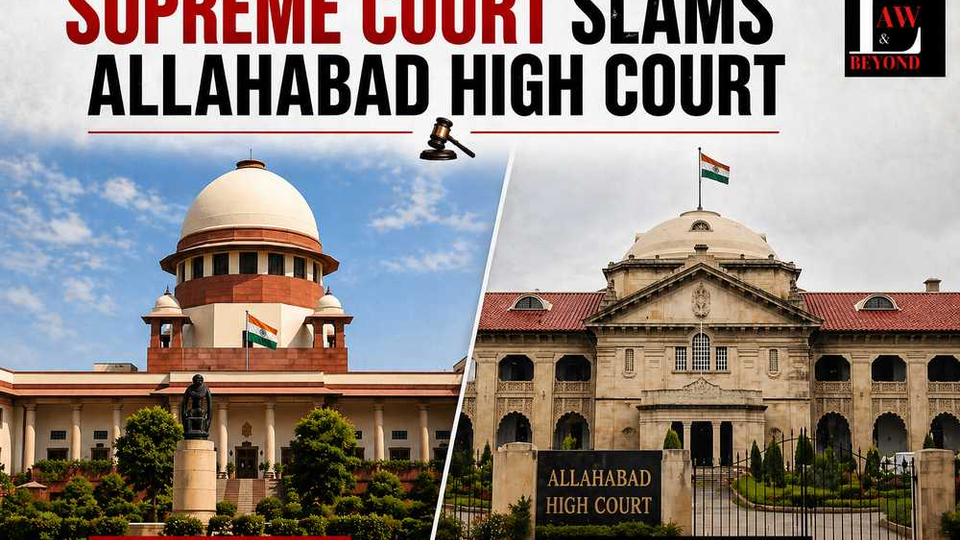
Supreme Court Grants Bail After 9 Years Custody, Slams HC for “Shocking” Order
The Supreme Court of India has strongly criticised the bail denial of an undertrial who spent nearly nine years in jail custody. Calling the High Court’s approach “shocking,” the Court emphasised that prolonged incarceration without a trial conclusion violates the fundamental right to a speedy trial under Article 21 of the Constitution.
Background of the Case
The petitioner, Vaibhav Singh, was arrested on March 7, 2017, in connection with offences under Sections 147, 148, 149, 120-B, and 302 of the IPC. The case was registered at Police Station Cantt., Gorakhpur. After investigation, a chargesheet was filed, and the matter was committed to the Sessions Court. However, despite the passage of nearly nine years, the trial remained pending.
The bail plea of the petitioner was rejected by the Allahabad High Court, which relied on precedent to hold that once trial begins, bail should ordinarily not be granted.
Table of Contents
Arguments Before the Court
Counsel for the petitioner argued that prolonged incarceration without trial completion amounted to a violation of the right to speedy trial under Article 21. It was contended that the delay was not attributable to the accused and that continued detention was unjust.
On the other hand, the High Court relied on the judgment in X v State of Rajasthan (2024 INSC 909) to justify denial of bail after commencement of trial.
Supreme Court’s Observations
A bench comprising Justice J.B. Pardiwala and Justice Ujjal Bhuyan expressed strong disapproval of the High Court’s reasoning.
The Court observed:
“It appears that the High Court has not been able to understand the true purport and ratio of the decision… What more was required for the High Court to consider the plea of the petitioner for bail, keeping his right of speedy trial in mind as enshrined under Article 21 of the Constitution.”
Criticising the denial of bail despite prolonged custody, the bench further stated:
“Howsoever grave the crime may be, but if the accused is denied his right of speedy trial and is languishing in jail for years together and for no fault on his part, he cannot be kept in jail for indefinite period.”
The Court termed the High Court’s order “very shocking” and “very disappointing,” highlighting that the constitutional mandate of speedy trial had been overlooked.
Misapplication of Precedent
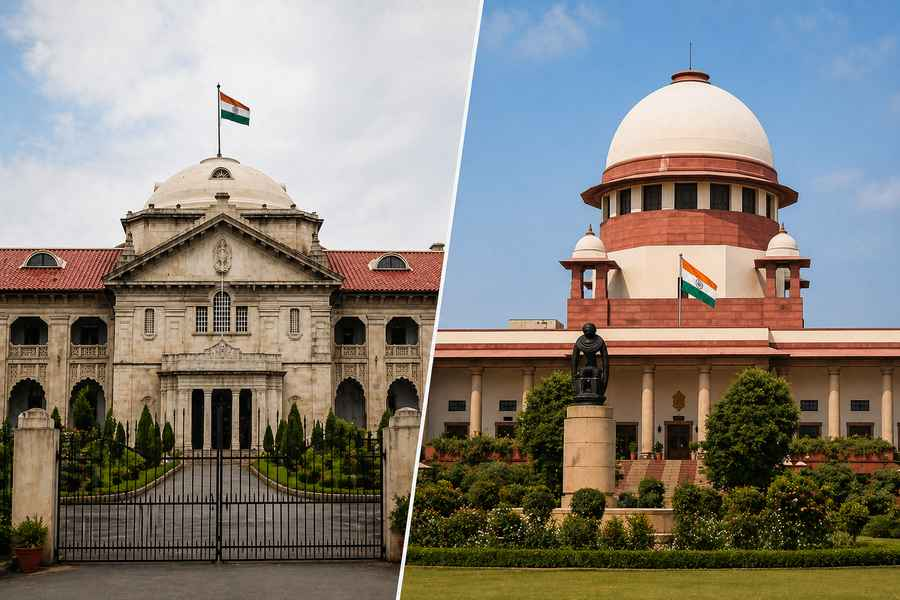
The Supreme Court found that the High Court misinterpreted the ruling in X v State of Rajasthan. It clarified that the precedent did not justify ignoring prolonged custody and constitutional rights. The apex court stressed that the length of incarceration and delay in trial must be key considerations in bail decisions.
Key Ruling and Directions
Noting a clear violation of Article 21, the Court held:
“We believe we should not wait even for the State to appear. This is a gross case wherein the fundamental right of the petitioner to have a speedy trial as enshrined under Article 21 of the Constitution could be said to have been infringed.”
Allowing the Special Leave Petition (Crl.) No. 7416/2026, the Court directed that the petitioner be released on bail forthwith, subject to conditions imposed by the trial court.
Legal Significance
This judgment reinforces that the gravity of the offence alone cannot justify indefinite detention. The ruling underscores that constitutional rights, particularly the right to a speedy trial, must prevail over procedural delays. It also serves as a caution to lower courts against mechanical reliance on precedents without considering factual realities.
Case Details
- Case Title: Petitioner v. State of Uttar Pradesh
- Case No.: Special Leave Petition (Crl.) No. 7416/2026
- Court: Supreme Court of India
- Bench: Justice J.B. Pardiwala and Justice Ujjal Bhuyan
- Date: April 2026
- Advocates: Mr. Shwetank Sailakwal, AOR; Mr. Mayank Suryan; Ms. Abhinanda Bhuyan; Mr. Alok Mishra
LATEST POSTS:

READ ORDER: