
Supreme Court Urges Centre to Remove Abortion Time Limit for Minor Rape Survivors | MTP Act Reform
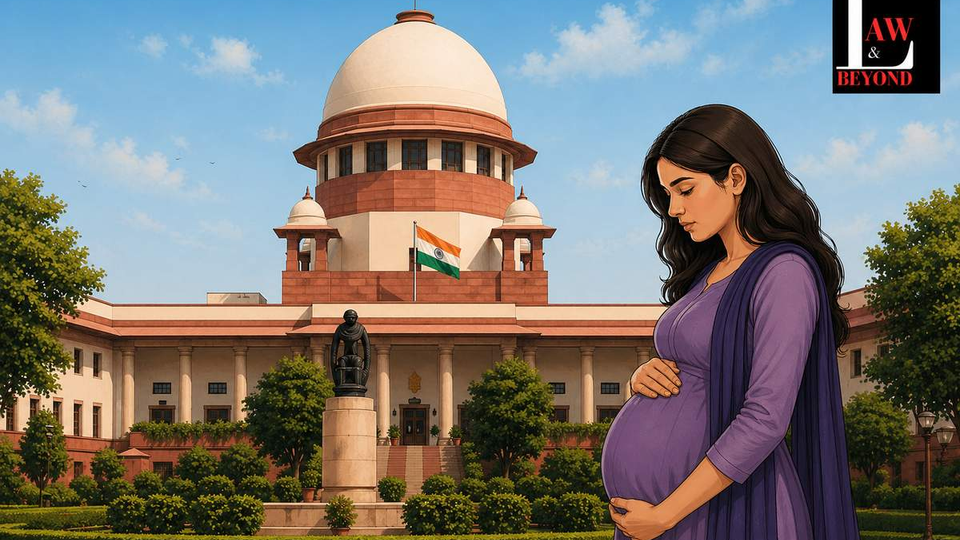
On Thursday (April 30, 2026), concerning reproductive rights and child protection, the Supreme Court of India urged the Central government to amend the Medical Termination of Pregnancy Act to remove gestational (Abortion ) time limits in cases involving rape of minor girls. The oral observations were made by a Bench comprising Chief Justice of India Surya Kant and Justice Joymalya Bagchi while hearing a curative petition filed by the All India Institute of Medical Sciences (AIIMS).
Table of Contents
Case Background: AIIMS Curative Petition on 30-Week Pregnancy
The case arose from a curative plea filed by AIIMS seeking reconsideration of the Supreme Court’s earlier decision permitting termination of a pregnancy (Abortion) exceeding 30 weeks carried by a 15-year-old rape survivor. Earlier in April 2026, the Court had allowed the termination, observing that the minor could not be compelled to continue an unwanted pregnancy.
However, a medical board at AIIMS subsequently opined that terminating the pregnancy (Abortion ) at such an advanced stage could likely result in a live birth with severe deformities. It also warned of serious long-term health risks to the minor, including the possibility of losing her ability to reproduce in the future. The doctors suggested that continuing the pregnancy for a few more weeks could improve the chances of the child’s survival, after which the baby could be given up for adoption.
Appearing for AIIMS, Additional Solicitor General Aishwarya Bhati argued that termination beyond the statutory 24-week limit was medically inadvisable and that continuation of pregnancy may better serve the interests of the child. She also proposed counselling for the minor and her parents regarding the medical consequences before any final decision.
Supreme Court Prioritises Minor’s Autonomy
The Bench, however, expressed strong reservations about the approach suggested by AIIMS and the State, reiterating that the ultimate decision must lie with the minor and her guardians, not institutions.
Chief Justice Kant made a significant policy-oriented observation:
“Please amend your law so that in cases of unwanted pregnancy on account of rape of a minor girl, the time limitation will not be there.”
He further underlined the need for the law to adapt to evolving realities:
“Please amend your law… that when there is pregnancy due to rape etc., the time limitation will not be there. The law needs to be organic and in sync with evolving time.”
Highlighting the practical barriers faced by minor victims, the Court observed:
“by the time a minor victim realises the development of pregnancy and becomes aware of the statutory remedies, the time limit will be over.”
The Bench also noted that victims of sexual assault, particularly minors, are often reluctant to disclose the incident due to stigma and trauma, thereby rendering rigid statutory timelines unjust and exclusionary.
“Minor Cannot Be Forced to Bear Pregnancy”
In a poignant articulation of the survivor’s plight, the Chief Justice stated:
“Unwanted pregnancy cannot be thrust on a person. Imagine, she is a child. She should be studying now. But we want to make her a mother… This is a case of child rape. Victim will have lifelong scar and trauma … It is now a fight between foetus vs child…Minor child cannot be forced to bear a pregnancy.”
The Court also expressed concern that the discourse was disproportionately centred on the foetus rather than the minor’s suffering:
“Too much focus on the child (foetus) and not the mother who has gone through such pain.”
Justice Bagchi: Respect the Citizen’s Choice
Justice Bagchi reinforced the principle of informed consent and personal autonomy, observing:
“Give respect to your citizen. Show data to the parents and if they choose to keep it, then so be it. But if they think the mental health is in jeopardy, they will take a call.”
He further cautioned against turning such matters into adversarial litigation between the State and citizens:
“Let us not make a fight between State and its citizens. We will not allow the institution to choose. The institution can convey it to the parents. They will decide.”
The Bench indicated that while expert medical opinion is important, it should only aid, not override, the decision-making process of the minor and her family. It directed that counselling should be conducted with full disclosure of medical consequences, after which the Court would consider the course chosen by the minor and her parents.
Legal Framework and Courts’ Constitutional Powers
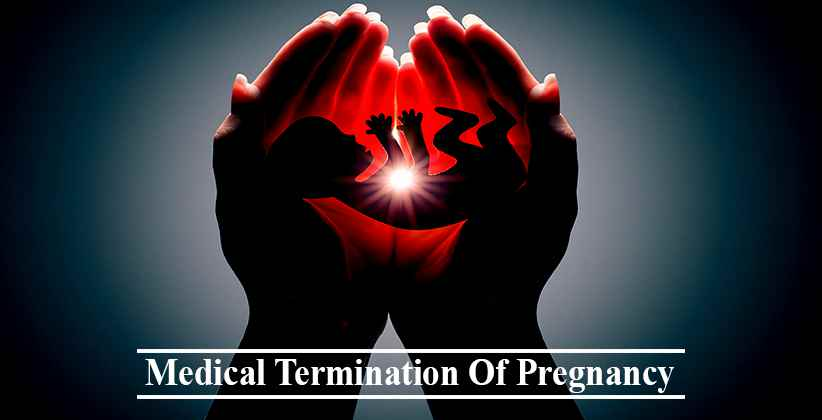
Under the current framework of the Medical Termination of Pregnancy Act (as amended in 2021), termination is generally permitted up to 20 weeks, and up to 24 weeks for specific categories, including rape survivors and minors. Beyond 24 weeks, termination is allowed only in cases where it is immediately necessary to save the life of the woman or where there are substantial foetal abnormalities.
However, the Court clarified that these statutory limits bind medical practitioners but do not restrict constitutional courts exercising powers under Article 142 of the Constitution of India, which empowers the Supreme Court to pass orders necessary to do “complete justice.”
The Bench also refused to entertain AIIMS’ curative petition, holding that medical institutions cannot impose their decision on the survivor.
Need for Legislative Reform
The Court’s remarks reflect a growing judicial concern regarding gaps in the existing legal framework, particularly for vulnerable groups like minor rape survivors. It reiterated that the law must be responsive to ground realities and ensure that access to safe and legal abortion is not denied due to procedural or temporal constraints.
The Bench also suggested that trials in child rape cases should be expedited to ensure timely justice and access to remedies.
Notably, similar concerns were raised in the 2024 judgment in A (Mother of X) v. State of Maharashtra, where the Court questioned the rationale behind permitting termination beyond 24 weeks for foetal abnormalities but not for pregnancies arising out of rape of minors.
LATEST UPDATES
- Supreme Court’s Powerful Relief To Murder Convict After 22 Years In Jail; Faults Orissa HC For Rejecting Appeal On Delay

- Supreme Court Questions Delhi High Court Ruling on Low Attendance for Law Students, Seeks BCI’s Stand
- Union Cabinet Approves Key Move to Increase Supreme Court Strength to 38 Judges
- Supreme Court Clarifies Limits of Article 227: High Courts Cannot Substitute Plausible Views of Execution Courts
- Shocking Delhi Judge Death: 30-Year-Old Judicial Officer Found Dead, Family Alleges Harassment

- Breaking: Supreme Court Declines to Interfere in TMC Plea on Bengal Vote Counting, Orders Strict Compliance with ECI Circular