
Supreme Court Urgent Hearing on TMC Plea Against ECI Counting Supervisor Decision in Bengal Elections
Ahead of the West Bengal Assembly election vote counting, the All India Trinamool Congress (AITC) has approached the Supreme Court challenging the decision to deploy only Central government and Central PSU employees as counting supervisors and assistants. The matter has gained urgency as counting is scheduled for May 4, 2026.
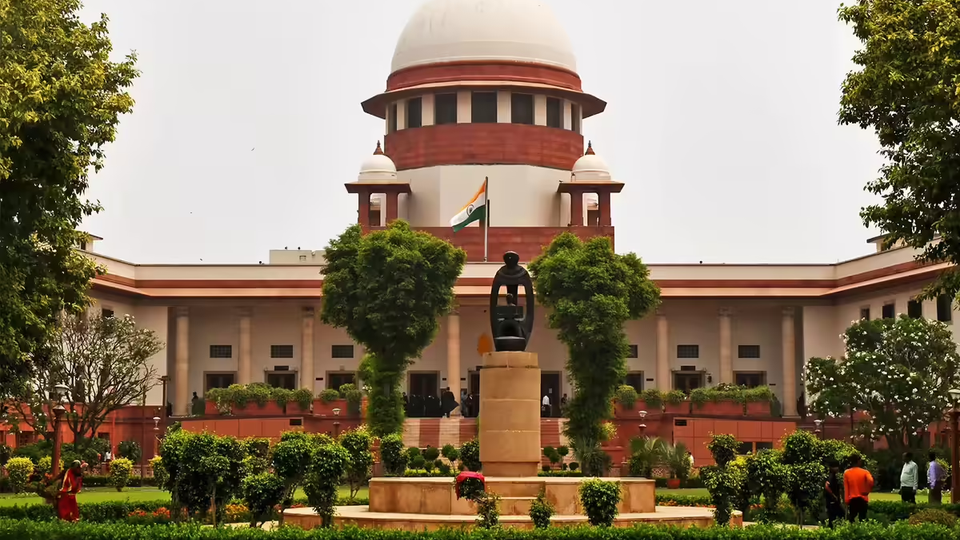
A special sitting of the Supreme Court is set to hear the plea on May 2, 2026, before a Bench comprising Justices PS Narasimha and Joymalya Bagchi. The petition, filed through Advocate-on-Record Sanchit Garga, challenges a recent order of the Calcutta High Court that dismissed the party’s objections.
Background of the Dispute
The controversy stems from a communication issued by the Additional Chief Electoral Officer (CEO), West Bengal, which mandated that at least one official at each counting table—either the counting supervisor or assistant—must be a Central government or Central PSU employee.
The AITC objected to this directive, arguing that it excluded State government and State PSU employees and deviated from the Election Commission of India (ECI) handbook. The party contended that such a mandate was beyond the jurisdiction of the Additional CEO and could only be issued by the ECI itself.
Further, AITC argued that while micro-observers are required to be Central government officials, extending this requirement to counting staff was arbitrary and “unique to West Bengal.” The party also raised concerns about a potential lack of neutrality, alleging that Central employees could be susceptible to influence, thereby affecting the fairness of the electoral process.
Table of Contents
Calcutta High Court’s Observations
The Calcutta High Court, however, rejected these arguments and upheld the ECI’s authority. It ruled that the appointment of counting personnel falls squarely within the Commission’s prerogative.
“This Court does not find any illegality for appointing counting supervisor and counting assistant from the Central Government/Central PSU employee instead of State Government employee,”
the High Court said.
Addressing concerns of bias, the High Court found them unsubstantiated and emphasized the existence of multiple safeguards, including micro-observers, candidate-appointed counting agents, and CCTV surveillance during the counting process.
The Court also clarified that the Election Commission’s functions can be delegated, thereby validating the competence of the Additional CEO to issue the communication. On the issue of judicial interference, the Court underscored the principle of restraint during an ongoing electoral process.
Importantly, the High Court left the door open for post-election remedies, stating:
“If the petitioner proves that the Central Government/Central PSU employees appointed as counting supervisor and counting assistants, helped the opponent of the petitioner by manipulating votes while counting the same, the petitioner has the liberty to take all the points in the election petition.”

Maintainability and Legal Issues
On the question of maintainability, the High Court referred to earlier litigation involving similar challenges during the electoral process. It noted that such issues had previously reached the Supreme Court, where the Special Leave Petition (SLP) was dismissed while keeping the question of law open. Consequently, the High Court held that it could not adjudicate the same issue again.
The writ petition was ultimately dismissed on the ground that mere apprehension of bias does not justify judicial intervention in electoral matters.
Supreme Court Hearing Ahead
Dissatisfied with the High Court’s ruling, AITC has now escalated the matter to the Supreme Court in All India Trinamool Congress v. Election Commission of India (Diary No. 26799/2026). The party has sought urgent relief given the proximity of the counting date.
The Supreme Court’s decision in the upcoming hearing is expected to have significant implications for the conduct of election processes and the scope of judicial review during ongoing elections.
LATEST POSTS: