
Is Right to Vote a Fundamental Right? Supreme Court Clarifies It Is Statutory
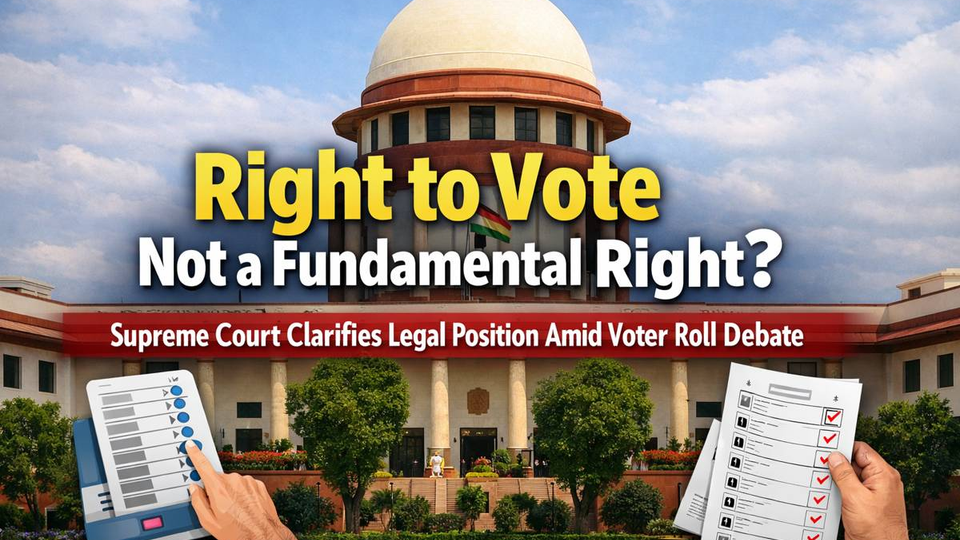
The Supreme Court of India has reiterated that the right to vote is not a fundamental right, but a statutory right governed by legislation.
Table of Contents
Supreme Court Bench Clarifies Legal Position
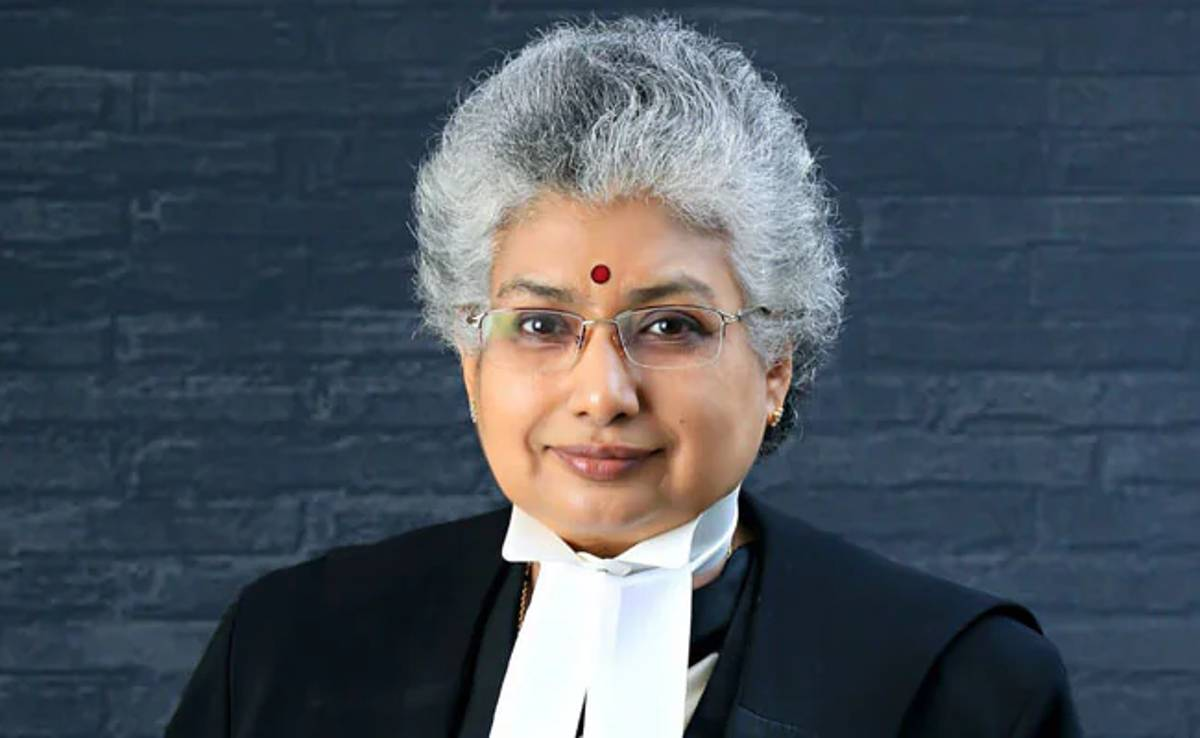
A Bench comprising Justice BV Nagarathna and Justice R Mahadevan delivered the ruling on April 10, 2026, emphasizing the distinction between the right to vote and the right to contest elections.
The Court categorically observed:
“It is well settled that neither the right to vote nor the right to contest an election is a fundamental right… these rights are purely statutory in nature and exist only to the extent conferred by statute,”
The Bench stressed that both rights operate in separate legal domains and are subject to conditions prescribed under relevant statutes.
Background of the Case
The ruling arose from a dispute concerning bye-laws framed by District Milk Producers’ Co-operative Unions in Rajasthan, which laid down eligibility conditions for candidates contesting elections to their management committees.
The Rajasthan High Court had earlier struck down these bye-laws, holding them inconsistent with the governing statutory framework.
However, the Supreme Court disagreed with this approach on both procedural and substantive grounds.
Supreme Court’s Key Observations
1. Writ Jurisdiction Improperly Invoked
The Court held that the High Court should not have entertained the challenge under writ jurisdiction, especially when a statutory dispute resolution mechanism was available under the Rajasthan Co-operative Societies Act.
2. Eligibility vs Disqualification
The Bench found that the High Court erred in treating the bye-laws as disqualifications rather than eligibility criteria.
It clarified that:
- The bye-laws merely prescribed conditions related to participation and performance of member societies.
- They did not restrict the right to vote.
3. Distinction Between Voting and Contesting
The Court reiterated that:
- The right to vote is statutory and may be granted to members.
- The right to contest elections is separate and can be regulated through eligibility conditions.
4. No Constitutional Violation
The Bench further observed that prescribing qualifications for contesting elections does not violate constitutional principles, provided such conditions align with the governing statute.

Outcome of the Judgment
Setting aside the High Court’s decision, the Supreme Court upheld the validity of the bye-laws, affirming that they were legally sound and within statutory limits.
Legal Representation
The petitioners were represented by Senior Advocate Kapil Sibal, along with Advocates Purushottam Sharma Tripathi, Ravi Chandra Prakash, Amit, Vani Vyas, and Prakhar Singh.
The State and other respondents were represented by Additional Advocate General Shiv Mangal Sharma, assisted by Advocates Arushi Rathore, Nidhi Jaswal, and Namit Saxena.
Broader Legal Significance
This ruling reinforces a long-standing constitutional principle: electoral rights in India are statutory, not fundamental. The judgment also underscores judicial restraint in electoral matters where alternative statutory remedies exist.
At a time when electoral processes and voter rights are under scrutiny, the Court’s clarification provides crucial legal certainty regarding the scope and limitations of voting and contesting rights in India.
READ JUDGEMENT
LATEST POSTS
- Supreme Court Declines PIL Seeking 50% Reservation for Women in Judicial Services and Government Panels

- Patna High Court Dismisses Delayed Appeal on Service Regularisation; Says Courts Need Not Indulge Indolent Litigants
- India Not a Religious State, Constitution Reflects Pluralism: Supreme Court Justice N. Kotiswar Singh

- Delhi High Court Reserves Verdict on Arvind Kejriwal’s Recusal Plea Against Justice Swarana Kanta Sharma
- Right to Vote Not a Fundamental Right? Supreme Court Clarifies Legal Position Amid Voter Roll Debate
- Justice Yashwant Varma Resigns Amid Cash Controversy: Allahabad High Court Judge Steps Down During Impeachment Proceedings