
Patna High Court Dismisses Delayed Service Regularisation Appeal, Cites Delay and Laches
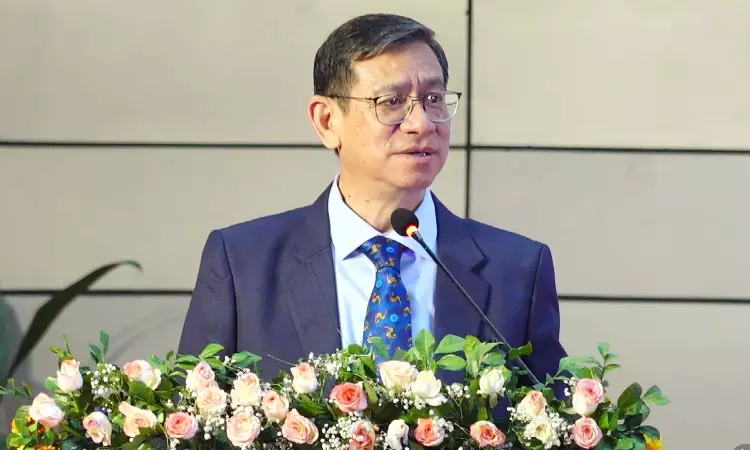
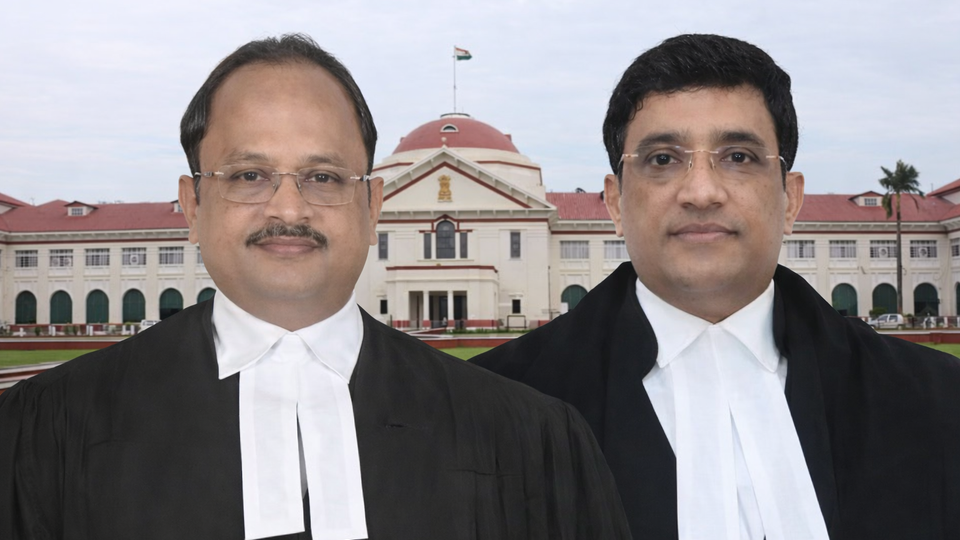
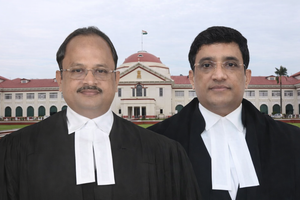
The Patna High Court dismissed an intra-court appeal challenging the denial of service regularisation, holding that courts are not obligated to entertain stale claims filed after inordinate delay. The Division Bench comprising Chief Justice Sangam Kumar Sahoo and Justice Harish Kumar reaffirmed that filing repeated representations does not extend the limitation.
The case, Raj Kumar Jha v. State of Bihar & Ors. (Letters Patent Appeal No. 762 of 2025), arose from the rejection of a claim for regularisation by a retired work-charge employee of the Water Resources Department. The appellant, appointed in 1973 as a Work Supervisor Grade II, retired in 2012 and approached the Court over thirteen years later seeking regularisation and pensionary benefits under applicable government resolutions.
Table of Contents
Background and Contentions
The appellant argued that he had completed the requisite service period and that his case had been recommended by departmental authorities. He further contended that similarly placed employees were granted regularisation, alleging discrimination. It was also submitted that his service was continuous and that no disciplinary proceedings were initiated despite medical leave.
Opposing the plea, the State contended that the appellant had remained absent for over twelve years at different intervals and had failed to meet the requirement of continuous service. It was further argued that such leave was sanctioned beyond the authority of the Executive Engineer and hence invalid. The State also raised the issue of delay, highlighting that the claim was pursued more than a decade after retirement and that earlier litigation had already attained finality. A Screening Committee had also rejected the claim for non-fulfilment of eligibility conditions.
Court’s Observations on Delay and Laches
The Bench emphasized the importance of timely legal action, observing that
“if it is found that the writ petitioner is guilty of delay and laches, the High Court would be fully justified to dismiss the writ petition at the threshold.”
Reiterating settled principles, the Court noted that
“equity aids the vigilant, not the indolent” and that “courts of equity grant relief to only those who actively protect their rights, not those who sleep on them.”
Relying on the Supreme Court judgment in P.S. Sadashivaswamy v. State of Tamil Nadu, the Bench observed that an aggrieved party in service matters should approach the court within six months or at most one year from the cause of action. The Court stated that
“it would be sound and wise exercise of discretion for the Court to refuse to exercise the extraordinary power under Article 226 of the Constitution of India”
in cases of undue delay, adding that entertaining such petitions
“is a wastage of time of the Court and it would impede the work of the Court in considering the legitimate grievances.”
Further underscoring the consequences of delay, the Bench remarked that
“remaining innocuously oblivious to the delay does not foster the cause of justice, on the contrary it brings injustice and it is likely to affect others.”
In a strongly worded observation, the Court held that
“a Court is not expected to give indulgence to the indolent persons who compete with Kumbhkarana and the delay does not deserve any indulgence and on that ground alone, the writ Court can throw the petition overboard at the very threshold.”
Findings on Merits
On merits, the Bench found no infirmity in the Single Judge’s decision. Taking into account the appellant’s prolonged absence, delayed approach, and prior rejection of similar claims, the Court held that
“it cannot be said that there is any perversity, or palpable unreasonableness in the impugned order passed by the learned Single Judge.”
The Court further concluded:
“after going through the impugned order, we do not find any such perversity, illegality or unreasonableness or inconsistency with any particular position of law.”
Final Order
Dismissing the appeal, the Court directed: “
Accordingly, the L.P.A stands dismissed. Pending I.A., if any, stands disposed of.”
Representation
The petitioners were represented by Mr. Braj Kishore Singh, Advocate, while Mr. Anjani Kumar, Additional Advocate General (4), appeared for the respondents.
READ JUDGEMENT
LATEST POSTS
- Supreme Court Declines PIL Seeking 50% Reservation for Women in Judicial Services and Government Panels

- Patna High Court Dismisses Delayed Appeal on Service Regularisation; Says Courts Need Not Indulge Indolent Litigants
- India Not a Religious State, Constitution Reflects Pluralism: Supreme Court Justice N. Kotiswar Singh