
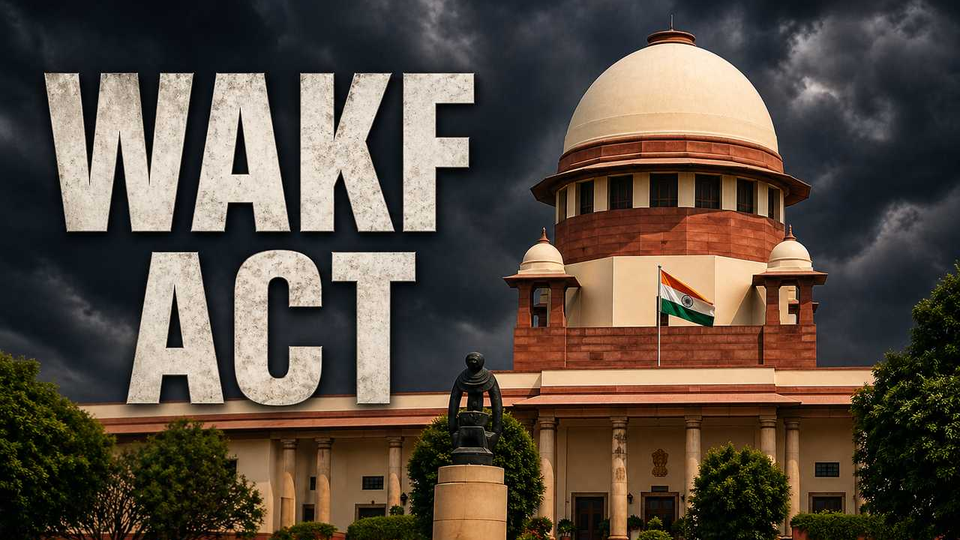
Service Inam Land Is Wakf Property, Cannot Be Alienated: Supreme Court Judgment
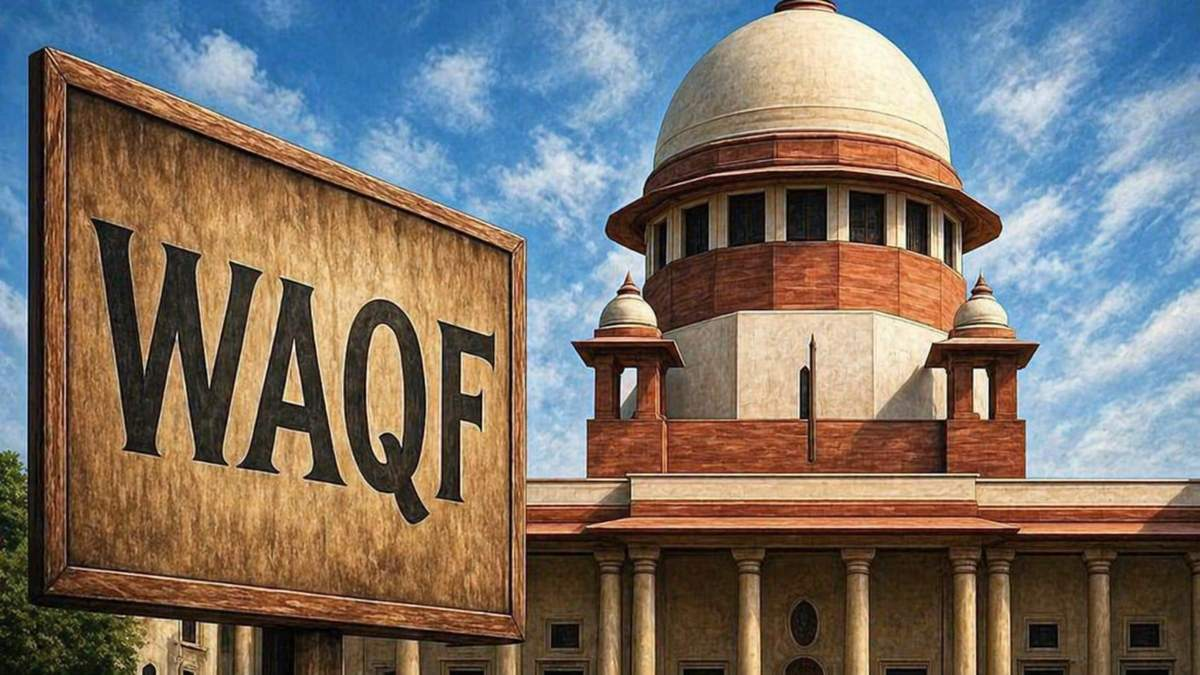
In a landmark ruling dated April 24, 2026, the Supreme Court in A.P. State Wakf Board Versus Janaki Busappa and Others (Civil Appeal No. 1946 of 2013) reaffirmed that lands classified as “service inam” and granted for religious or charitable purposes acquire the character of Wakf property and cannot be alienated through private transactions. The judgment, authored by Justice Augustine George Masih and Justice M.M. Sundresh, set aside the Andhra Pradesh High Court’s decision and restored the findings of the Wakf Tribunal.
Table of Contents
Background of the Dispute
The case concerned land measuring Ac. 3.00 in Survey No. 914/B situated in Kallur Village, Kurnool District. The plaintiffs, Janaki Busappa and others, claimed ownership based on a partition deed dated June 1, 1945, and subsequent registered sale deeds executed in 1985 and 1996. They sought declaration of title and permanent injunction against the Wakf Board to protect their alleged possession.
The dispute escalated when the Wakf Board allotted the land in 1999 to a religious body for the construction of an Edgah. Challenging this action, the plaintiffs contended that the land was their private property (personal inam) and that the Wakf Board’s intervention was illegal and without authority of law.
Findings of Lower Authorities
The Wakf Tribunal dismissed the suit, holding that the plaintiffs failed to establish valid title or lawful possession. It concluded that the land was “service inam” attached to a mosque, thereby constituting Wakf property. As a result, any subsequent partition or sale transactions were void ab initio and incapable of conferring valid title.
However, the Andhra Pradesh High Court reversed the Tribunal’s findings, ruling in favour of the plaintiffs. It held that the Wakf Board had failed to conclusively prove its title and that the plaintiffs had established ownership and possession through documentary evidence.
Supreme Court’s Analysis and Observations
Allowing the appeal filed by the Wakf Board, the Supreme Court strongly disagreed with the High Court’s approach. The Court emphasized the settled legal principle that lands granted for religious or charitable purposes are impressed with a public or religious trust.
“It is undisputed and settled that lands granted as service inam for religious or charitable purposes partake the character of endowed property and are impressed with a public or religious trust, thereby restricting their alienability.”
A crucial aspect of the case was the 1945 partition deed relied upon by the plaintiffs themselves. The Court noted that the document explicitly described the property as “service inam,” granted for rendering services to a mosque, which directly contradicted the plaintiffs’ claim of it being “personal inam.”
The Court also relied on the precedent in Sayyed Ali v. A.P. Wakf Board, (1998) 2 SCC 642, observing:
“a grant of land for rendering religious or charitable services does not vest absolute title in the individual, and such grants, being for purposes recognised under Muslim law as pious, religious or charitable, would clothe the property with the character of Wakf.”
Burden of Proof and Evidentiary Findings
The Supreme Court reiterated the principles under Sections 101–103 of the Indian Evidence Act, holding that the burden of proof in a suit for declaration lies entirely on the plaintiff.
“It is also necessary to advert to the settled principle that a plaintiff seeking declaration of title must succeed on the strength of his own case and not on the weakness of the defence. The Respondents, in the present case, having approached the Tribunal seeking declaration and injunction, were required to establish a clear and lawful title to the suit property. However, as noticed hereinabove, the very document relied upon by them militates against their claim. The High Court, in reversing the findings of the Tribunal, has effectively shifted the burden upon the Appellant, which, in the facts of the present case, is legally untenable.”
The Court found that the High Court erred in shifting the burden onto the Wakf Board. It further placed significant reliance on admissions made by the plaintiffs’ witness, who acknowledged that the land was originally granted for mosque-related services.
Additionally, the Court noted that a Gazette Notification (1963) and survey records supported the Wakf character of the property. Even in the absence of the original title deed, the cumulative documentary and oral evidence sufficiently established the Wakf nature of the land.
Possession vs. Title
Addressing the plaintiffs’ claim of possession based on cultivation, the Court clarified that mere physical possession does not confer legal ownership in the absence of valid title. The existence of mosque-related structures on the land further strengthened the Wakf Board’s claim.
Final Verdict
Setting aside the High Court’s judgment, the Supreme Court restored the Wakf Tribunal’s decision and held:
“we are of the considered opinion that the suit schedule property is “service inam” land attached to a religious institution and partakes the character of Wakf property. The Respondents have failed to establish any valid title or lawful possession so as to entitle them to the reliefs claimed.”
The appeal was accordingly allowed, with no order as to costs.
Case Details
- Case Title: A.P. State Wakf Board Versus Janaki Busappa And Others
- Citation: JURISHOUR-932-SC-2026 / 2026 LiveLaw (SC) 423
- Case No.: Civil Appeal No. 1946 of 2013
- Date of Judgment: 24/04/2026
- Bench: Justice M.M. Sundresh and Justice Augustine George Masih
ALSO READ: “Supreme Court Hearing: ED Clarifies It Is Not Alleging Breakdown of Constitutional Machinery in West Bengal”
READ JUDGEMENT
LATEST POSTS:
- Supreme Court’s Powerful Relief To Murder Convict After 22 Years In Jail; Faults Orissa HC For Rejecting Appeal On Delay
- Supreme Court Questions Delhi High Court Ruling on Low Attendance for Law Students, Seeks BCI’s Stand
- Union Cabinet Approves Key Move to Increase Supreme Court Strength to 38 Judges
- Supreme Court Clarifies Limits of Article 227: High Courts Cannot Substitute Plausible Views of Execution Courts
- Shocking Delhi Judge Death: 30-Year-Old Judicial Officer Found Dead, Family Alleges Harassment

- Breaking: Supreme Court Declines to Interfere in TMC Plea on Bengal Vote Counting, Orders Strict Compliance with ECI Circular