
Supreme Court Says Frictionless Bar and Bench Relationship Furthers Justice in Yatin Oza Contempt Case
The Supreme Court has observed that the Bar and the Bench are the “two indispensable wheels of the chariot of justice” and that a friction-less relationship between them is essential for maintaining public confidence in the justice delivery system. The Court made the observation while closing contempt proceedings against senior advocate Yatin Oza, who had made controversial remarks against the Gujarat High Court during the COVID-19 pandemic.
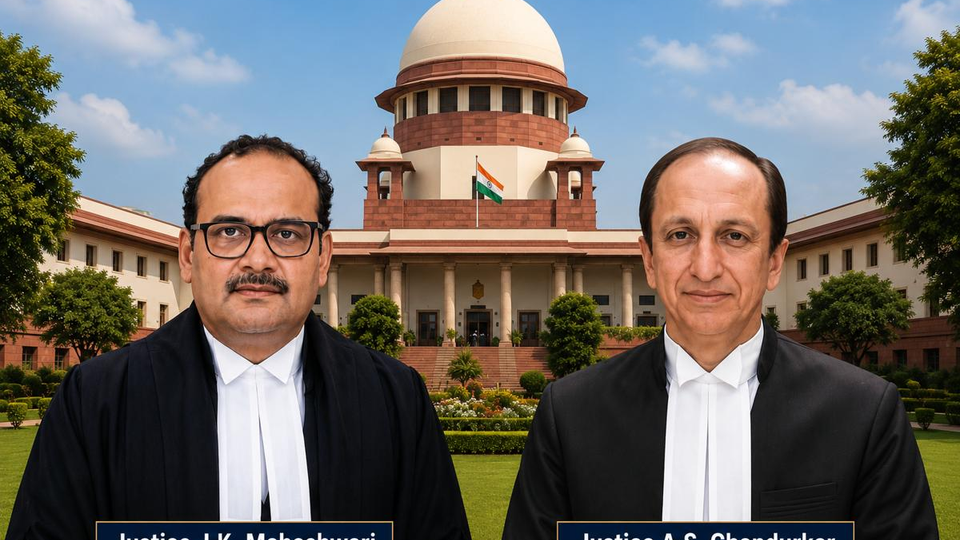
A bench comprising Justice J.K. Maheshwari and Justice Atul S. Chandurkar delivered the judgment in Yatin Narendra Oza v. Suo Motu, High Court of Gujarat and Anr., Criminal Appeal No. 669/2020.
The judgment was delivered on May 11, 2026, while considering the legality of the Gujarat High Court’s order convicting Yatin Oza for criminal contempt and sentencing him till the rising of the court for making scandalous remarks against the judiciary.
Background of the Case
The controversy arose during the first wave of the COVID-19 pandemic in 2020 when virtual court functioning had become the norm across the country. Yatin Oza, who was then serving as President of the Gujarat High Court Advocates’ Association, publicly criticised the functioning of the Gujarat High Court and its registry during a live press conference held on June 5, 2020.
During the press conference, Oza allegedly described the Gujarat High Court as a “gambling den” while raising concerns over listing practices, e-filing difficulties, non-circulation of matters, and objections raised by the registry during virtual hearings. Subsequently, the Gujarat High Court initiated suo motu criminal contempt proceedings against him.
The Supreme Court noted that Yatin Oza was functioning under immense pressure from members of the Bar, particularly junior advocates who were facing severe financial hardship due to the closure of physical courts during the pandemic. The Court referred to several letters and resolutions placed on record highlighting grievances relating to virtual court functioning.
The bench also reproduced portions of Yatin Oza’s resignation letter wherein he highlighted the “pathetic and disastrous financial situation” faced by junior lawyers and stated that some advocates had started working as food delivery personnel to survive during the pandemic.
Table of Contents
Supreme Court on Relationship Between Bar and Bench
While holding that Yatin Oza’s remarks were unjustified, the Supreme Court emphasised the importance of mutual respect between judges and lawyers.
“It is imperative to reflect upon the foundational relationship between the Bar and the Bench. They are inextricably linked, serving as indispensable wheels in the chariot of justice. To steer through the complex terrain of the law and achieve fair, equitable outcomes, these wheels must move in perfect tandem, bound by the shared devotion to uphold the rule of law,” the Court observed.
The bench further remarked:
“The relationship between the Bar and the Bench is like two sides of the same coin, forever complementing each other. Candor and honesty on either side must also be met with patience and dignity on the other. A friction-less relationship between the Bar and the Bench only furthers the purpose of justice and forwards the cause of those seeking justice.”
The Court also stressed that judges must maintain restraint while exercising contempt powers.
“Measured reprimand and corrective guidance remain the wiser course over sheer penal consequences. The majesty of our legal system is preserved not through retribution but through mutual respect, shared responsibility and institutional grace.”
Court Highlights Institutional Responsibility
The Supreme Court underlined that both the judiciary and the legal profession are intrinsic pillars of the justice delivery system. According to the Court, misconduct or indiscipline by either side can weaken public faith in institutions.
“Such an impasse between the two most intrinsic pillars of our legal system has the potential to wither the faith of public at large in the justice delivery mechanism,”
the Court said.
The bench observed that while criticism of the judiciary is permissible, it cannot degenerate into scandalous allegations that damage institutional dignity. At the same time, the Court recognised that institutional mechanisms are capable of improvement and that grievances should be communicated through proper channels and respectful language.
The judgment further stated:
“Furthermore, it is the cardinal imperative that neither conducts itself in a manner that casts a shadow of disrepute upon the other. The dignity of the Bench and the honour of the Bar are mutually reflective.”
Statutory and Legal Aspects
The matter involved criminal contempt proceedings initiated suo motu by the Gujarat High Court under the law governing contempt of courts. The Supreme Court, while balancing institutional dignity and judicial magnanimity, ultimately suspended the Gujarat High Court’s order convicting Yatin Oza.
The Court reiterated that constitutional courts in India have historically balanced accountability with opportunities for reform, particularly in matters involving the relationship between the Bar and the Bench.
Case Details
- Case Title: Yatin Narendra Oza v. Suo Motu, High Court of Gujarat and Anr.
- Case Number: Criminal Appeal No. 669/2020
- Court: Supreme Court of India
- Bench: Justice J.K. Maheshwari and Justice Atul S. Chandurkar
- Date of Judgment: May 11, 2026
READ JUDGEMENT
LATEST POSTS: