
Justice BV Nagarathna on Constitutional Structure: Institutions Like ECI Must Function Independently
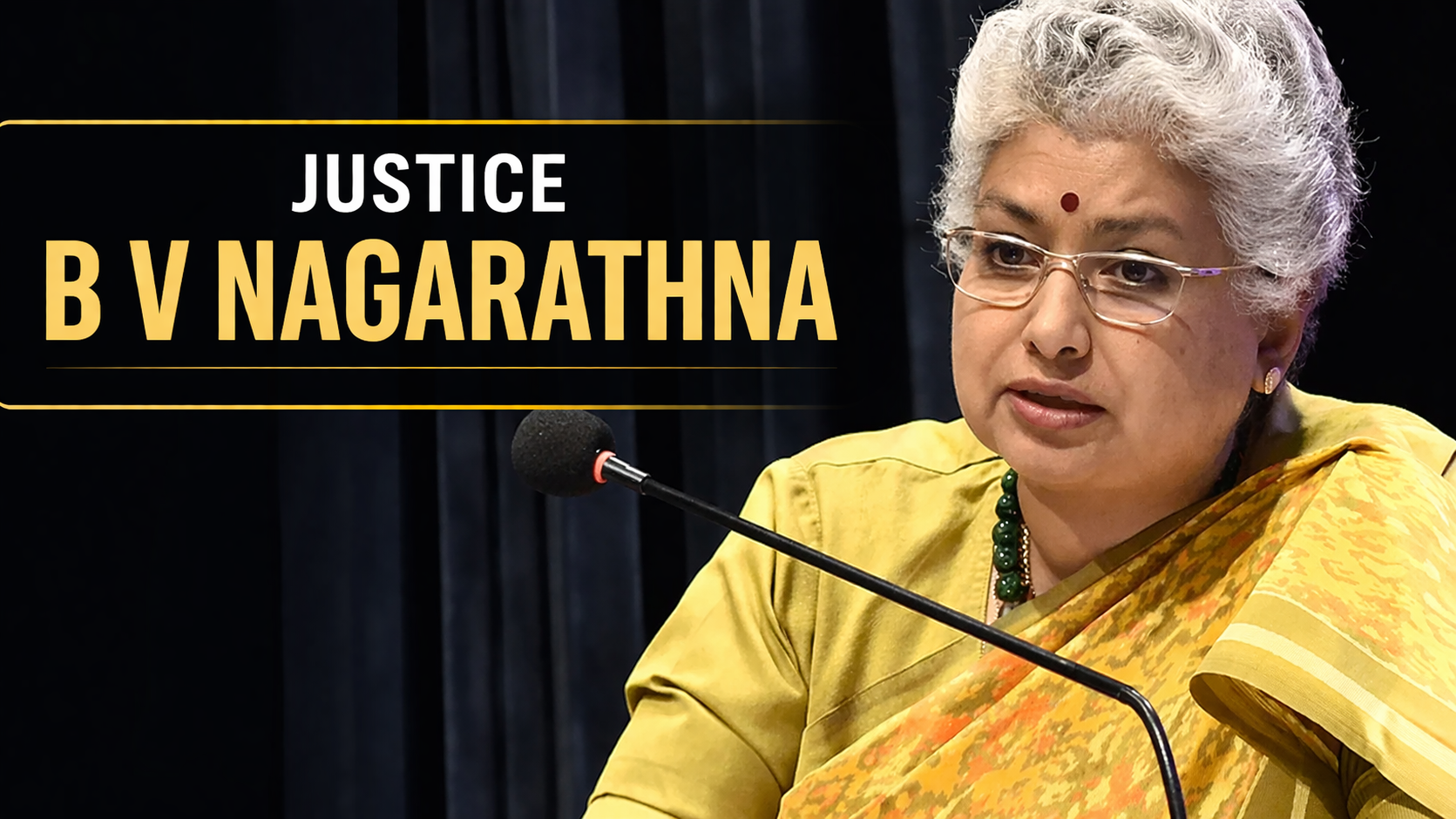
Patna, April 4, 2026: Justice B.V. Nagarathna of the Supreme Court of India underscored the critical importance of institutional independence in preserving constitutional governance while delivering the 1st Dr. Rajendra Prasad Memorial Lecture at Chanakya National Law University.
Speaking on the theme “Constitutionalism beyond Rights: Why Structure Matters,” the judge highlighted that institutions such as the Election Commission of India (ECI), the Comptroller and Auditor General of India (CAG), and the Finance Commission are deliberately designed to remain insulated from political influence.
“It is of utmost importance that these institutions function independently and not to be influenced by political processes,” she said.
Independence of ECI and Electoral Integrity
Justice Nagarathna emphasized the constitutional mandate of the ECI under Article 324, noting that elections are foundational to democratic legitimacy.
“Elections are not merely periodic events but a mechanism through which political authority is constituted.”
She added:
“Our constitutional democracy has amply demonstrated smooth changes in government due to elections being held on a timely basis. Control over that process is, in effect, control over the conditions of political competition itself.”
Referring to the landmark ruling in T.N. Seshan v. Union of India, she noted:
“In TN Seshan v. Union of India, the Supreme Court recognised the Election Commission as a constitutional authority of high significance, entrusted with ensuring the integrity of elections. The concern, once again, was structural: if those who conduct elections are dependent on those who contest them, the neutrality of the process cannot be assured.”
Table of Contents
Role of CAG and Finance Commission
Highlighting financial accountability, Justice Nagarathna discussed the constitutional role of the CAG under Article 148, stating that independent audits ensure scrutiny of public expenditure. She also noted that the Finance Commission under Article 280 prevents fiscal allocation from being influenced by political considerations.
“These institutions share a common design logic. They are insulated, specialised, and tasked with overseeing domains where the ordinary political process may be insufficient to ensure neutrality. It is of utmost importance that these institutions function independently and not to be influenced by political processes.”
Warning on Constitutional Breakdown

Justice Nagarathna cautioned that constitutional collapse can occur even without overt illegality.
“The unmistakable lesson of history is that constitutional collapse occurs through the disabling of its structure and the violation of rights merely follows.”
She further warned:
“The dismantling of structure, in turn, occurs when institutions stop checking each other. In that moment, elections may continue, courts may function, laws may be enacted by the parliament; and yet, power is effectively not restrained because the structural discipline no longer exists.”
Centre-State Relations and Cooperative Federalism
Addressing federal dynamics, the judge clarified that States are not subordinate to the Union except as constitutionally provided.
“There cannot be a pick and choose approach vis-à-vis the States when it is in the realm of development programmes for the citizens of a State. Equity as a matter of a fair approach must be adopted.”
She cautioned:
“This creates a dent in constitutional form of governance which must be avoided always for, the strength of the nation is based on constitutional foundation and principles.”
Advocating cooperative federalism, she remarked:
“When States begin filing suits against one another, or against the Centre, it reflects not strength, but a weakening of cooperative federalism.”
Legislative, Executive and Judicial Balance
Justice Nagarathna stressed the importance of institutional checks and balances:
“The result of this horizontal arrangement is not efficiency but friction at times. It is designed to prevent unchecked and untoward outcomes. It ensures that decisions are not the product of impulse or concentration of power in majorities.”
On governance, she stated that constitutional health depends on:
“whether the legislature deliberates on forthcoming laws rather than merely stamps approval” and “whether the executive governs within law rather than over it.”
On judicial authority, she added:
“The judicial authority is real. Its role is central and balancing. Its power is significant, but only neutral and not self-executing.”
She further emphasized that courts:
“must remain anchored, at all times, in the discipline of the Constitution which includes independence.”
Conclusion
Concluding her address, Justice Nagarathna reiterated that constitutional governance depends on sustained institutional discipline:
“Power, no matter however legitimate in its source, must always remain answerable.”
She stressed that the Constitution:
“is not self-sustaining” and must be preserved through “practice, through institutional fidelity, and through restraint in the exercise of power.”
ALSO READ:- “Rajasthan High Court Deletes Remarks Critical of Transgender Amendment Law, Says Epilogue Was “Added by Mistake”
LATEST POSTS:-