
Calcutta High Court Upholds ECI Powers, Dismisses PIL Against Transfer of IAS-IPS Officers in West Bengal Elections 2026
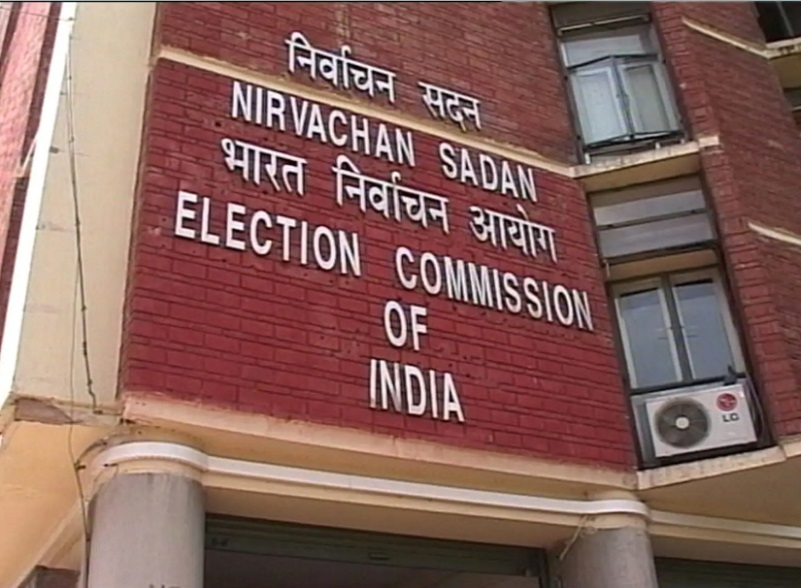
In a significant ruling concerning the powers of the Election Commission of India, the Calcutta High Court on March 31, 2026, dismissed a Public Interest Litigation (PIL) challenging the large-scale transfer of IAS and IPS officers in West Bengal ahead of the Assembly elections.
Bench and Background of the Elections Dispute
A Division Bench comprising Chief Justice Sujoy Paul and Justice Partha Sarathi Sen refused to interfere with the transfer orders issued after the election notification dated March 15, 2026.
The PIL was filed by advocate Arka Kumar Nag, who sought quashing of the transfer orders, alleging that the mass-scale reshuffling of top bureaucrats—including the Chief Secretary, Director General of Police, Home Secretary, District Magistrates, and Superintendents of Police—was arbitrary and violative of federal principles.
Court’s Key Observations on Elections-Related Transfers
The High Court held that merely because a large number of officers were transferred, the action cannot be termed arbitrary or mala fide. The Bench categorically observed:
“Merely because the ECI had transferred a sizable number of officers, it cannot be said that action is arbitrary, capricious or mala fide. More so, when similar or more number of transfers/posting of officers had taken place nationwide.”
Rejecting the argument that the transfers created an administrative vacuum, the Court stated:
“Thus, as such there is no vacuum created in the system or in the administrative arena.”
Further emphasizing continuity in governance during elections, the Bench noted:
“If officers are transferred for a short time i.e. till election, it cannot be said that administrative machinery in the State is paralysed and a ‘numb’ like situation has been created.”
Table of Contents
Limited Scope of Judicial Review in Election Administration
The Court highlighted the limited scope of judicial review in administrative matters, especially in the absence of any statutory violation. It observed:
“The ECI has taken administrative decisions to transfer/shift the officers. This is trite that scope of judicial review on administrative decisions is limited.”
Importantly, the Court noted that the petitioner failed to establish any breach of law or injury to public interest—an essential requirement for maintaining a PIL. It held:
“The existence of power with ECI is not in dispute. It could not be established that the power is used in an arbitrary manner, which resulted in any injury to public interest.”
No “Numb” Situation in State Administration During Elections
Addressing the claim that the State machinery was paralysed due to election-related transfers, the Bench observed:
“It is seen that when one officer is transferred, another has occupied his position. Thus, as such there is no vacuum created in the system or in the administrative arena.”
The Court further clarified that a practicing advocate cannot challenge such transfers unless public injury is demonstrated:
“The petitioner is a practising advocate and cannot have grievance against transfer of officers unless such transfers result in injury to public interest.”
Petitioner’s Arguments on Election Governance
Senior Advocate Kalyan Bandopadhyay, appearing for the petitioner, argued that the transfers amounted to a “wholesale dismantling of the State’s administrative machinery” and raised concerns about arbitrariness and federal imbalance during elections.
He questioned the extent of ECI’s powers under Article 324 of the Constitution, stating:
“I am well aware of supervisory power of ECI but the question is whether the ECI can act arbitrarily, whether ECI is bound by rule of law, whether it can destroy federal structural…”
He also argued:
“Entire power of running State cannot go to ECI. What will State do when number 1 person working is taken away.”

Court Declines to Entertain Collateral Issues
The Bench also refused to examine allegations relating to impeachment proceedings against Chief Election Commissioner Gyanesh Kumar, observing:
“More so, when no nexus between transfers and said motion could be established with accuracy and precision.”
Relief and Liberty Granted
While dismissing the PIL, the Court granted liberty to individually aggrieved officers to challenge their transfer orders in accordance with law, reiterating that transfer is an incident of service and election-related administrative decisions must be assessed within the framework of limited judicial review.
LATEST POSTS