
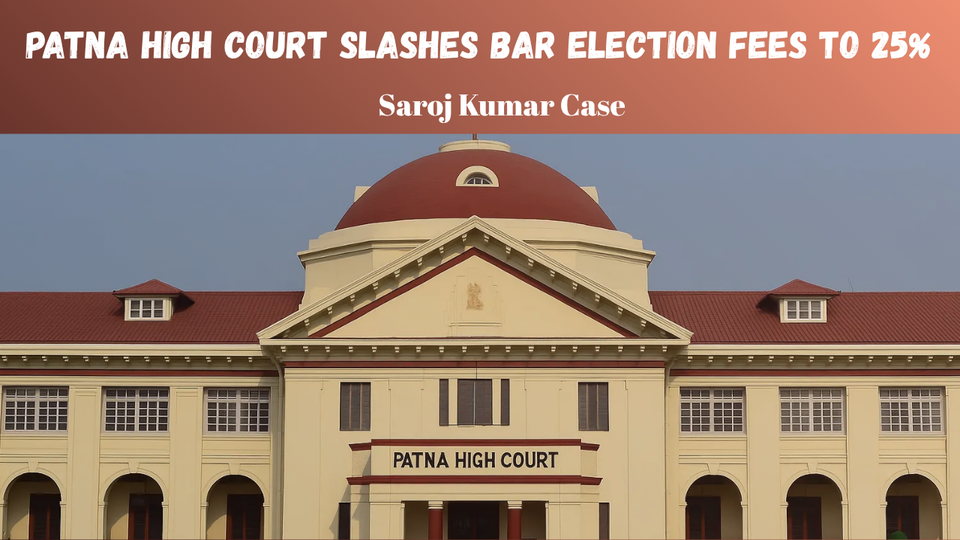
Patna High Court Slashes Bar Election Fees to 25% | Saroj Kumar Case Explained
Patna High Court resolves Bar election fee dispute in Saroj Kumar case, reduces nomination fees to 25%, ensures fair and democratic participation.
Patna, March 26, 2026: Reinforcing democratic participation within the legal fraternity, the Patna High Court in Saroj Kumar v. Bar Council of India & Ors. (Civil Writ Jurisdiction Case No. 4393 of 2026) resolved a dispute concerning exorbitant nomination fees for the Advocates’ Association elections. The matter was heard by Hon’ble Mr. Justice Ajit Kumar on 26 March 2026.
Table of Contents
Background: Sharp Fee Hike Triggers Legal Challenge
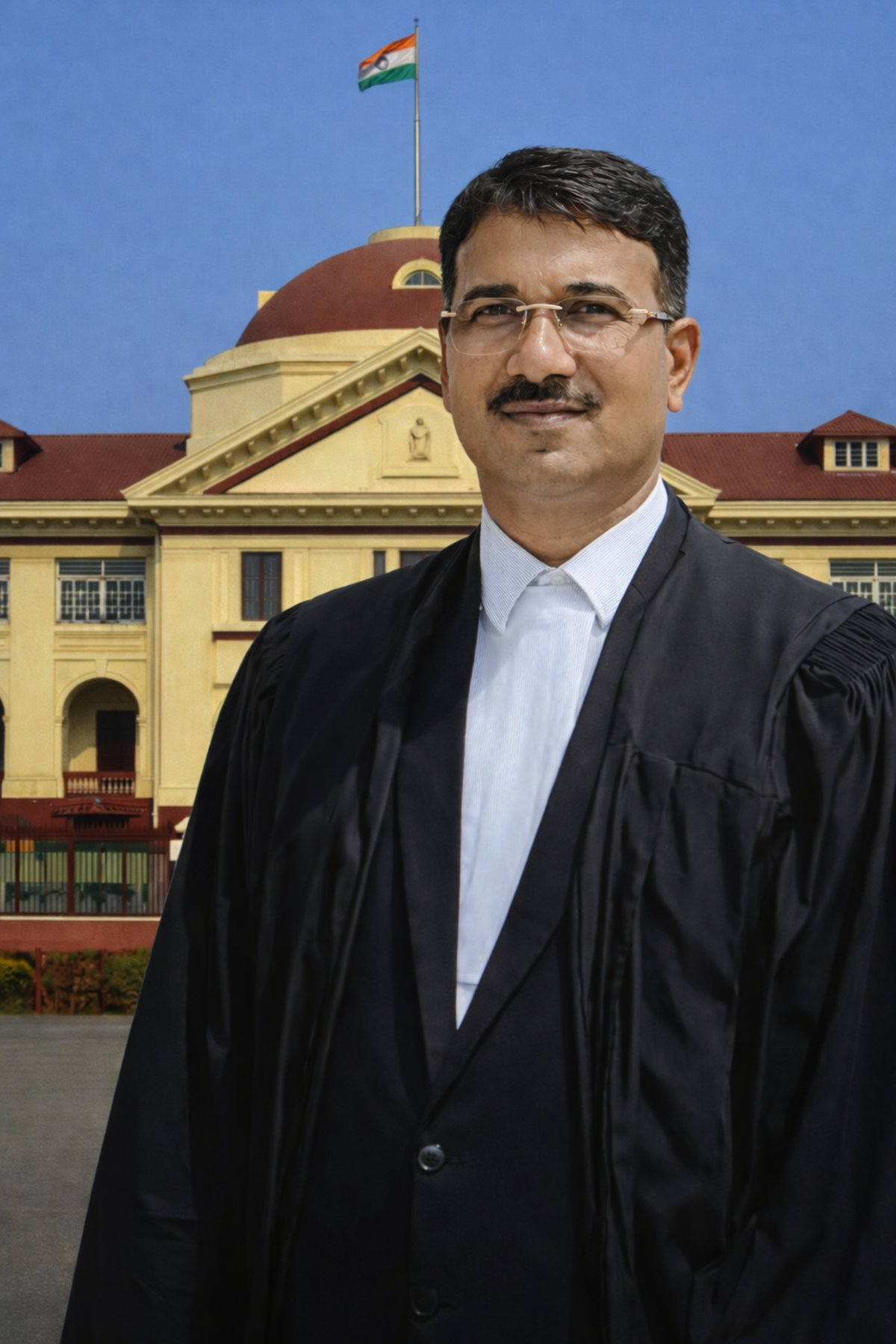
The petitioner, Saroj Kumar, a practicing advocate and member of the Advocates’ Association, challenged the election notification dated 17 March 2026, which scheduled elections for 17 April 2026.
The dispute arose after nomination fees were drastically increased to:
- ₹25,000 for President
- ₹20,000 for Secretary General
This marked a nearly 25-fold increase from the ₹500–₹1000 range in earlier elections.
Before approaching the Court, the petitioner had submitted a representation dated 18 March 2026 seeking a reduction of fees, which was not acted upon.
Statutory Framework and Legal Grounds
The petitioner relied on the “Uniform Rules for Bar/Advocates’/Lawyers’ Association of Bihar (Amendment, 2017)”, particularly Para 19(xiv), which prescribes modest nomination fees.
The Court also reproduced the broader Para 19 framework, outlining the entire election procedure, including voter lists, dispute mechanisms, and nomination requirements—highlighting the statutory scheme governing Bar elections.
The petitioner argued violation of:
- Article 14 (Equality)
- Article 19 (Freedom)
- Article 21 (Right to dignity)
He submitted:
“The exorbitant increase in the nomination fee serves no useful purpose except promoting corruption in the running of the Association.”
Stand of the Respondents
The Bihar State Bar Council defended the increase citing rising costs of conducting elections and financial constraints. It stated:
“the expenditure for holding election has gone high in comparison to the earlier election cost… a part the fund of the Association is meant for welfare of the Members… and that fund ought not be utilized for the election purposes.”
Court Proceedings: From Adjudication to Consensus
Importantly, the Court had earlier, by order dated 25 March 2026, directed stakeholders to deliberate on the issue and arrive at a fair solution.
Initially, a proposal was made to reduce the fees by 50%. However, during the hearing on 26 March 2026, the Court noted that:
- Members and prospective candidates were not satisfied with the 50% reduction
- They insisted on a further reduction
This led to fresh negotiations among:
- Bar Council Chairman
- Returning Officer
- Association office bearers
- Petitioner
The petitioner also expressed willingness to accept a fair consensus:
“whatever consensus proposal comes… shall be acceptable to the petitioner.”
Final Settlement: Fees Reduced to 25%
Ultimately, all stakeholders agreed that:
“the present nomination fees shall be reduced to 25% as of it was figured in Annexure-P/1.”
A Memorandum of Understanding (MoU) was executed and signed by all parties, recording:
“it was mutually agreed that the prescribed fee… shall be reduced to 25%… none of the parties will challenge the same before any forum of Law.”
This “no appeal” clause is a notable feature, ensuring finality to the dispute.
Judgment and Key Directions
Taking note of the amicable settlement, the Court held:
“since the issues have amicably been settled… nothing survives for adjudication in the instant writ application.”
The writ petition was accordingly disposed of with directions:
- Revised fees to be formally notified
- Elections to be conducted ensuring free and fair process
- Returning Officer to function under the supervision of the Bar Council’s Executive Committee (acting as an election authority)
Additional Observation: Campaign Regulation
The Court also addressed concerns raised through a supplementary affidavit regarding campaign practices and observed:
“limit the use and distribution of handbills/pamphlets… which destroys the conditions of the buildings… and… is a threat to the environment.”
Significance of the Ruling
- Promotes Democratic Access: Removes financial barriers for advocates
- Ensures Rule Compliance: Reinforces adherence to statutory Bar rules
- Judicial Pragmatism: Highlights the Court’s role as a facilitator of consensus
- Institutional Accountability: Prevents arbitrary decision-making by Bar bodies
Conclusion
While the Court refrained from a detailed constitutional ruling, its intervention ensured a balanced and practical outcome. The decision underscores that fairness, accessibility, and consensus remain central to democratic functioning—even within professional institutions.
READ JUDGEMENT
ALSO READ: “AI-Generated Fake Judgments a “Menace” Across Courts: Supreme Court Cautions Litigants and Lawyers”
READ LETTER
- Supreme Court Upholds Murder Conviction in Matrimonial Home Death Case, Draws Adverse Inference Under Section 106 Evidence Act
- Delhi High Court Dismisses PIL Seeking Deregistration of AAP, Disqualification of Arvind Kejriwal From Elections
- Justice Swarana Kanta Sharma Recuses From Delhi Excise Policy Case After Initiating Contempt Against Arvind Kejriwal, AAP Leaders
- Supreme Court Restores Kuldeep Sengar’s Life Sentence in Unnao Rape Case, Sets Aside Delhi HC Order Suspending Sentence
- Frictionless Relationship Between Bar and Bench Furthers Justice: Supreme Court Closes Contempt Case Against Yatin Oza
- Political Victimisation Claim: Punjab Minister Sanjeev Arora Seeks Parity With BJP MPs In Plea Against ED Arrest Before P&H High Court