
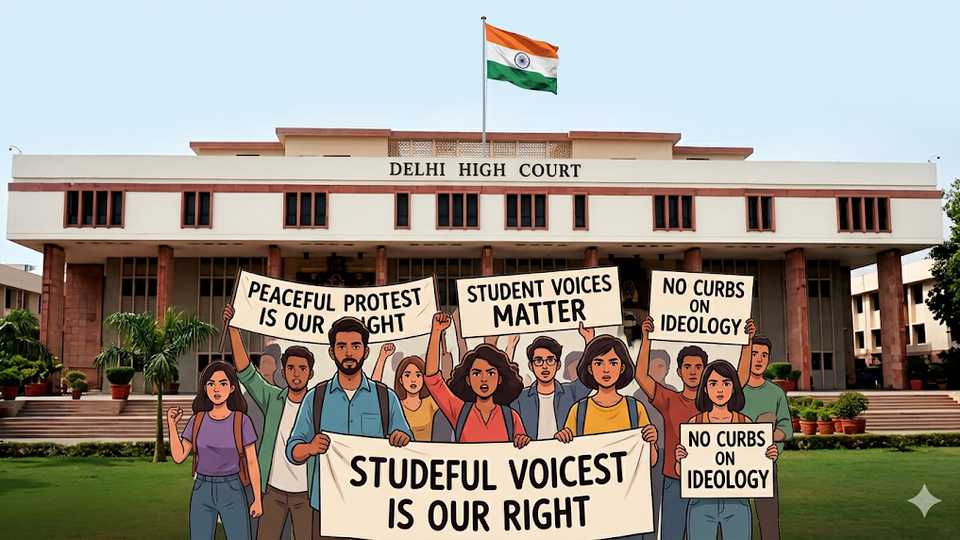
Delhi High Court: Universities Cannot Suppress Peaceful Student Protests Over Ideological Differences
Recently, the Delhi High Court has ruled that universities cannot restrict peaceful student protests merely due to ideological differences. The judgment reiterates that academic institutions must act as spaces that encourage dialogue, debate, and dissent rather than suppress them.
Table of Contents
Background of the Case
The case before the Delhi High Court concerned restrictions imposed by a university administration on student protests within the campus. The petitioners argued that such curbs infringed upon their fundamental rights under Article 19(1)(a) and Article 19(1)(b) of the Constitution of India, which guarantee freedom of speech and peaceful assembly.
The dispute raised critical questions regarding the extent to which universities can regulate student expression while maintaining order and discipline.
Bench and Judicial Consideration
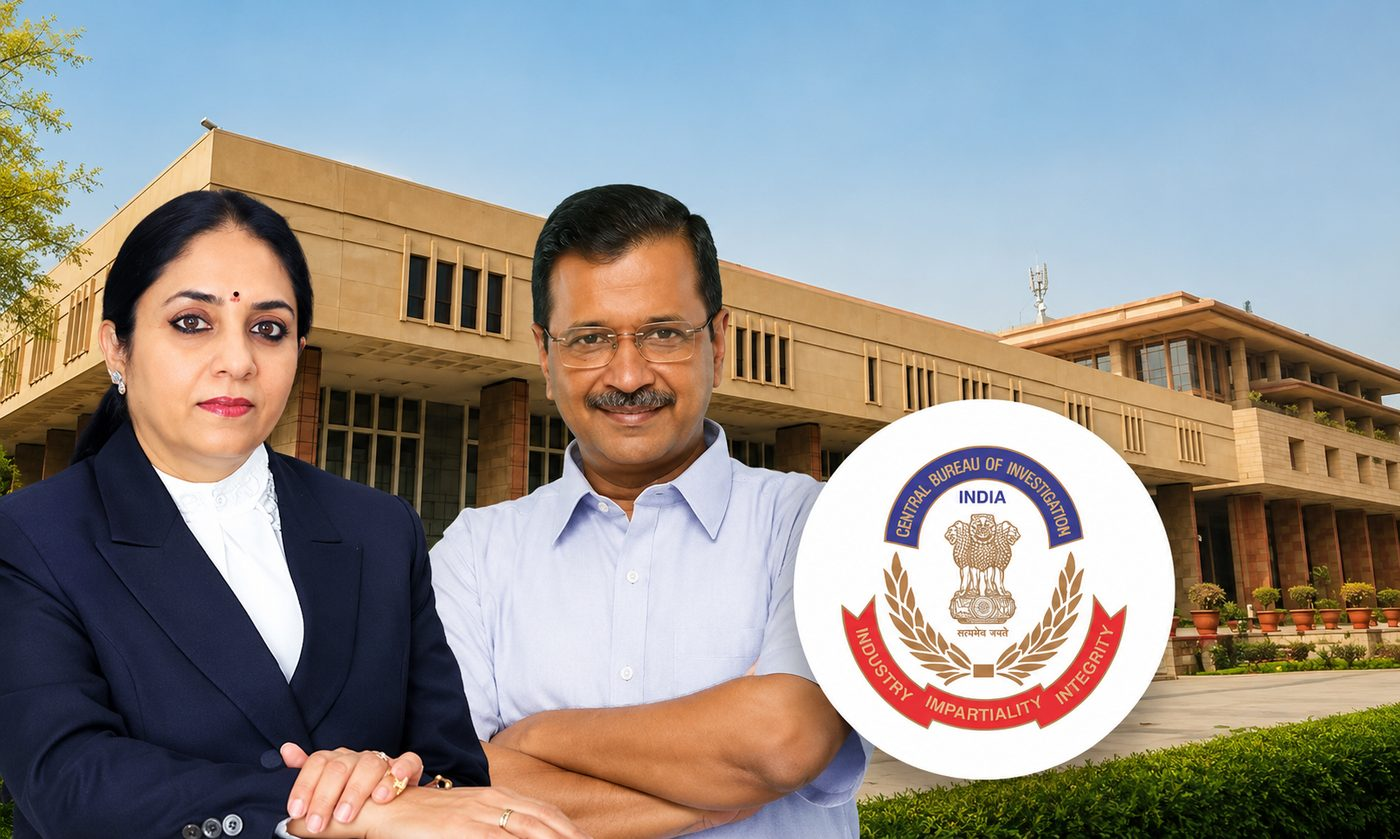
The matter was adjudicated by the Delhi High Court, where Justice Jasmeet Singh examined the legality and proportionality of restrictions imposed on peaceful demonstrations by students. The Court emphasized the constitutional framework governing free speech and assembly.
Key Observations by the Court
The Court made strong observations about the role of universities in a democratic society, stating that institutions of higher education must nurture independent thinking rather than enforce conformity.
Among the central findings, the Court held:
“Universities cannot curb peaceful student protest over ideological differences.”
Further stressing the importance of intellectual freedom, the Court observed:
“Universities must foster free thought, not suppress dissent.”
In elaborating on the role of educational institutions, the Court noted that:
“Universities are spaces for free exchange of ideas and must encourage critical thinking.”
The Court also highlighted that disagreement and debate are essential components of academic growth and democratic culture.
Additional Quotations from the Judgment
The ruling, as reflected across the reports, includes important remarks reinforcing student rights:
“The expression of dissent is a vital component of any vibrant democracy.”
“Merely because a section of students holds views that are not aligned with the administration cannot be a ground to stifle their voice.”
“Peaceful protests, as long as they do not disrupt public order, deserve constitutional protection.”
These observations collectively underline that dissent—when expressed peacefully—cannot be treated as misconduct.
Legal Framework and Constitutional Analysis
The Court’s reasoning was grounded in constitutional guarantees, particularly:
- Article 19(1)(a) – Freedom of speech and expression
- Article 19(1)(b) – Right to assemble peacefully
The Court reiterated that restrictions under Article 19(2) must satisfy the test of reasonableness and cannot be arbitrary or excessive. Any administrative action that disproportionately curtails student expression would fail constitutional scrutiny.
Court’s Reasoning
The High Court clarified that:
- Universities must act as marketplaces of ideas, where diverse viewpoints coexist.
- Peaceful protests do not inherently threaten discipline or institutional functioning.
- Suppressing dissent can have a chilling effect on academic freedom.
The Court emphasized that regulations should facilitate order without extinguishing fundamental rights.
Significance of the Judgment
This ruling is a crucial development in the context of student rights and campus governance in India. It establishes that:
- Ideological differences cannot justify suppression of peaceful protest.
- Student participation in discourse is integral to democracy.
- Universities must align their policies with constitutional principles.
The judgment is expected to guide educational institutions in framing policies that balance discipline with democratic freedoms.
Conclusion
The Delhi High Court’s ruling reinforces the foundational democratic principle that dissent must be protected, especially within academic spaces. By safeguarding peaceful student protests, the Court has ensured that universities remain environments that promote intellectual independence and constitutional values.
ALSO READ: “Delhi High Court Refuses to Quash CBI FIR Against Lalu Yadav in Land-for-Jobs Scam”
READ JUDGEMENT
RECENT POSTS
- Supreme Court Upholds Murder Conviction in Matrimonial Home Death Case, Draws Adverse Inference Under Section 106 Evidence Act
- Delhi High Court Dismisses PIL Seeking Deregistration of AAP, Disqualification of Arvind Kejriwal From Elections

- Justice Swarana Kanta Sharma Recuses From Delhi Excise Policy Case After Initiating Contempt Against Arvind Kejriwal, AAP Leaders
- Supreme Court Restores Kuldeep Sengar’s Life Sentence in Unnao Rape Case, Sets Aside Delhi HC Order Suspending Sentence
- Frictionless Relationship Between Bar and Bench Furthers Justice: Supreme Court Closes Contempt Case Against Yatin Oza
- Political Victimisation Claim: Punjab Minister Sanjeev Arora Seeks Parity With BJP MPs In Plea Against ED Arrest Before P&H High Court