
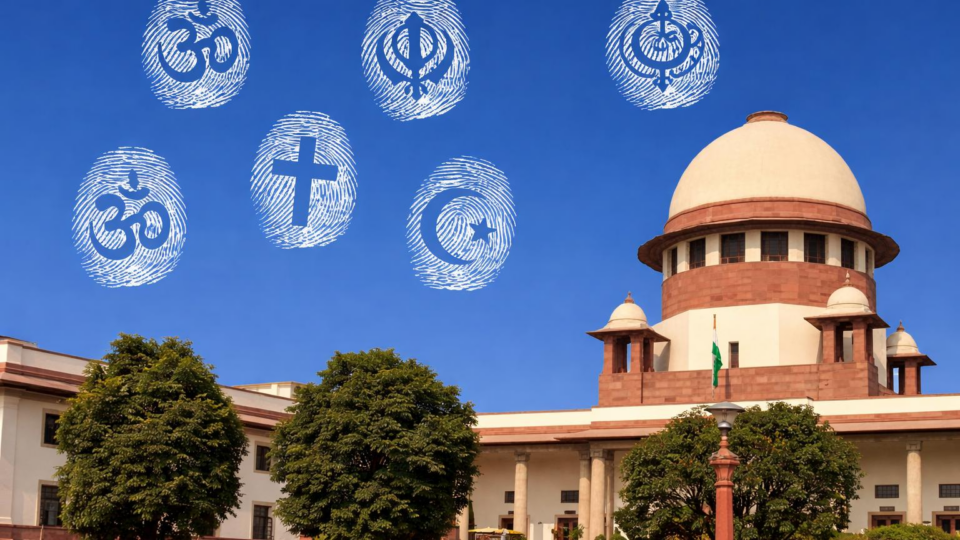
Supreme Court: Conversion Ends Scheduled Caste Status Under 1950 Order
The Supreme Court ruled that conversion to religions other than Hinduism, Sikhism, or Buddhism results in loss of Scheduled Caste status. Read full judgment, bench details, and implications.
On March 24, 2026, the Supreme Court of India reaffirmed that individuals who convert to religions other than Hinduism, Sikhism, or Buddhism cannot retain their Scheduled Caste (SC) status. The ruling reiterates the legal position under the Constitution (Scheduled Castes) Order, 1950, and has wide-ranging implications for reservation benefits.
Table of Contents
Bench and Case Background
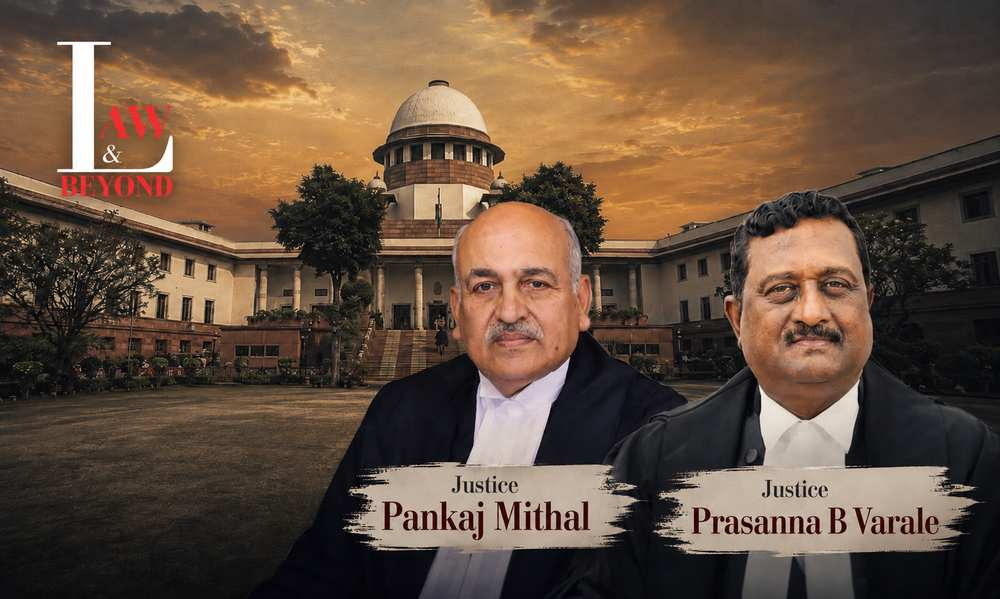
The judgment was delivered by a two-judge bench led by Justice P.K. Mishra, while upholding a decision of the Andhra Pradesh High Court dated April 30, 2025. The case involved a dispute over whether a person who had converted to Christianity could continue to claim SC status and protections under law.
Core Legal Issue
The central question before the Court was whether a person, after converting to a religion not specified under the 1950 Presidential Order, could continue to claim benefits reserved for Scheduled Castes.
Statutory Framework
The Court relied heavily on Paragraph 3 of the Constitution (Scheduled Castes) Order, 1950, which states that only persons professing:
- Hinduism
- Sikhism (added in 1956)
- Buddhism (added in 1990)
can be recognized as Scheduled Castes.
Supreme Court’s Observations
Reaffirming the statutory bar, the Court categorically held:
“A person who professes a religion other than Hinduism, Sikhism or Buddhism cannot be recognised as a member of a Scheduled Caste.”
The bench further clarified the absolute nature of this restriction, observing:
“No statutory benefit, protection or reservation or entitlement… can be claimed by or extended to any person who… is not deemed to be a member of the Scheduled Caste. This bar is absolute and admits no exception.”
The Court also emphasized that:
“A person can’t simultaneously profess and practice a religion other than the one specified… and claim membership of the Scheduled Caste.”
Reasoning of the Court
The Supreme Court reiterated that the concept of Scheduled Castes is rooted in the historical context of caste-based discrimination within specific religions. Once a person converts to another religion, the legal foundation for claiming SC status ceases.
The Court also noted that in the present case, there was no evidence of reconversion or acceptance back into the original caste community, which could have altered the legal position.
Implications of the Judgment
The ruling has significant consequences:
- Loss of reservation benefits in education, employment, and political representation upon conversion
- Reinforcement of the exclusive scope of SC status under existing constitutional provisions
- Impact on ongoing debates regarding extension of SC status to Dalit converts to Christianity and Islam
Broader Legal Context
The issue of SC status post-conversion has been subject to long-standing constitutional debate. Courts have consistently upheld the validity of the 1950 Order, while petitions challenging its exclusionary nature remain pending consideration.
The present ruling strengthens the existing legal position and aligns with earlier judicial precedents that link SC identity to specific religious frameworks.
Conclusion
The Supreme Court’s judgment firmly reiterates that conversion to religions outside Hinduism, Sikhism, or Buddhism results in the loss of Scheduled Caste status. While the ruling is consistent with the statutory framework, it continues to fuel broader constitutional discussions on equality, discrimination, and the scope of reservation policies in India.
ALSO READ: “Supreme Court Upholds Confiscation Against Spouse After Public Servant’s Death Under Bihar Special Courts Act”
READ JUDGEMENT
- Supreme Court Upholds Murder Conviction in Matrimonial Home Death Case, Draws Adverse Inference Under Section 106 Evidence Act
- Delhi High Court Dismisses PIL Seeking Deregistration of AAP, Disqualification of Arvind Kejriwal From Elections
- Justice Swarana Kanta Sharma Recuses From Delhi Excise Policy Case After Initiating Contempt Against Arvind Kejriwal, AAP Leaders
- Supreme Court Restores Kuldeep Sengar’s Life Sentence in Unnao Rape Case, Sets Aside Delhi HC Order Suspending Sentence

- Frictionless Relationship Between Bar and Bench Furthers Justice: Supreme Court Closes Contempt Case Against Yatin Oza
- Political Victimisation Claim: Punjab Minister Sanjeev Arora Seeks Parity With BJP MPs In Plea Against ED Arrest Before P&H High Court