
Supreme Court Rejects Mandatory Menstrual Leave Plea, Says It May Harm Women’s Careers
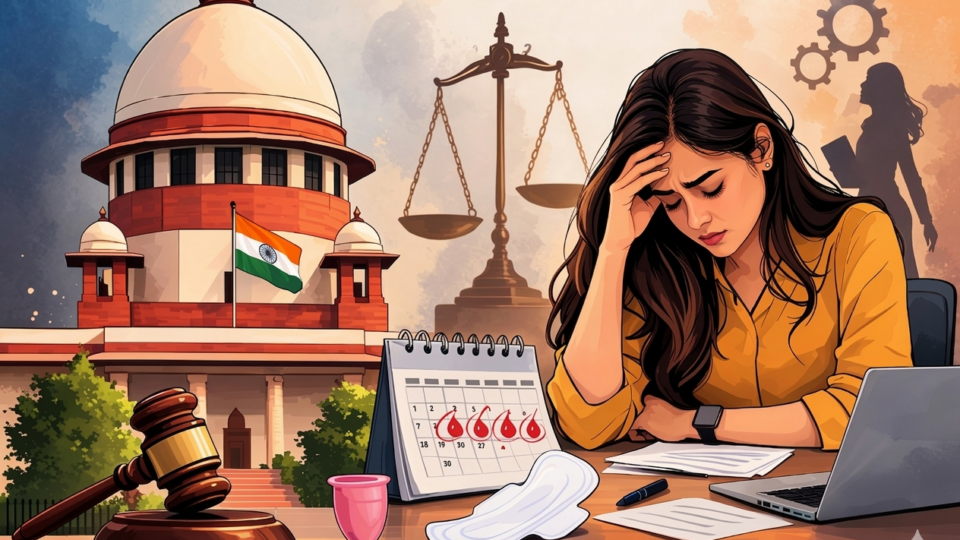
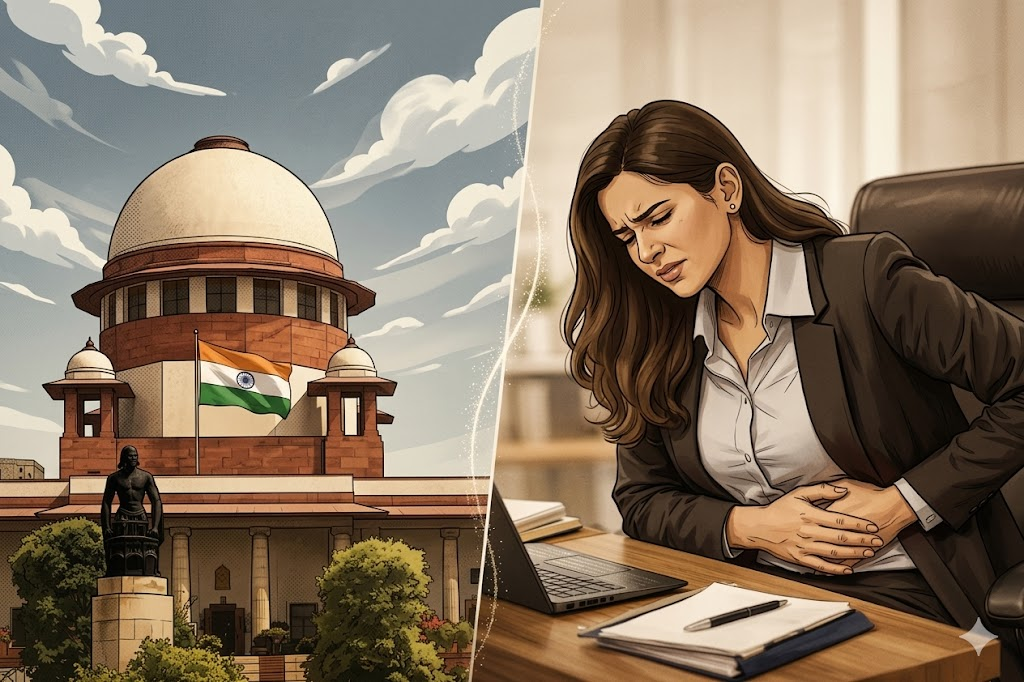
In a significant observation on workplace equality and gender policies, the Supreme Court of India refused to entertain a Public Interest Litigation (PIL) seeking a direction to implement mandatory menstrual leave for women across workplaces and educational institutions. The Court cautioned that making such leave compulsory by law may unintentionally harm women’s employment prospects and reinforce gender bias in hiring practices.
The matter was heard by a Bench led by Chief Justice Surya Kant. During the hearing, the Court raised serious concerns about the broader consequences of mandating menstrual leave through judicial directions. While acknowledging that menstrual pain is a genuine health issue faced by many women, the Bench stated that compulsory leave could create unintended barriers for women in the workforce.
Supreme Court Raises Concerns Over Mandatory Menstrual Leave
The petition sought directions to the Union Government and State Governments to frame a policy mandating menstrual leave for women employees and female students. The petitioner argued that menstrual pain and related health issues significantly affect women’s productivity and therefore require legal recognition through a structured leave policy.
However, the Supreme Court expressed apprehension that such a policy, if made mandatory by law, might discourage employers from hiring women.
During the hearing, the Bench remarked:
“The moment you say compulsory in law, nobody will give them jobs, nobody will take them in judiciary or government jobs, their career is over.”
The Court indicated that employers may view mandatory menstrual leave as an additional burden and could prefer hiring male employees instead, thereby negatively affecting women’s participation in the workforce.
Table of Contents
Court Warns Against Reinforcing Gender Stereotypes
The Bench also cautioned that such policies may unintentionally reinforce stereotypes about women’s capabilities in professional environments. According to the Court, legal mandates that treat women differently in employment contexts must be carefully evaluated to ensure they do not undermine the principle of equality.
The Court observed:
“These are plans to call women inferior.”
Through this observation, the Bench highlighted the risk that mandatory menstrual leave could create a perception that women require special treatment due to biological differences, which could further deepen workplace bias.
Policy Decision Should Be Left to the Government
The Supreme Court further emphasized that the issue of menstrual leave involves complex policy considerations, including labour law, workplace welfare, gender equality, and economic implications. Therefore, the Court stated that such matters are best handled by the executive and legislature rather than through judicial directives.
The Bench observed:
“This is actually a government policy aspect and not for the courts to look into.”
The Court suggested that the Union Government and State Governments may examine the issue in consultation with stakeholders, including employers, employees, public health experts, and labour organizations.
Existing Menstrual Leave Policies in India
While refusing to mandate menstrual leave, the Court clarified that voluntary policies introduced by institutions or governments are not problematic. In fact, several organizations and educational institutions in India have already implemented menstrual leave policies as welfare measures.
Some states and universities have adopted limited menstrual leave provisions to support women students and employees. However, these policies have been introduced voluntarily rather than through a nationwide legal mandate.
A Continuing Debate on Workplace Equality
The debate around menstrual leave has been growing in India in recent years. Advocates argue that menstrual health is a legitimate workplace issue that deserves recognition through supportive policies. They believe such measures promote dignity, health awareness, and gender-sensitive workplaces.
On the other hand, critics argue that mandatory menstrual leave may unintentionally lead to discrimination during hiring processes. The Supreme Court’s observations reflect this concern, emphasizing the need to balance welfare initiatives with equal employment opportunities.
By declining to intervene, the Supreme Court highlighted that policy-making on sensitive socio-economic issues should be carefully designed through legislative and administrative processes rather than judicial mandates.
The ruling underscores the Court’s cautious approach toward policy intervention while encouraging a broader national conversation on menstrual health, workplace rights, and gender equality in India.
ALSO READ:-“Supreme Court Upholds Conviction of Excise Inspector in 35-Year-Old Bribery Case, Reduces Sentence Considering Age“
LATEST POSTS