
Supreme Court Sets Aside Allahabad HC Directions in Bail Proceedings Under Section 483 BNSS
The Supreme Court of India has set aside directions issued by the Allahabad High Court concerning the service of summons and execution of coercive processes, holding that such sweeping directions could not have been issued while exercising bail jurisdiction under Section 483 of the Bharatiya Nagarik Suraksha Sanhita, 2023 (BNSS).
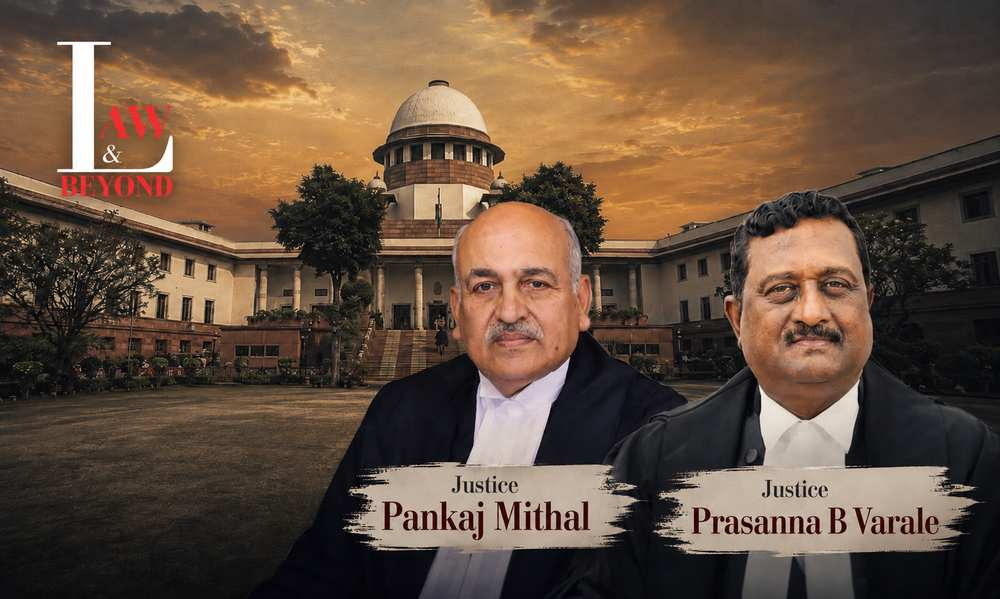
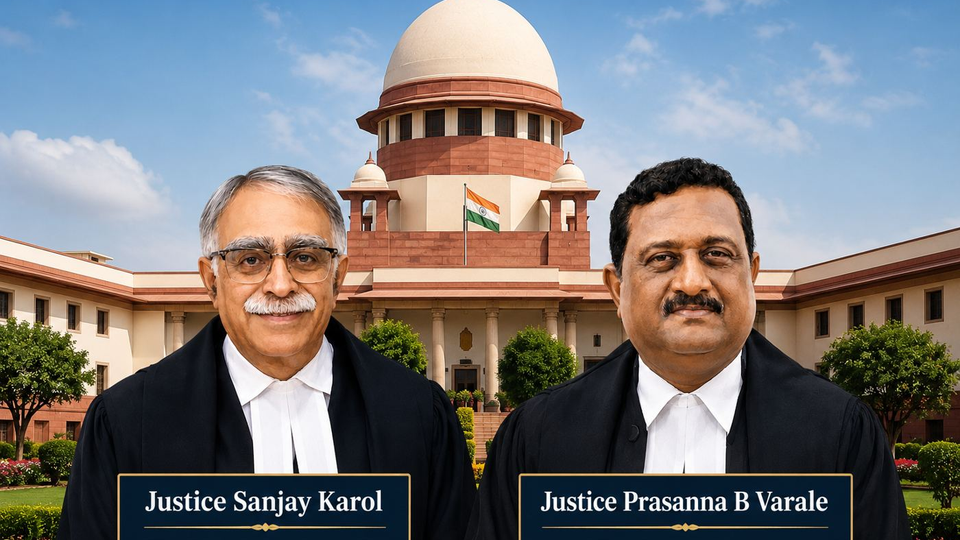
A Division Bench comprising Justice Sanjay Karol and Justice Prasanna B. Varale delivered the judgment in Rambalak v. State of U.P., reported as 2026 (SC) 527 and bearing Neutral Citation 2026 INSC 511.
The case arose from a 2002 criminal matter registered under Sections 419, 420, 467, 468 and 471 of the Indian Penal Code (IPC). The appellant, Rambalak, had challenged the Allahabad High Court’s order rejecting his second bail application.
Supreme Court Examines Scope of Bail Jurisdiction Under Section 483 BNSS
While hearing the appeal, the Supreme Court noted that the primary issue was not merely the rejection of bail, but the far-reaching directions issued by the Allahabad High Court to trial courts regarding the issuance of summons under Sections 62 and 69 of the Code of Criminal Procedure (CrPC) and the adoption of coercive measures against persons allegedly delaying proceedings.
The Allahabad High Court had directed trial courts to follow earlier decisions in Bhanwar Singh @ Karamvir v. State of U.P. (2023) and Jitendra v. State of U.P. (2023), where concerns were raised regarding delays in the execution of summons and production of witnesses.
In those proceedings, the High Court had called for affidavits from the Uttar Pradesh Additional Chief Secretary (Home) and the Director General of Police regarding failures in service of summons and execution of coercive processes. Subsequently, the State authorities introduced an administrative framework involving district nodal officers, central process registers, periodic monitoring, and departmental accountability mechanisms for police officials responsible for serving court processes.
The High Court later treated those executive measures as judicially enforceable directions.
Table of Contents
“Constitutional Power Cannot Overshadow Statutory Power”
Referring to its recent judgment in State of U.P. v. Anurudh (2026), the Supreme Court reiterated that courts exercising bail jurisdiction are confined to determining whether an accused person should remain in custody or be released pending trial.
In Anurudh, the Court had similarly disapproved of Allahabad High Court directions issued in bail proceedings mandating scientific age determination in cases under the Protection of Children from Sexual Offences Act, 2012, despite the existing statutory framework under the Juvenile Justice (Care and Protection of Children) Act, 2015.
The Bench observed:
“The constitutional power cannot overshadow the statutory power, enlarging its scope beyond what has been envisaged by the statute.”
The Court held that the Allahabad High Court had committed a jurisdictional error by issuing such extensive directions while deciding a bail application under Section 483 BNSS.
The Bench stated:
“In view of this short discussion alone, we are of the considered view that the impugned judgment in so far as it directs following what has been laid in the earlier bail orders, cannot be sustained and has to be set aside. Ordered accordingly.”
Administrative Measures by State Authorities to Continue
Although the Supreme Court set aside the judicial directions, it clarified that the administrative steps already implemented by Uttar Pradesh authorities would continue independently.
The Court observed:
“However, in the interest of justice we direct that the steps that have been taken by the State authorities shall remain unaffected and continue to function independent of the orders in which they stood issued. The State shall be at liberty to modify the same to be in consonance with the prevalent laws of the land should the need so arise.”
The Bench further confirmed its interim order dated November 26, 2025, through which the appellant had already been granted bail.
Appearance of Counsel
The appellant was represented by Advocate Uday Prakash Yadav along with AOR Ramjee Pandey, Advocates Sneha Singh, Ravi Pandey, and Anugrah Singh. The respondent-State was represented by AOR Akshay Amritanshu and Advocate Sarthak Srivastava. Ms. Akriti Chaubey appeared as Amicus Curiae.
Significance of the Judgment
The ruling is important because it reinforces the principle that courts exercising statutory bail jurisdiction cannot issue broad policy-oriented directions unrelated to the limited scope of bail adjudication. The judgment also underscores the Supreme Court’s view that constitutional status of High Courts cannot be used to expand statutory powers beyond legislative intent.
READ JUDGMENT:
LATEST POSTS: