
Judges Who Fall Prey to Greed Must Be Weeded Out: Justice BV Nagarathna on Judicial Integrity & AI
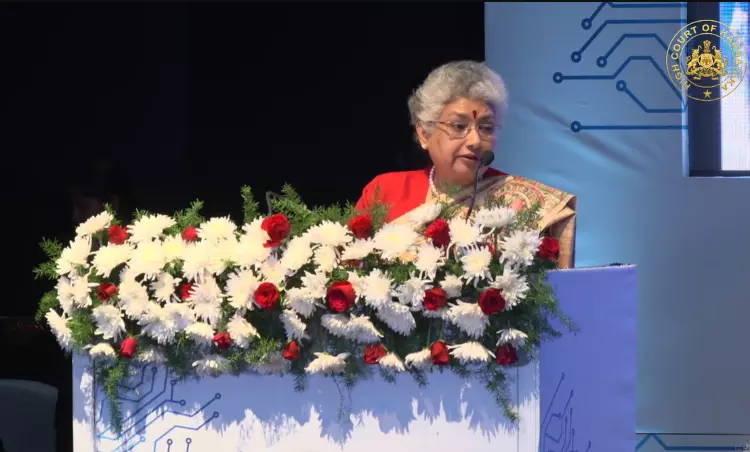
Highlighting judicial ethics, independence, and emerging technological challenges, Supreme Court judge Justice BV Nagarathna called for strict action against judges who succumb to greed and fail to uphold the integrity of the institution. She delivered these remarks at the 22nd Biennial State Level Conference of Judicial Officers held in Bengaluru, Karnataka, themed “Reimagining the Judiciary in the Era of Artificial Intelligence.”
Table of Contents
Strong Warning Against Judicial Misconduct
Justice Nagarathna underscored that financial impropriety and moral compromise among judges cannot be tolerated, particularly in light of improved pay structures.
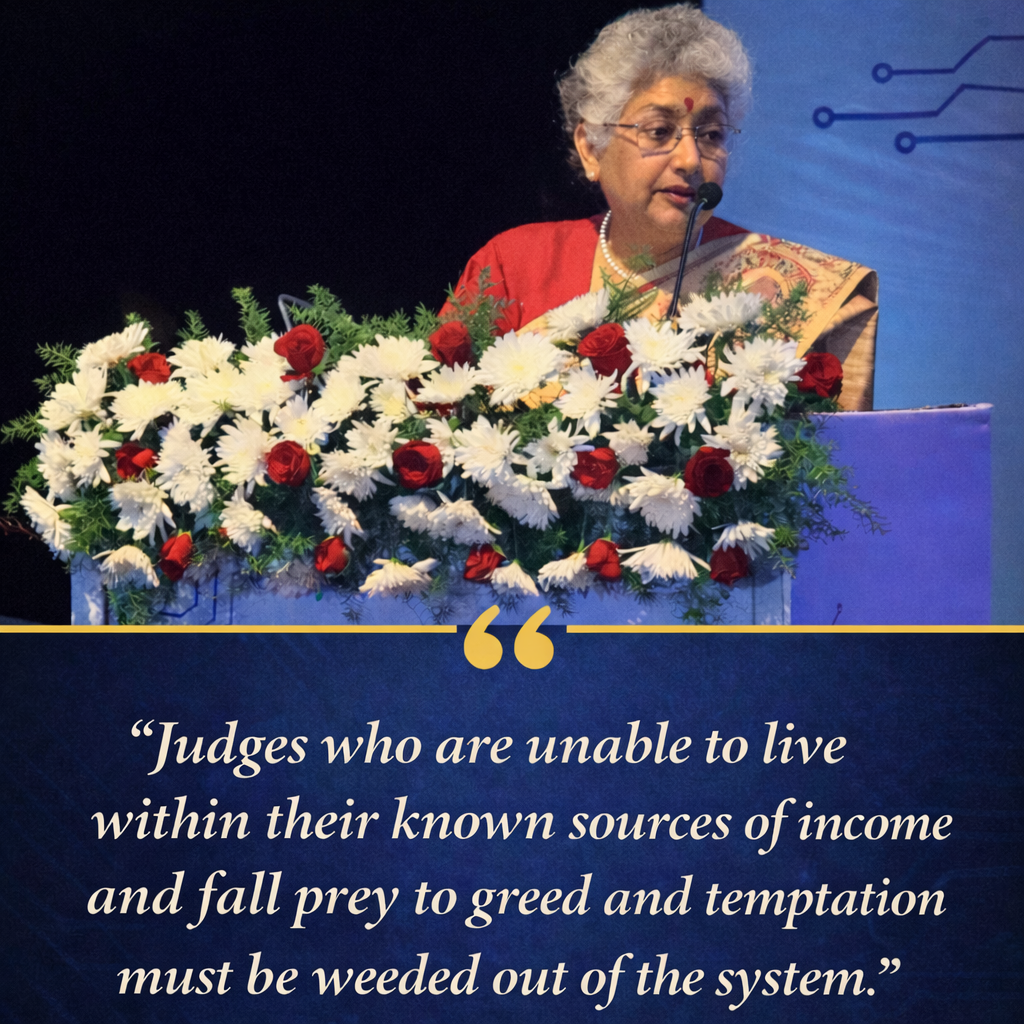
“Judges who are unable to live within their known sources of income and fall prey to greed and temptation must be weeded out of the system.”
She further noted that the Supreme Court has already accepted the recommendations of the 2nd National Judicial Pay Commission, resulting in enhanced salaries and allowances for district judiciary judges:
“There has been adequate increase in salaries and allowances for the Judges in the District Judiciary, thanks to the Pay Commission’s recommendations being accepted by the Supreme.”
Despite such improvements, she stressed that ethical lapses remain unjustifiable.
Judicial Independence and External Pressures
Emphasizing the need for fearless adjudication, Justice Nagarathna cautioned judges against any form of external influence, including from within the judiciary itself:
“Judges must be free from external pressures or from their colleagues. They must develop courage and independence. There cannot be any “co-ordination” in decision making. A tainted decision by a Judge is a black mark on the Judge and on the Judiciary itself. Hence, let us realise and be conscious of our duty to the litigant public and to the nation.”
Her remarks reinforced the principle that judicial independence is central to maintaining public trust in the legal system.
Concerns Over Artificial Intelligence in Courts
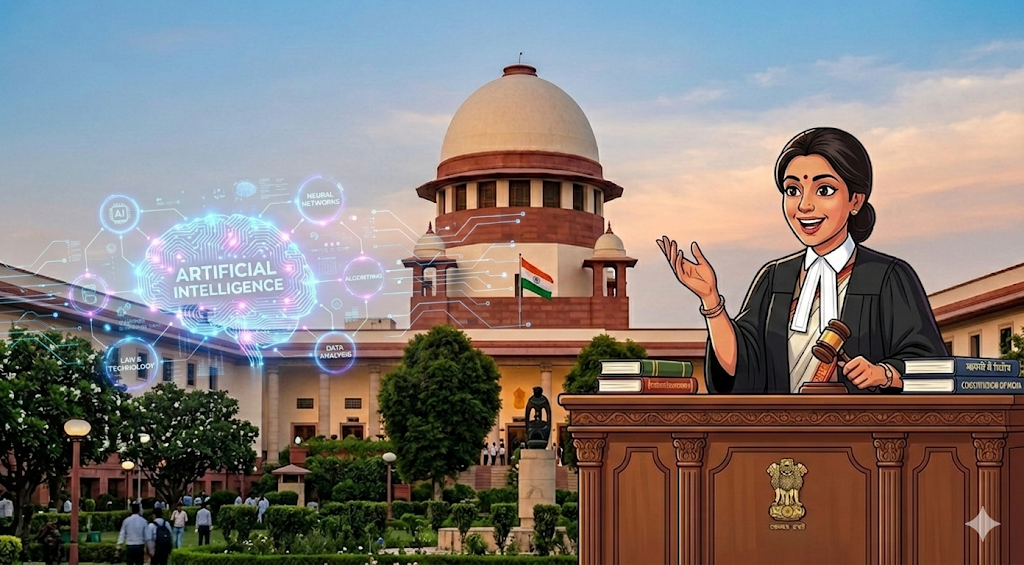
A key highlight of her speech was the growing reliance on artificial intelligence in legal research. Justice Nagarathna raised serious concerns about the accuracy and reliability of AI-generated content, citing real instances encountered in court:
“There have already been instances where AI has produced incorrect or even entirely fabricated case law citations even in the Supreme Court before my Bench.”
She specifically mentioned a fabricated case titled “Mercy vs. Mankind” that was cited before her bench, as well as another instance where a judgment was incorrectly quoted. Expressing concern over such developments, she stated:
“The time has now come for the learned advocates who rely upon judicial precedents to also issue a certificate that the judgments relied upon are authentic and have been reported in the relevant journals.”
Reiterating the role of human judgment, she concluded:
“The future of justice cannot be shaped by AI, but by judges only; supported by tools, but guided always by constitutional values, rule of law, and commitment to equity and fairness.”
She also stressed that judicial independence includes independence from undue AI influence.
Role of High Courts and Article 235
Justice Nagarathna highlighted the responsibility of High Courts in ensuring the welfare and morale of the district judiciary. Referring to Article 235 of the Constitution, she stressed the importance of fairness in administrative functions such as promotions, postings, transfers, and leave.
“A fair, transparent and responsive administration by High Courts is essential to preserve both the independence and morale of Judges at the district level.”
She also emphasized the role of High Court Registries:
“No judicial officer must feel that he/she has been left in the lurch only because the Registry of the High Court is not taking necessary steps at an appropriate time to assuage their genuine grievances.”
Need for Protection and Inclusion of Women Judges
Addressing gender-related concerns, Justice Nagarathna called for stronger institutional measures to support women in the judiciary:
“There must be safety, dignity, and enabling work conditions for women Judges.”
She elaborated that such support must go beyond infrastructure:
“This includes not just physical infrastructure but also institutional sensitivity and protection against bias or harassment. Strengthening these aspects is integral to building a Nyaayapaalika (न्यायपालिका) that is not only efficient but also inclusive and secure for all its members.”
Commendation of Karnataka Judiciary and Dignitaries Present
Justice Nagarathna also commended the Karnataka district judiciary, describing it as one of the best in the country. The conference witnessed the presence of several eminent dignitaries, including Chief Justice of India Surya Kant, Justice Aravind Kumar, Karnataka High Court Chief Justice Vibhu Bakhru, and Karnataka Chief Minister Siddaramaiah, among other members of the judicial fraternity.
Conclusion
Justice Nagarathna’s address serves as a comprehensive reflection on the present and future of the judiciary—balancing ethical accountability, institutional transparency, technological caution, and inclusivity. Her remarks reinforce that while tools like AI may assist the judiciary, the ultimate responsibility of delivering justice rests firmly on human conscience guided by constitutional principles.
LATEST POSTS:
- Supreme Court’s Powerful Relief To Murder Convict After 22 Years In Jail; Faults Orissa HC For Rejecting Appeal On Delay
- Supreme Court Questions Delhi High Court Ruling on Low Attendance for Law Students, Seeks BCI’s Stand
- Union Cabinet Approves Key Move to Increase Supreme Court Strength to 38 Judges
- Supreme Court Clarifies Limits of Article 227: High Courts Cannot Substitute Plausible Views of Execution Courts
- Shocking Delhi Judge Death: 30-Year-Old Judicial Officer Found Dead, Family Alleges Harassment

- Breaking: Supreme Court Declines to Interfere in TMC Plea on Bengal Vote Counting, Orders Strict Compliance with ECI Circular