

Supreme Court Stays UGC Equity Regulations 2026 Over Caste Discrimination Concerns
New Delhi, January 29, 2026:
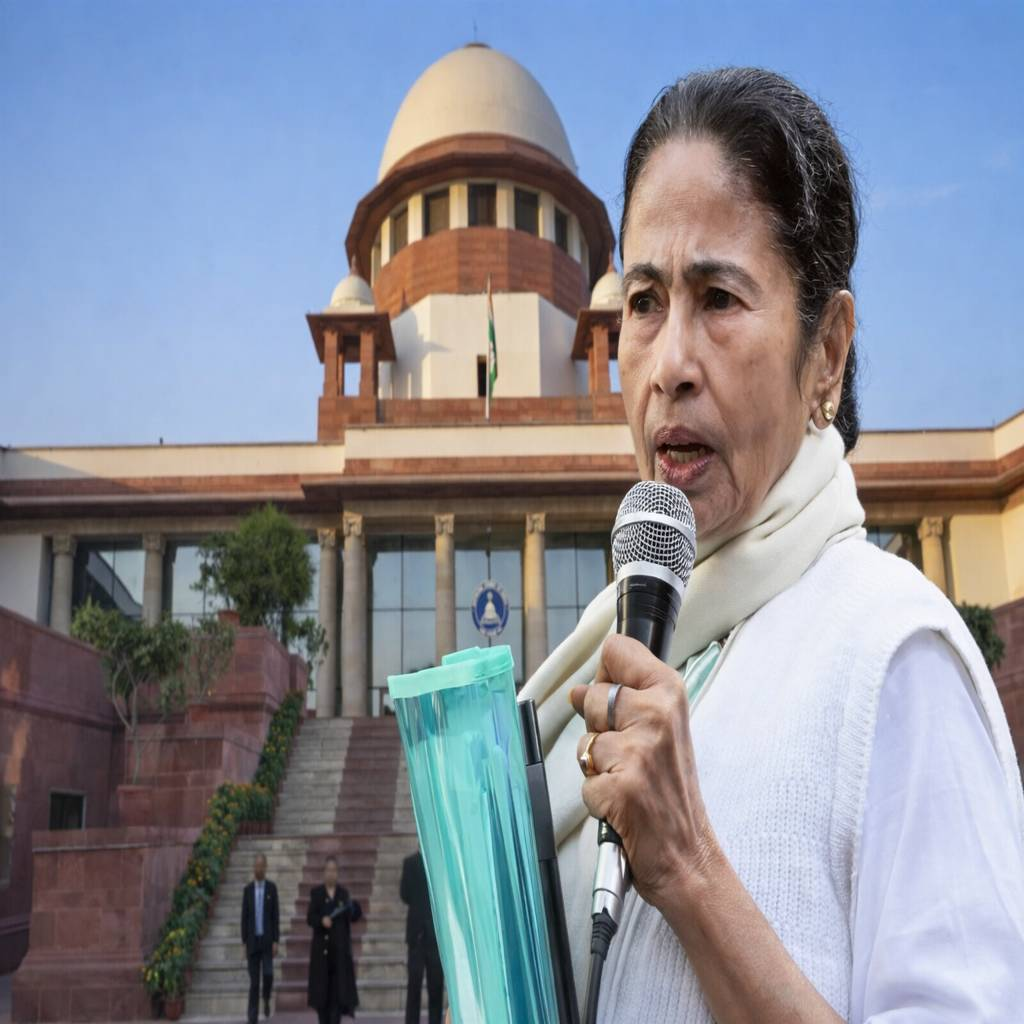
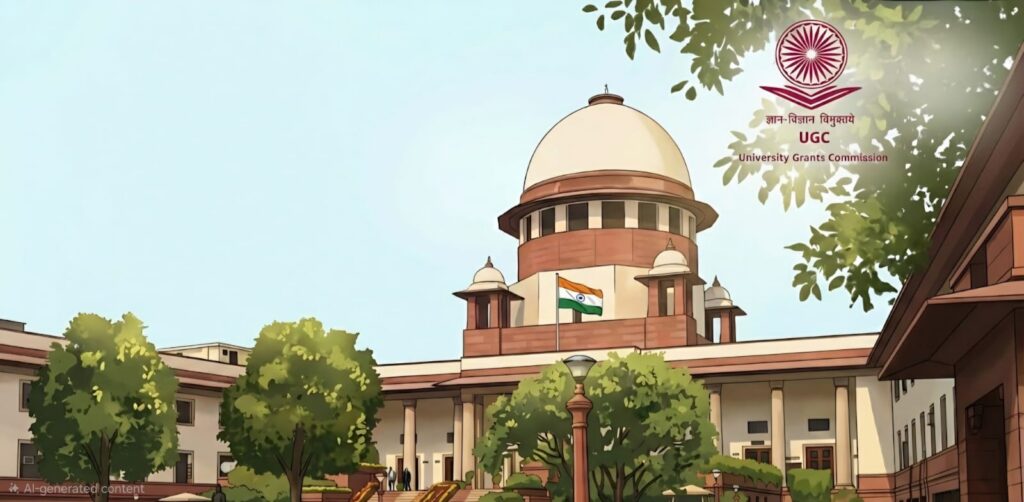
The Supreme Court of India has stayed the implementation of the University Grants Commission (Promotion of Equity in Higher Education Institutions) Regulations, 2026, commonly referred to as the UGC Equity Regulations 2026, after expressing serious concerns over their constitutional validity, vague language, and potential to divide society.
Table of Contents
A Bench comprising Chief Justice of India Surya Kant and Justice Joymalya Bagchi observed that the Regulations are prima facie capable of misuse and may have far-reaching consequences if enforced in their present form. The Court clarified that, until further orders, the 2012 UGC anti-discrimination regulations will continue to operate so that students and faculty members are not left without remedies.
“Very Dangerous Impact”: Supreme Court’s Strong Warning
During the hearing, the Chief Justice made it clear that the Court was deeply concerned about the broader social implications of the Regulations. Addressing submissions, he remarked:
“No, no, no. We will hear you. There are 4-5 questions which arise for consideration. Otherwise, this will have very sweeping consequences. It will divide the society, it will lead to very dangerous impact.”
The Chief Justice further questioned whether the Regulations undermine long-standing constitutional goals, asking:
“Are we going backwards from whatever we gained in terms of achieving a casteless society?”
Justice Joymalya Bagchi echoed these concerns, stressing the importance of unity within educational spaces. He stated:
“Unity of India must be reflected in the educational institutions.”
Definition of Caste-Based Discrimination Under Scrutiny
A central issue before the Court was Regulation 3(1)(c), which defines caste-based discrimination as:
“discrimination only on the basis of caste or tribe against the members of the scheduled castes, scheduled tribes, and other backward classes.”
Petitioners argued that this definition is exclusionary, as it leaves out individuals belonging to the general category, thereby violating Article 14 of the Constitution, which guarantees equality before the law.
Senior counsel pointed out that the Regulation creates an artificial assumption that caste-based discrimination can only be faced by SC, ST, and OBC communities. One of the submissions highlighted:
“When Regulation 3(1)(e) already exists, what is the need for 3(1)(c)? It has no reasonable nexus with the objective and presumes that discrimination is faced only by one section.”
Regulation 3(1)(e), in contrast, defines “discrimination” more broadly to include unfair treatment on grounds of religion, race, caste, gender, place of birth, and disability, leading the Court to question why a narrower caste-specific provision was carved out at all.
Concerns Over Ragging and Lack of Remedies
Another significant concern raised before the Bench was that the 2026 Regulations do not address ragging, an issue frequently reported in higher educational institutions. The Court questioned why harassment unrelated strictly to caste identity was excluded from the regulatory framework.
One counsel illustrated the gap by stating:
“If a fresher belonging to the general category faces ragging at the instance of a senior belonging to the scheduled caste, there is no remedy under these Regulations.”
The Bench observed that such omissions could leave students without protection and render the Regulations ineffective in addressing real-world campus issues.
Interim Directions and Continuation of 2012 Regulations
Considering the serious constitutional questions raised, the Supreme Court stayed the operation of the 2026 Regulations and directed that the 2012 UGC anti-discrimination regulations shall continue to remain in force until the matter is finally decided. This, the Court noted, was necessary to ensure that complainants are not left remediless.
The Court also issued notice to the Union of India and the University Grants Commission and listed the matter for further hearing on March 19, 2026. The Bench indicated that the Regulations may need to be revisited by a committee of experts, including jurists and social thinkers.
Background of the UGC Equity Regulations 2026
The UGC Equity Regulations 2026 were notified on January 13, 2026, replacing the 2012 framework. They sought to introduce structured mechanisms such as Equity Committees, Equal Opportunity Centres, and monitoring systems to address caste-based discrimination in higher education institutions.
The Regulations trace their origin to a 2019 public interest litigation filed by the families of Rohit Vemula and Payal Tadvi, whose deaths were allegedly linked to caste-based discrimination. While the intent was to strengthen protections, critics argue that the new framework narrows the scope of equality and risks fostering social division.
What Lies Ahead
With the stay in place, the future of the UGC Equity Regulations 2026 now depends on the Supreme Court’s final adjudication. Until then, educational institutions across India will continue to be governed by the 2012 anti-discrimination regulations, while the Court examines whether the new rules align with constitutional principles of equality, inclusiveness, and unity.
ALSO READ: “UGC Equity Regulations 2026 Face Supreme Court Challenge Amid Nationwide Opposition”
Connect with us: