

Supreme Court Pulls Up Lawyer Over FIR Plea Against PM, HM in CAA Case
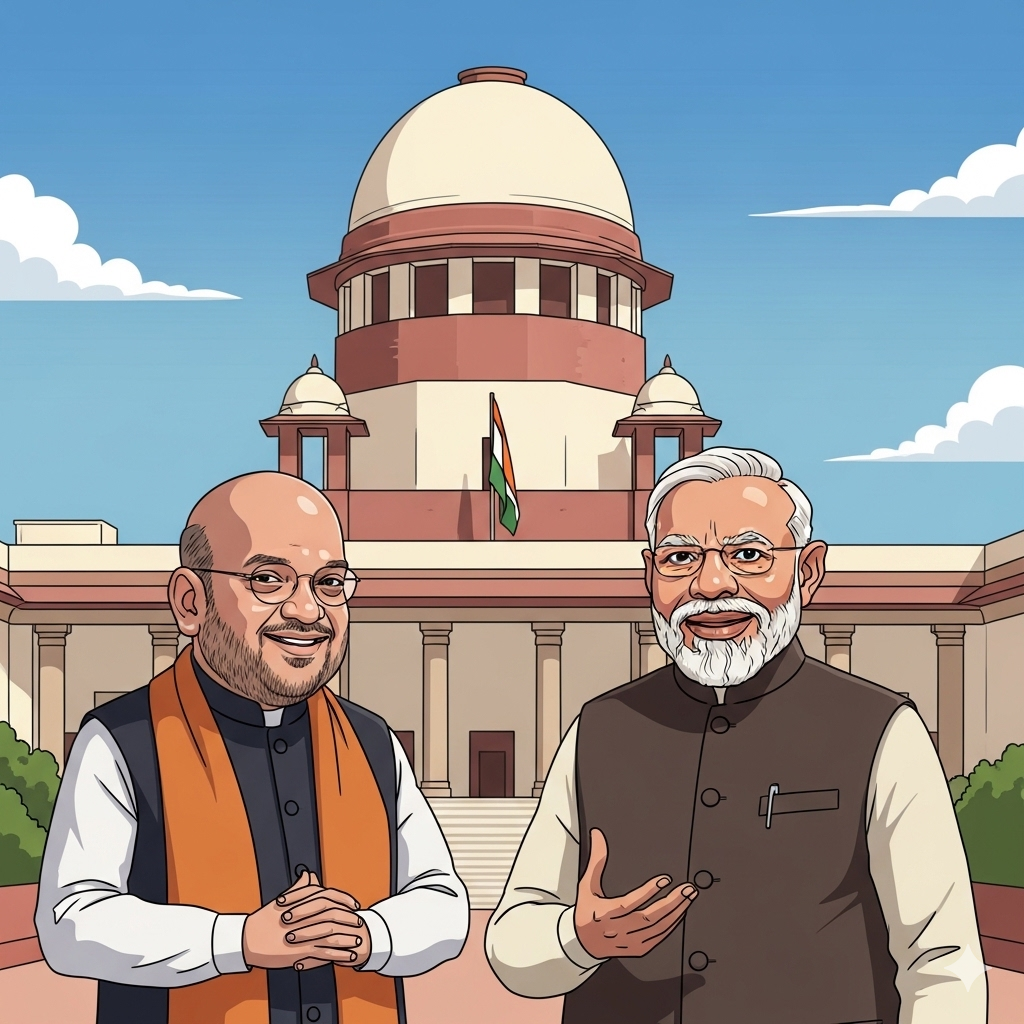
New Delhi: The Supreme Court of India strongly reprimanded a lawyer who sought registration of an FIR against Prime Minister Narendra Modi and Union Home Minister Amit Shah over the Citizenship (Amendment) Act, 2019 (CAA). While criticizing the petition as misconceived, the Court agreed to keep the ₹50,000 costs imposed by the Rajasthan High Court in abeyance after the advocate expressed regret and withdrew his plea.
The matter was heard by a Bench comprising Chief Justice of India Justice Surya Kant and Justice Joymalya Bagchi. The Bench was dealing with a challenge to the Rajasthan High Court’s order dismissing the petition and imposing costs for filing what it considered a frivolous plea.
Supreme Court Questions Basis of FIR Against Constitutional Authorities
At the outset, the Chief Justice expressed displeasure over the nature of the petition and remarked:
“Inko cost nahi lagaya High Court ne? Band vand pehene nahi hai… laga koi dangal me utarne aaye hai.”
The Court was informed that the High Court had indeed imposed ₹50,000 as costs on the petitioner. When the Bench asked the lawyer about his standing at the Bar, he responded: “From 1995.”
The Bench was visibly concerned that a senior member of the Bar had filed such a plea seeking criminal prosecution of the Prime Minister and Home Minister over legislative action connected to the CAA.
Table of Contents
Justice Bagchi Warns Against Converting Political Differences Into Criminal Offences
During the hearing, Justice Joymalya Bagchi delivered a pointed warning against misuse of criminal law for political disagreement. He observed:
“If you press further… we have to increase the costs. You may have a difference of opinion from ideology or politics etc, but that does not give rise to offence or you ask FIR against an authority. For argument’s sake, if parliament passes an illegal law… is it a crime?? Please withdraw. Do not embarrass yourself.”
The remarks underscored the Court’s position that disagreement with a law or policy cannot automatically translate into criminal liability for lawmakers or executive authorities.
The Bench emphasized that the remedy for challenging legislation lies within constitutional mechanisms and judicial review — not criminal prosecution unless a clear cognizable offence is made out.
Advocate Expresses Regret; Supreme Court Keeps Costs in Abeyance
Following the Court’s stern observations, the advocate expressed regret and repentance. He also undertook that he would not pursue the complaint or initiate any further proceedings based on the 2020 representation submitted to the Station House Officer (SHO), Alwar.
Recording this undertaking, the Supreme Court ordered that the ₹50,000 costs imposed by the Rajasthan High Court would remain in abeyance indefinitely. However, the Court clarified that if the undertaking is breached, the cost direction contained in paragraph 16 of the High Court’s judgment would automatically revive.
The order reflects a balance between judicial discipline and granting an opportunity for course correction after an unconditional withdrawal.
Legal Significance of the Order
The Supreme Court’s intervention sends a clear message regarding misuse of criminal process against constitutional functionaries. While citizens retain the right to question and challenge laws like the Citizenship (Amendment) Act, 2019, such challenges must follow constitutional routes rather than invoking criminal machinery without legal foundation.
The ruling also reinforces judicial intolerance toward frivolous or politically motivated litigation that burdens courts and misapplies criminal law principles.
This development adds to the broader jurisprudence on abuse of process of law, particularly in matters involving high constitutional offices such as the Prime Minister and Union Home Minister.
RECENT POSTS