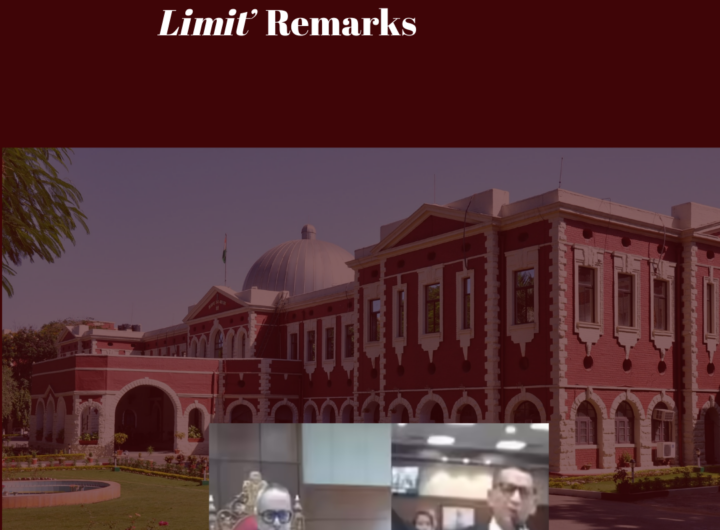

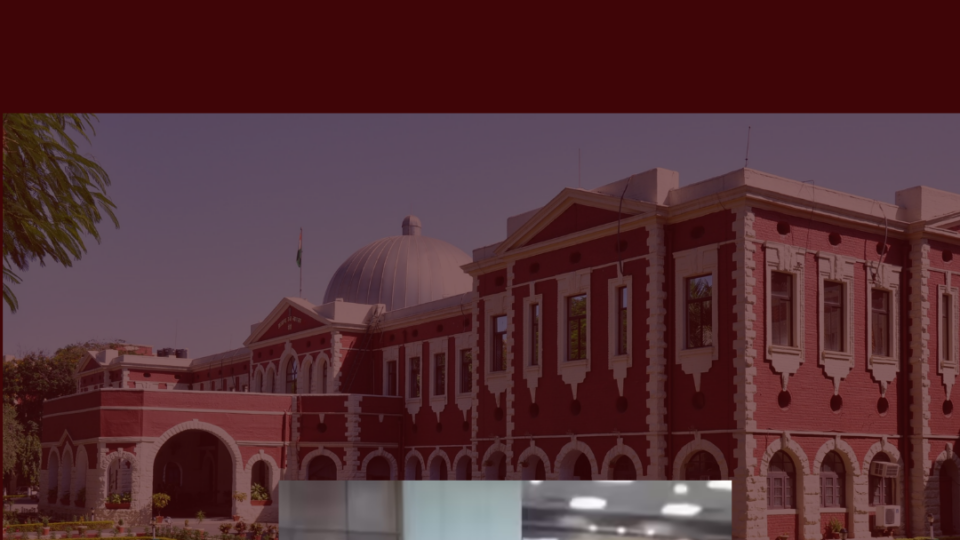
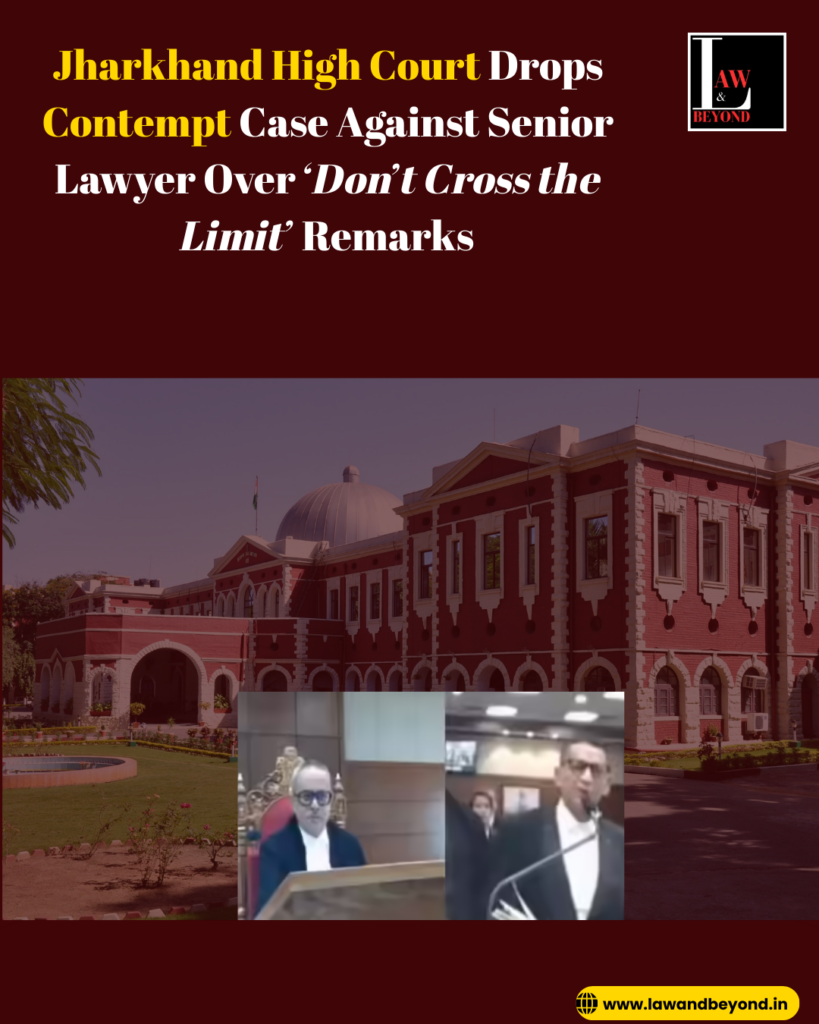
Jharkhand High Court Drops Contempt Case Against Senior Lawyer Over ‘Don’t Cross the Limit’ Remarks
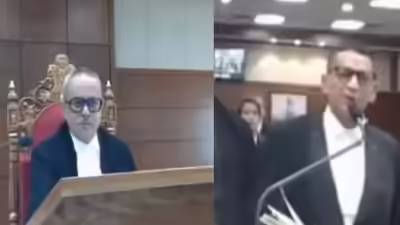
Ranchi: The Jharkhand High Court has dropped criminal contempt proceedings against senior advocate Mahesh Tewari over his controversial remarks to a sitting judge during live court proceedings last year. A five-judge Full Bench accepted his unconditional apology and ruled that further action was unnecessary in the interest of justice.
Table of Contents
The proceedings stemmed from an October 16, 2025 courtroom exchange before Justice Rajesh Kumar that went viral after being livestreamed. During arguments, Tewari had told the judge:
“I can argue in my own way, not in your way in which you say. Please mind that… Don’t try to humiliate any advocate, I am telling you. Sir, please don’t try to humiliate any person. The country is burning… with the judiciary. … Don’t cross the limit. Please, don’t cross the limit. I have already practiced for the last 40 years.”
The High Court subsequently initiated suo motu criminal contempt proceedings, observing that such remarks could amount to scandalising the court and lowering the authority of the judiciary.
Supreme Court’s Role in the Matter
The issue reached the Supreme Court of India, where a Bench headed by Justice Surya Kant declined to interfere with the contempt notice but advised that the High Court consider the apology sympathetically. The top court did not quash the proceedings, instead leaving it to the High Court’s discretion.
Following this, Tewari submitted an affidavit describing the episode as “unfortunate and regretful.” He stated that the remarks were made in the heat of the moment and clarified that he never intended to undermine the dignity of the institution.
High Court’s Observations on Judicial Dignity and Restraint
In its detailed order, the Full Bench underscored that contempt powers are not meant to protect judicial ego. The Court observed:
“This power is to be exercised sparingly, not to vindicate the dignity of the Court against insult or injury, but to safeguard the proper administration of justice and to prevent any obstruction, interference, or impediment thereto.”
At the same time, the Bench did not overlook the seriousness of the conduct. It remarked that an advocate with over four decades of standing at the Bar was expected to show “greater restraint, if not circumspection.”
The Court also addressed Tewari’s earlier stance during proceedings, noting:
“The statement made by him that he has no remorse or regret not only hurt us, but harms the institution… which is far greater than the judges and lawyers who are but a part of it.”
The Bench further reflected on the broader institutional implications, emphasizing that courts function on mutual respect between the Bar and the Bench. It reiterated that criticism of the judiciary must remain within constitutional boundaries and professional decorum.
Why the Contempt Case Was Dropped
Ultimately, after considering the unconditional apology and the guidance from the Supreme Court, the Jharkhand High Court concluded that continuing the contempt proceedings would serve no useful purpose. The Court accepted the apology and discharged the notice, effectively closing the matter.
The ruling highlights the delicate balance courts must maintain between preserving judicial authority and allowing space for human error, particularly in emotionally charged courtroom situations.
Legal Significance
The decision is significant in the context of the Contempt of Courts Act, 1971 and the High Court’s constitutional powers under Article 215. While courts retain the authority to punish acts that scandalise or obstruct justice, this case demonstrates judicial restraint and the preference for reconciliation where genuine remorse is expressed.
Legal observers note that the episode underscores the importance of courtroom decorum, especially in the era of live-streamed proceedings where exchanges can instantly reach the public domain.
RECENT POSTS