
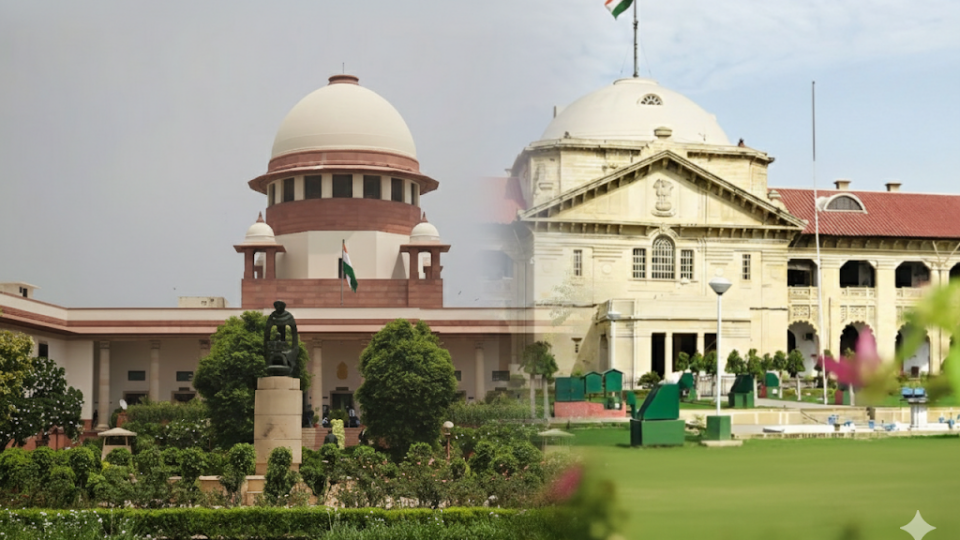
Supreme Court Overturns Allahabad HC Ruling — Grabbing Breasts & Loosening Pyjama String is Attempt to Rape
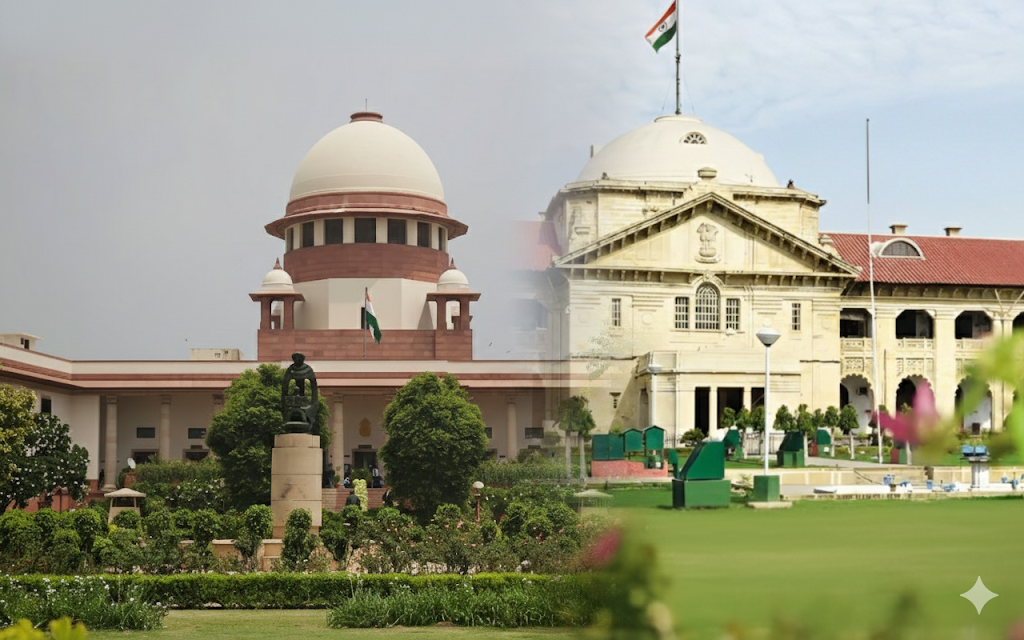
In a pivotal legal development with far-reaching implications for sexual offence jurisprudence in India, the Supreme Court of India has set aside a contentious judgment of the Allahabad High Court that had previously held that grabbing a minor’s breasts and loosening her pyjama string did not amount to an attempt to rape. The apex court’s decision reinstates the original serious charges under the Protection of Children from Sexual Offences Act (POCSO Act) and the Indian Penal Code.
Table of Contents
Supreme Court’s Observations: Intent and Jurisprudence
A bench headed by Chief Justice Surya Kant, along with Justices Joymalya Bagchi and N.V. Anjaria, ruled on February 10, 2026, that the High Court’s interpretation was a “patently erroneous application of the settled principles of criminal jurisprudence”. The top court emphasised that the actions alleged against the accused showed a predetermined intent to commit rape, not mere preparatory conduct.
“The facts alleged being so, we cannot agree with the finding of the High Court that the allegations only amount to preparation, but not an attempt, towards the commission of the offence of rape,”
the Supreme Court observed.
“The attempt made by the accused persons appears clearly and inevitably leads us to conclude that, prima facie, a case for invoking the provisions of attempt to commit rape has been made out by the complainant and the prosecution.”
In this context, the court stressed that a bare perusal of the allegations leaves no “modicum of doubt” about the presence of intent to commit the offence under Section 376 (rape) of the IPC.

Facts of the Case: What Happened?
According to the prosecution, on November 10, 2021, a woman was returning from her sister-in-law’s home with her 14-year-old daughter when three men — Pawan, Akash and Ashok — stopped on their motorcycle and allegedly began to grope the minor’s breasts. One of the accused, Akash, is said to have pulled the string of her pyjama and tried to drag her beneath a culvert before onlookers intervened and the accused fled.
The Special Judge (POCSO) in Kasganj initially summoned the accused under Section 376 IPC read with Section 18 of the POCSO Act for attempt to commit rape, which carries a stringent penalty. The High Court, however, controversially reduced the charge, asserting that the acts did not cross the threshold from “preparation” to “attempt”.
What the Allahabad High Court Originally Held
In its March 17, 2025 order, the Allahabad High Court, presided by Justice Ram Manohar Narayan Mishra, had controversially ruled that:
“…the allegation against accused Pawan and Akash is that they grabbed the breasts of the victim and Akash tried to bring down lower garment of the victim and for that purpose they had broken string of her lower garments and tried to drag her beneath the culvert…but due to intervention of witnesses they left the victim…”
“…This fact is not sufficient to draw an inference that the accused persons had determined to commit rape…”
For these reasons it modified the charges from Section 376 (rape) and Section 18 POCSO to Section 354-B IPC (assault or use of criminal force with intent to disrobe) and Sections 9/10 POCSO (aggravated sexual assault), which carry comparatively lesser punishment.
Supreme Court’s Reinstatement and Clarifications
The Supreme Court has set aside the March 17, 2025 judgment and restored the original summons order dated June 23, 2023 by the Special Judge (POCSO), affirming that the matter must proceed on the more serious charges.
Importantly, the apex court clarified that its observations are prima facie in nature and should not be interpreted as any definitive opinion on the guilt of the accused, which remains subject to trial.
Broader Impact & Legal Sensitivity
The decision marks a reaffirmation of the need for sensitivity and correct legal standards in adjudicating sexual offences, particularly involving minors. By correcting the High Court’s approach, the Supreme Court has reinforced that actions indicating clear sexual intent should be properly classified to ensure robust legal protection for vulnerable victims.