

Karnataka High Court Stays FIR Against Drone | Can a Drone Commit Criminal Trespass?
The Karnataka High Court has stayed an FIR registered against a drone, calling it a “unique crime against an inanimate object.” Read how the Court is examining whether a drone can legally commit criminal trespass under Indian law.

In a significant and unprecedented development, the Karnataka High Court has stayed an FIR registered against a drone, raising a novel legal question: can an inanimate object such as a drone commit the offence of criminal trespass under Indian criminal law? The interim order was passed by Justice M. Nagaprasanna while hearing a petition filed by a Bengaluru-based aerospace and defence research company.
Table of Contents
FIR Registered Against Drone for Criminal Trespass
The case arises from an FIR registered by the Doddaballapura Rural Police, wherein a drone was accused of committing offences including criminal trespass and rash conduct under the Bharatiya Nyaya Sanhita. The FIR was registered suo motu after the drone was found on private property adjoining the petitioner’s leased land.
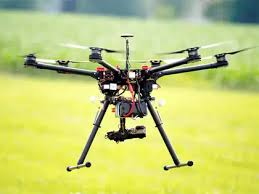
The drone in question was a research and development prototype, weighing approximately six kilograms and made primarily of thermocol. As per the petitioner, the drone suffered a battery malfunction during routine testing on January 29, causing it to glide beyond the permitted area and land on neighbouring private property. No damage, injury, or loss to life was reported.
Arguments Advanced by the Petitioner
Appearing for the petitioner, advocate Angad Kamath submitted that the company holds valid DGCA approvals for research and development operations and was conducting tests strictly within a designated Green Zone as per the Drone Rules, 2021. He contended that the police lacked jurisdiction to interfere in lawful drone operations.
He argued before the Court:
“Once I am operating under an R&D licence in a green zone and within my own premises, no authority other than the DGCA has jurisdiction to question the operation.”
It was further highlighted that no complaint was filed by the owner of the land where the drone landed, nor was there any allegation of trespass by a human being. The petitioner also alleged procedural lapses and coercive conduct by police officials, including being detained at the police station for over six hours and being denied a copy of the FIR until intervention by the State Public Prosecutor.
Court Observations: A Unique Legal Issue
Justice M. Nagaprasanna observed that the case raised a serious legal question warranting judicial examination. The Court remarked:
“There is a legal issue. The case projects a unique crime registered against an inanimate object.”
The Court noted that criminal trespass traditionally requires intent and physical entry by a person, and the registration of an FIR against a drone raises concerns regarding the applicability of penal provisions to non-sentient entities.
State’s Stand and Interim Relief
The State attempted to justify the police action by referring to local sensitivities and security concerns due to a nearby rally. However, the Court noted that such factors were not reflected in the FIR. The bench also expressed concern over the failure to upload the FIR online, despite the offences being bailable.
Taking note of the submissions and procedural irregularities, the High Court stayed all further investigation in the matter and directed the concerned police officer to file an affidavit responding to the allegations raised in the petition. The matter has been listed for further hearing on February 13, 2026.
Legal Significance
This case has far-reaching implications for drone regulation, criminal liability, and emerging technologies in India. The High Court’s examination may shape how Indian criminal law adapts to technological advancements and clarify whether existing penal provisions can be applied to autonomous or remotely operated devices.
CASE TITLE: New Space Research and Technologies Vs State of Karnataka
ALSO READ- “Madhya Pradesh High Court Rejects Husband’s Virginity Test Plea as Invasion of Privacy and Not a Divorce Ground”
RECENT POSTS



INSTAGRAM POSTS