
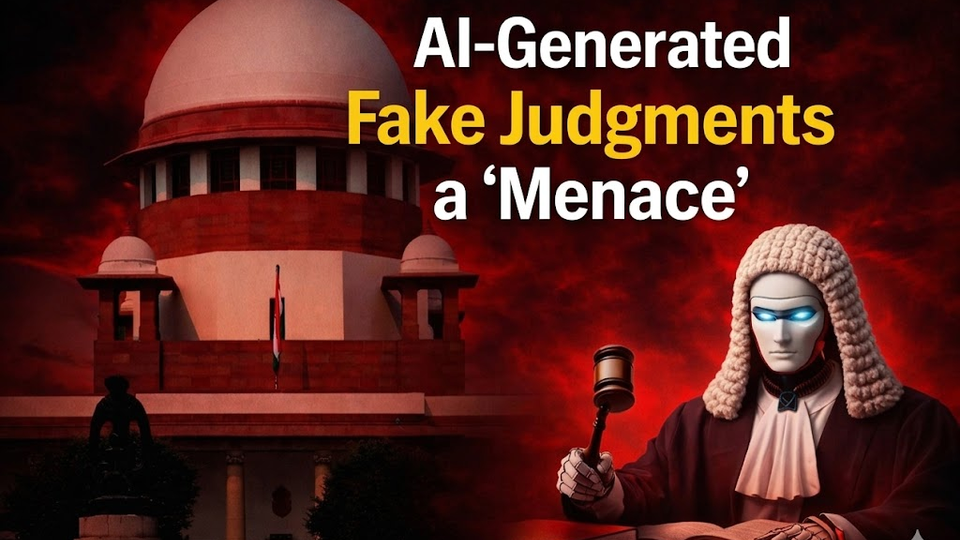
AI-Generated Fake Judgments a Menace: Supreme Court Warns Lawyers and Litigants
The Supreme Court has warned that citing AI-generated fake judgments is a growing menace across courts worldwide, urging strict caution and verification while using artificial intelligence tools in legal submissions.
Recently, addressing the misuse of artificial intelligence in legal proceedings, the Supreme Court of India has flagged the growing practice of citing AI-generated, non-existent judgments as a serious “menace” not only in India but globally. The Court urged litigants and lawyers to exercise caution while relying on AI-generated material.
The observations came from a Bench comprising Justice Rajesh Bindal and Justice Vijay Bishnoi while hearing a Special Leave Petition in Heart & Soul Entertainment Ltd. v. Deepak s/o Shivkumar Bahry (SLP (C) No. 3090/2026).
Table of Contents
Background: Bombay High Court Flags Fake AI Citation
The case arose after the Bombay High Court made adverse remarks against the petitioner for citing a non-existent judgment allegedly generated through AI tools like ChatGPT.
In its order dated January 7, the High Court noted:
“The Respondent has filed written submissions in February 2025 and April 2025. From the overall tenor of the written submissions and a few give-away features, such as green-box tick-marks, bulletpoint-marks, repetitive submissions etc., this Court strongly feels that the submissions are prepared using an AI tool such as Chat GPT or alike. A strong pointer is seen from a reference made to one alleged caselaw “Jyoti w/o Dinesh Tulsiani Vs. Elegant Associates”. Neither citation is given nor a copy of judgment is supplied by the Respondent. This Court and its law clerks were at pains to find out this caselaw but could not find. This has resulted in waste of precious judicial time.”
The High Court further cautioned against misuse of AI tools, stating:
“This practice of dumping documents / submissions on the Court and making the Court go through irrelevant or non-existing material must be deprecated and nipped at bud. This is not assistance to the Court. This is a hurdle in swift delivery of justice. This Court will not take such practices kindly and it is going to result in costs. If an advocate is found to be indulging in such practice, then even stricter action of referring to Bar Council may follow.”
A cost of ₹50,000 was imposed on the petitioner by Justice M.M. Sathaye.
Supreme Court’s Observations on AI Misuse
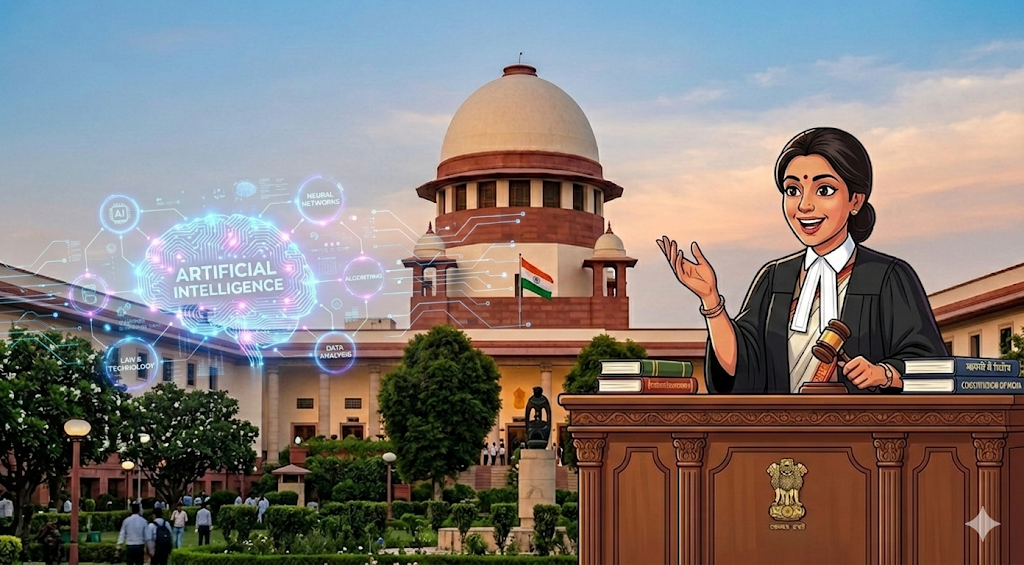
Before the Supreme Court, the petitioner argued that he had never cited the alleged fake judgment. While the Court chose not to examine that contention in detail, it expunged the High Court’s remarks.
However, the Bench issued a strong caution:
“Though, he tried to explain that he never cited that judgment, however, at the present we are not going into that issue.”
Further emphasizing the seriousness of the issue, the Court observed:
“As a matter of indulgence, we expunge the remarks made in the aforesaid paragraph. However, the fact remains that this menace is rampant in all Courts now, not only in India rather throughout the world. Everyone needs to be careful about this. In fact, this Court is already seized of this matter on judicial side.”
Reiterating the concern, the Court also noted:
“everyone needs to be careful”
Growing Judicial Concern Over AI in Legal Practice
The judgment highlights an emerging challenge in the legal ecosystem—the unchecked reliance on AI-generated content without verification. The Supreme Court noted that such practices are increasingly being observed across jurisdictions worldwide.
It is noteworthy that other benches of the Supreme Court have also taken cognizance of instances where lower courts relied on AI-generated fake citations, indicating a systemic concern.
Outcome of the Case
The Supreme Court disposed of the Special Leave Petition after expunging the adverse remarks made by the High Court. The petitioner appeared in person, while Senior Advocate Madhavi Divan, along with a team of advocates, represented the respondent.
READ JUDGEMENT
ALSO READ: “Supreme Court Directs Strict Compliance With Section 228A IPC: Non-Disclosure of Rape Victim’s Identity Mandatory in All Pending Cases”
RECENT POSTS
- Institutions Like ECI Must Function Independently: Justice BV Nagarathna Warns Against Constitutional Breakdown
- Rajasthan High Court Deletes Remarks Critical of Transgender Amendment Law, Says Epilogue Was “Added by Mistake”

- Delhi Court Grants Bail in AI Image Case Involving Narendra Modi and Shah Rukh Khan

- Supreme Court Slams West Bengal Over Attack on Judges During SIR Election Duties, Orders Central Probe

- Supreme Court Imposes ₹25,000 Costs on Centre for Unnecessary Litigation in CISF Constable Election
- Calcutta High Court Dismisses PIL Challenging ECI Transfers Ahead of West Bengal Elections