
Supreme Court Allows Open Court Hearing on Review of 3-Year Practice Rule for Judicial Service
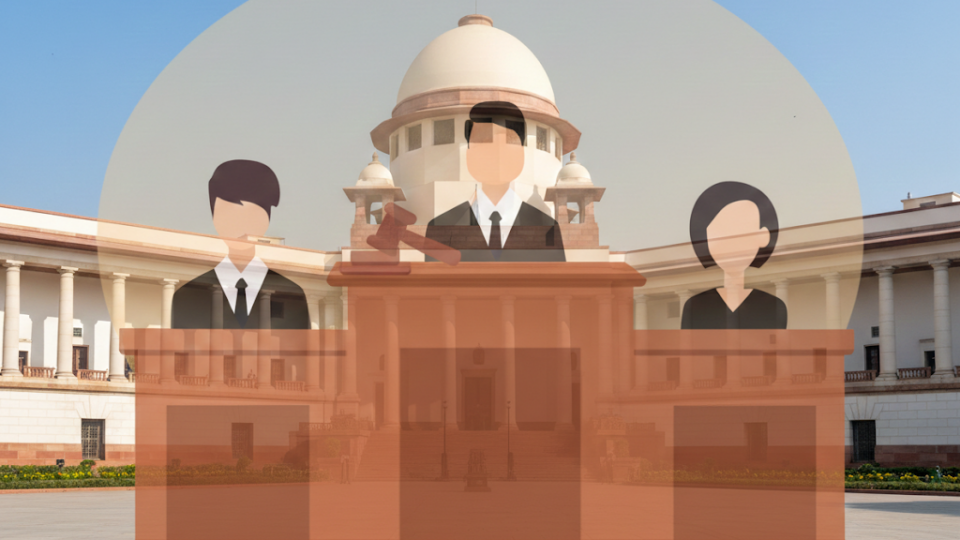
In the matter concerning judicial recruitment in India, the Supreme Court of India has decided to hear in open court the review petitions challenging its judgment that reinstated the mandatory three-year law practice requirement for entry into judicial service.
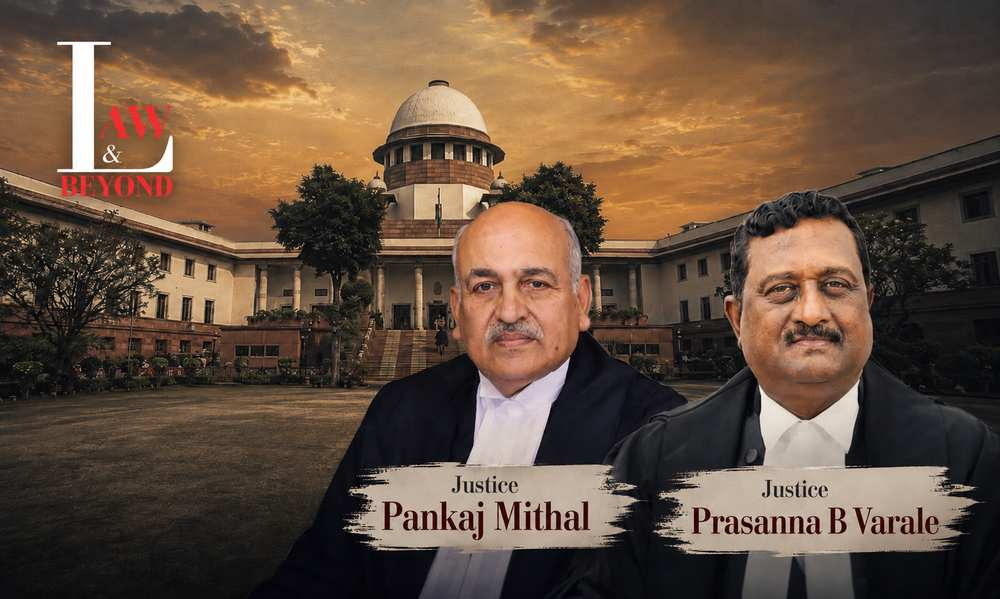
The order was passed by a Bench comprising Chief Justice of India Surya Kant, Justice Augustine George Masih, and Justice K. Vinod Chandran. The Court has listed the matter for oral hearing on February 26, 2026, marking a rare procedural departure as review petitions are ordinarily decided in chambers without open court arguments.
Table of Contents
Background: Restoration of the Three-Year Practice Rule
The controversy stems from the Supreme Court’s May 20, 2025 judgment in All India Judges Association v. Union of India, where the Court restored the requirement of “a minimum of three years of practice at the Bar” for candidates seeking appointment as Civil Judge (Junior Division).
The earlier condition, which had been removed in 2002, was reintroduced by the Court with the objective of strengthening the quality of the subordinate judiciary. The judgment emphasized the importance of practical courtroom experience and observed that:
“a minimum number of years of practice at the Bar” is necessary before entry into judicial service.
The Court further clarified that the period of practice would be counted from the date of provisional enrolment with the Bar Council and that the rule would operate prospectively so as not to disturb ongoing recruitment processes.
Why the Open Court Hearing Is Significant
Review petitions before the Supreme Court are generally decided “by circulation” without oral arguments. By allowing an open court hearing, the Bench has acknowledged that the issues raised require deeper judicial scrutiny.
The review petitioners have argued that the earlier ruling overlooked critical aspects, including the recommendations of the Shetty Commission, which had opposed a blanket mandatory practice requirement. They contend that modern legal education already includes internships, court visits, and clinical programs that provide substantial exposure to courtroom practice.
The petitions further assert that the judgment did not rely on empirical data or statistical material to demonstrate that fresh law graduates are incapable of effectively discharging judicial functions.
Another key ground raised is the alleged impact of the rule on candidates from economically weaker sections and socially disadvantaged communities. According to the petitioners, imposing a three-year practice condition may create financial barriers that disproportionately affect aspirants from marginalized backgrounds.
The petitioners have also argued that the direction effectively amounts to judicial legislation. They contend that prescribing uniform eligibility criteria for judicial service across States encroaches upon the domain of policy-making and may infringe the fundamental right to practice any profession under Article 19(1)(g) of the Constitution of India.
Broader Legal Implications
The three-year practice requirement has triggered widespread debate within the legal community. Supporters of the rule maintain that courtroom experience equips judicial officers with practical insight, professional maturity, and a realistic understanding of trial procedures before assuming adjudicatory responsibilities.
Opponents, however, argue that the rule delays entry into the judiciary, discourages meritorious fresh graduates, and lacks empirical backing.
The Supreme Court’s decision to hear the review petitions in open court signals the importance of the issue and underscores the constitutional dimensions involved, particularly concerning access to judicial service and professional freedom.
With the matter now slated for detailed oral arguments, the legal fraternity awaits clarity on whether the Court will uphold, modify, or revisit its earlier ruling.
CASE TITLE: All India Judges Association v. Union of India & Ors.
READ JUDGEMENT
ALSO READ: “Supreme Court: Police Cannot Re-Arrest Accused After Bail Without Court’s Permission”