
Allahabad High Court Rules Marriage or Conversion Does Not Change Caste Under SC/ST Act
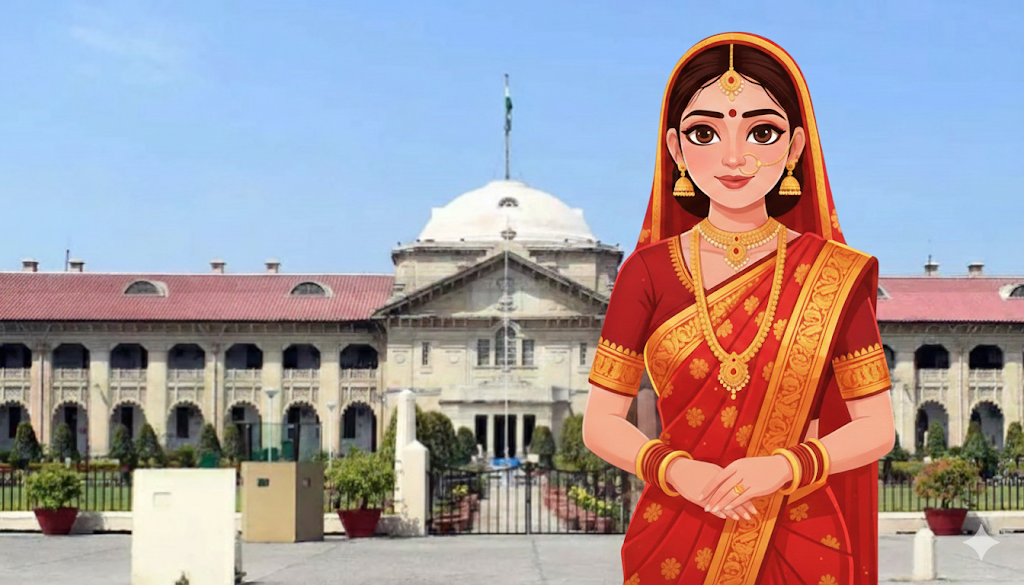
In a significant ruling clarifying the legal position on caste identity, the Allahabad High Court has held that a woman’s caste, determined by birth, does not change due to inter-caste marriage or religious conversion. Dismissing a criminal appeal under the Scheduled Castes and Scheduled Tribes (Prevention of Atrocities) Act, 1989, the Court reaffirmed that caste status remains unaffected by marriage.
The judgment was delivered by Justice Anil Kumar on February 10, 2026, while dealing with an appeal challenging a trial court’s summoning order in a case involving allegations under the Indian Penal Code (IPC) and the SC/ST Act.
Table of Contents
Background of the Case
The matter arose from an incident in Aligarh, where a woman belonging to a Scheduled Caste community filed a complaint alleging assault, criminal intimidation, trespass, and use of caste-based abusive language. Offences were registered under Sections 323, 506, 452, and 354 of the IPC along with Section 3(1)(R) of the SC/ST Act.
After examining the complaint, statements of witnesses, and injury reports, the trial court summoned the accused to face trial. The accused persons challenged this order before the High Court.
Appellants’ Argument: Marriage Changed Caste Status
The appellants contended that the complainant originally belonged to a Scheduled Caste community in West Bengal but had married a man from the Jat community. According to them, after marriage, she ceased to be a member of the Scheduled Caste community and therefore could not invoke the protections of the SC/ST Act.
They argued that summoning them under the SC/ST Act was legally unsustainable on this ground.
High Court’s Clear Observation on Caste Determination
Rejecting the contention, the Allahabad High Court made a categorical observation:
“Though a person may change religion, his or her caste remains the same despite conversion to another religion. Hence, marriage does not change a person’s caste. Therefore, the said contention is unsustainable.”
The Court emphasized that caste is determined by birth and does not undergo transformation merely because of marriage or religious conversion. The legal protections available under the SC/ST Act cannot be defeated on such grounds.
Cross-Case Argument Also Rejected
The accused also argued that the complaint was filed as a “counterblast” to an earlier FIR lodged from their side. However, the Court did not find merit in this submission and noted that merely because there is a cross-case does not automatically invalidate the complaint.
The High Court observed that the trial court had properly considered statements of the complainant and witnesses before issuing the summoning order. It found no illegality or perversity in the order requiring interference at the appellate stage.
Legal Significance of the Ruling
This decision reinforces an important legal principle: caste identity for statutory protection is determined by birth and remains unaffected by marriage or conversion.
The ruling ensures:
- Individuals cannot be deprived of SC/ST Act protection due to inter-caste marriage
- Conversion does not extinguish caste identity for legal purposes
- Accused persons cannot escape prosecution under the SC/ST Act by challenging caste status post-marriage
The judgment strengthens safeguards under the SC/ST Act and prevents dilution of protections meant for historically marginalized communities.
By dismissing the appeal, the Allahabad High Court reaffirmed that statutory protections cannot be undermined through technical arguments regarding marital status.
ALSO READ: “Supreme Court: Police Cannot Re-Arrest Accused After Bail Without Court’s Permission”
RECENT POSTS