
Supreme Court Calls Allahabad HC Bail Order in Dowry Death Case “Most Shocking and Disappointing”
SC sets aside Allahabad High Court’s unreasoned bail order in dowry death case, criticises lack of judicial reasoning, and stresses proper application of statutory presumption under criminal law.
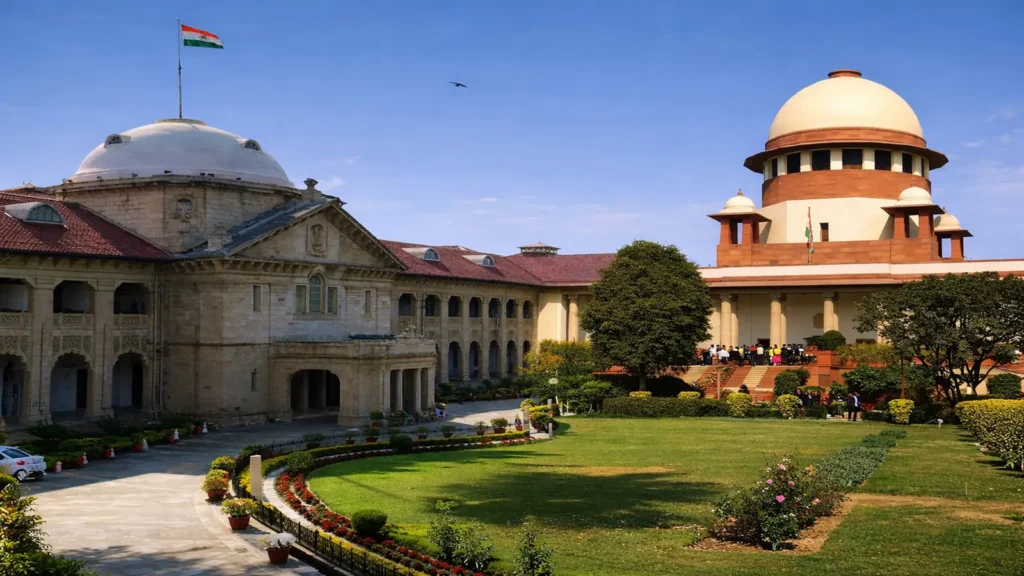
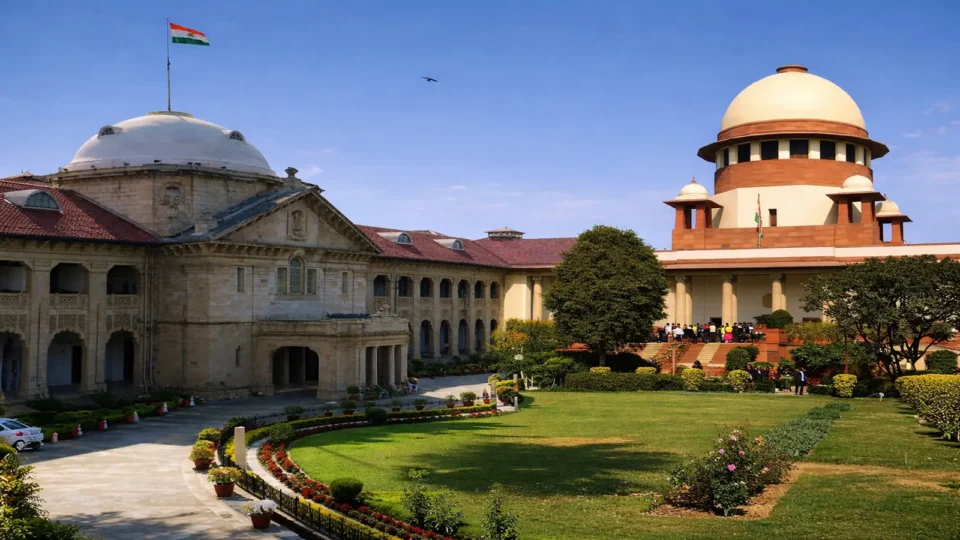
In a strongly worded judgment, the Supreme Court of India set aside a bail order passed by the Allahabad High Court in a dowry death case, calling it one of the “most shocking and disappointing orders” it had come across. The apex court expressed serious concern over the lack of reasoning in the High Court’s decision and emphasised that bail orders in grave offences must reflect proper judicial application of mind.
The matter arose from the death of a young woman within a few months of her marriage. According to the prosecution, the woman died under suspicious circumstances at her matrimonial home. The post-mortem report indicated death due to asphyxia caused by strangulation. Allegations were made that she was subjected to harassment and cruelty in connection with dowry demands before her death.
An FIR was registered against the husband and his family members under relevant provisions relating to dowry death and cruelty. During the proceedings, the Allahabad High Court granted bail to the husband, observing that he had been in custody since 27.07.2025 and had no prior criminal history.
Table of Contents
Supreme Court’s Strong Rebuke
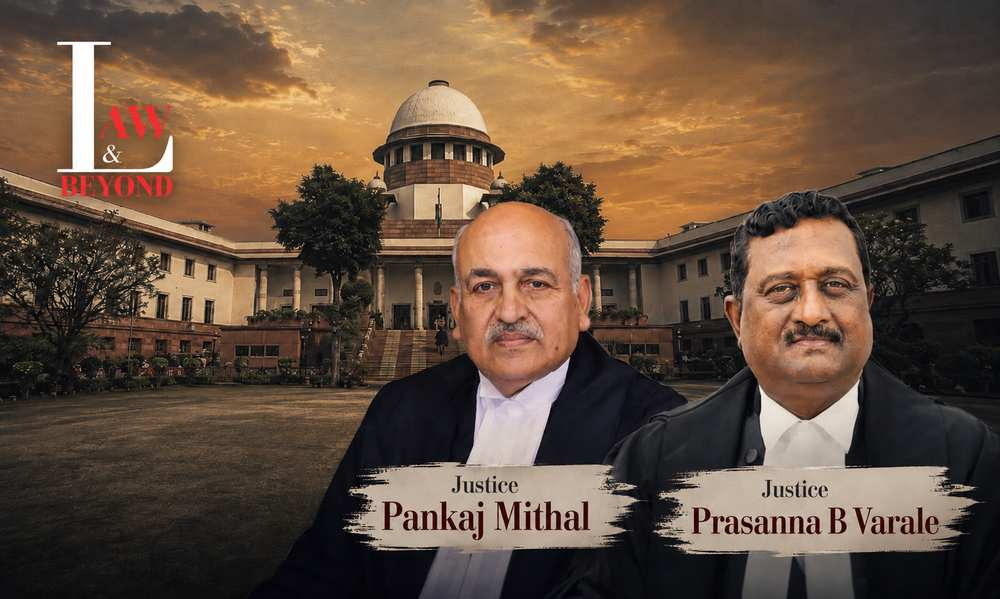
A Bench comprising Justice JB Pardiwala and Justice KV Viswanathan took serious exception to the High Court’s approach. The Supreme Court observed:
“We fail to understand on plain reading of the impugned order as to what the High Court is trying to convey. What weighed with the High Court in exercising its discretion in favour of the accused for the purpose of grant of bail in a very serious crime like dowry death?”
The Court found that the High Court had failed to assign any cogent reasons while granting bail. Instead of analysing the seriousness of the offence or the evidence on record, it merely recorded submissions and granted relief.
The Supreme Court further remarked:
“All that the High Court did, was to record the submission of the defense counsel and thereafter proceeded to observe that the accused was in jail since 27.07.2025 and there being no criminal history, he was entitled to bail.”
Expressing deep dissatisfaction, the apex court described the order as one of the most troubling it had encountered in recent times.
Failure to Consider Statutory Presumption
The Supreme Court noted that the High Court failed to consider the statutory presumption applicable in dowry death cases. Under the law, when a married woman dies under abnormal circumstances within seven years of marriage and evidence of cruelty or dowry harassment exists, a presumption operates against the accused.
The Bench emphasised that several crucial factors were ignored, including:
“(i) The nature of the alleged crime;
(ii) The punishment provided by the BNS 2023 for the alleged crime;
(iii) The relations between the accused and the deceased, i.e., being husband and wife;
(iv) The place where the incident occurred.”
The Supreme Court made it clear that bail in serious offences like dowry death cannot be granted mechanically. Judicial discretion must be exercised after a careful evaluation of the gravity of allegations, the statutory framework, and the surrounding circumstances.
Order Set Aside, Directions Issued
Finding the High Court’s reasoning wholly inadequate, the Supreme Court set aside the bail order. It also directed that a copy of its judgment be placed before the Chief Justice of the Allahabad High Court, signalling the seriousness of its concerns regarding judicial discipline and reasoning.
The ruling reinforces the principle that bail orders must demonstrate due application of mind, particularly in cases involving grave offences such as dowry death. The Supreme Court’s intervention underscores that unreasoned orders not only weaken the criminal justice system but also erode public confidence in judicial processes.
Cause Title: CHETRAM VERMA VERSUS STATE OF U.P.
READ JUDGEMENT