
Supreme Court Denies Bail to Kuldeep Singh Sengar in the Custodial Death Case of the Unnao Rape Case
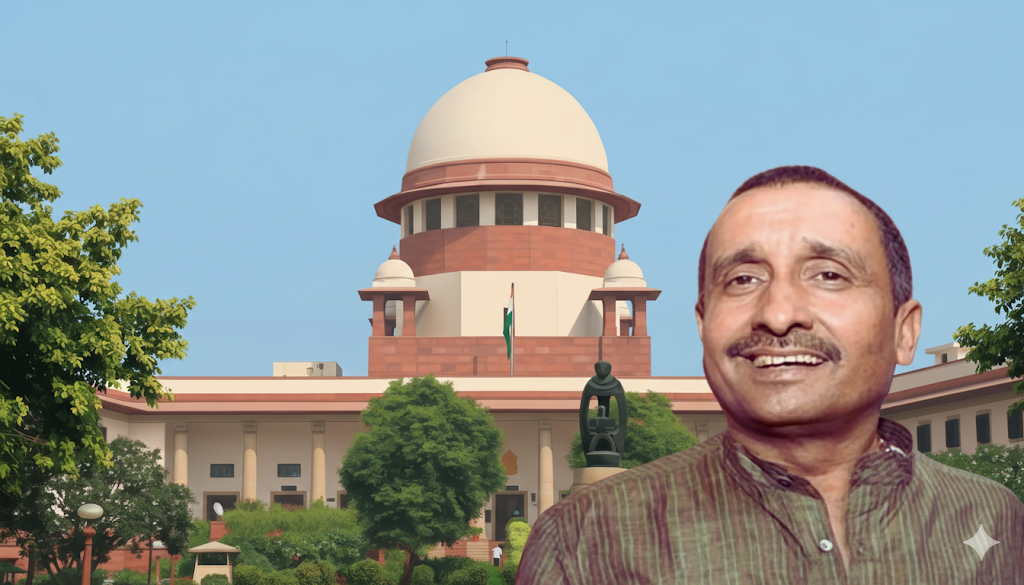
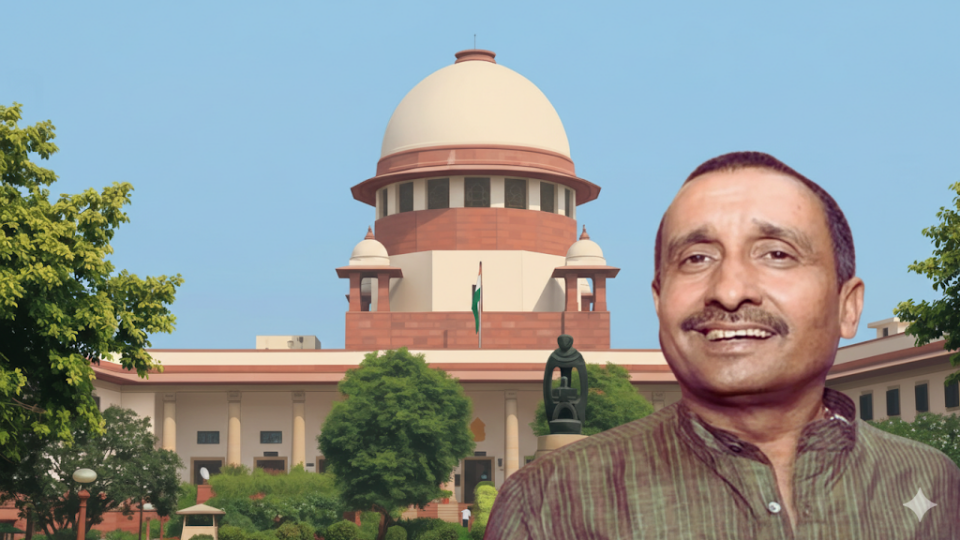
The Supreme Court of India has refused to grant bail to former Uttar Pradesh MLA Kuldeep Singh Sengar in the custodial death case of the father of the Unnao rape survivor. While denying immediate relief, the Court directed the Delhi High Court to hear Sengar’s appeal on priority, along with the victim’s plea seeking enhancement of sentence.
The order was passed by a three-judge Bench headed by Chief Justice of India Surya Kant, with Justices Joymalya Bagchi and N V Anjaria. The Bench observed that the offence involved serious allegations touching upon moral turpitude, and therefore did not warrant suspension of sentence at this stage.
Table of Contents
Background of the Custodial Death Case
Kuldeep Singh Sengar was convicted in March 2020 for the custodial death of the Unnao rape survivor’s father and sentenced to 10 years’ rigorous imprisonment. The victim’s father died in judicial custody on 9 April 2018, allegedly due to custodial violence after being arrested following pressure exerted by Sengar.
The custodial death case is closely linked to the larger Unnao rape case, where Sengar was found guilty of raping a minor girl in June 2017. The matter had sparked nationwide outrage and led the Supreme Court to transfer the trials from Uttar Pradesh to Delhi, citing concerns over witness safety and fairness of proceedings.
Arguments Before the Supreme Court
During the hearing, Senior Advocate Siddharth Dave, appearing for Sengar, submitted that the former MLA had already undergone almost the entire sentence awarded in the custodial death case. He argued that “9 years and 7 months completed out of a term of 10 years” had already been served and that co-accused in the same case had been released after completion of their sentences.
Dave further contended that suspension of sentence is a normal rule during the pendency of appeal and that continued incarceration would render the appeal infructuous.
Opposing the plea, Solicitor General of India Tushar Mehta, representing the Central Bureau of Investigation (CBI), informed the Court that Sengar’s appeal against conviction is already listed before the Delhi High Court on 11 February 2026. He also stated that the victim’s appeal seeking enhancement of sentence would be taken up by the High Court.
Court’s Observations on Sentence Suspension
During the hearing, Justice Joymalya Bagchi made a significant observation regarding Sengar’s continued imprisonment in other cases, stating:
“If you are serving life sentence in another offence, is that not a relevant consideration for suspension of sentence?”
The Bench noted that Sengar is already serving a life sentence in the Unnao rape case, which remains an important factor while considering suspension of sentence in the custodial death matter.
The Court further clarified that instead of granting bail, the appropriate course would be to ensure expeditious disposal of the appeal, given the gravity of the offence and the competing interests involved.
Direction to Delhi High Court
The Supreme Court directed that Sengar’s appeal be heard on priority by the Delhi High Court along with the victim’s appeal seeking enhancement of the 10-year sentence awarded in the custodial death case. The Court also granted liberty to the victim to mention her appeal before the High Court.
The Bench observed that if necessary, both appeals could be heard together, even if it requires placement before a different Bench of the High Court, in order to ensure a comprehensive adjudication.
Previous Bail Developments
Earlier, the Delhi High Court had declined to suspend Sengar’s sentence in the custodial death case, citing the seriousness of the offence, the manner in which the crime was committed, and the impact on public confidence in the criminal justice system.
Although Sengar had previously secured bail in the Unnao rape case after suspension of his life sentence, that relief was subsequently challenged by the CBI before the Supreme Court, and the matter remains under judicial consideration.
Conclusion
By refusing bail while ordering a priority hearing, the Supreme Court has struck a balance between the rights of the accused and the gravity of crimes involving custodial death and abuse of power. The outcome of the High Court proceedings is now expected to play a decisive role in the long-running Unnao case litigation.
Kuldeep Singh Sengar, custodial death case, Supreme Court bail refusal, Unnao rape case, Delhi High Court appeal, Sengar conviction, custodial violence India.
CASE TITLE: KULDEEP SINGH SENGAR Versus CENTRAL BUREAU OF INVESTIGATION, SLP(Crl) No. 2204/2026
RECENT UPDATES: