

Patna High Court Refuses Divorce Over Vague Adultery Allegations in Shyam Bihari Mishra v. Sanju Devi
The Patna High Court has upheld the dismissal of a husband’s divorce petition based on allegations of adultery, holding that vague and unsubstantiated accusations cannot form the basis for granting a decree of divorce. The Court further reiterated the settled legal principle that evidence beyond pleadings cannot be relied upon while adjudicating matrimonial disputes.
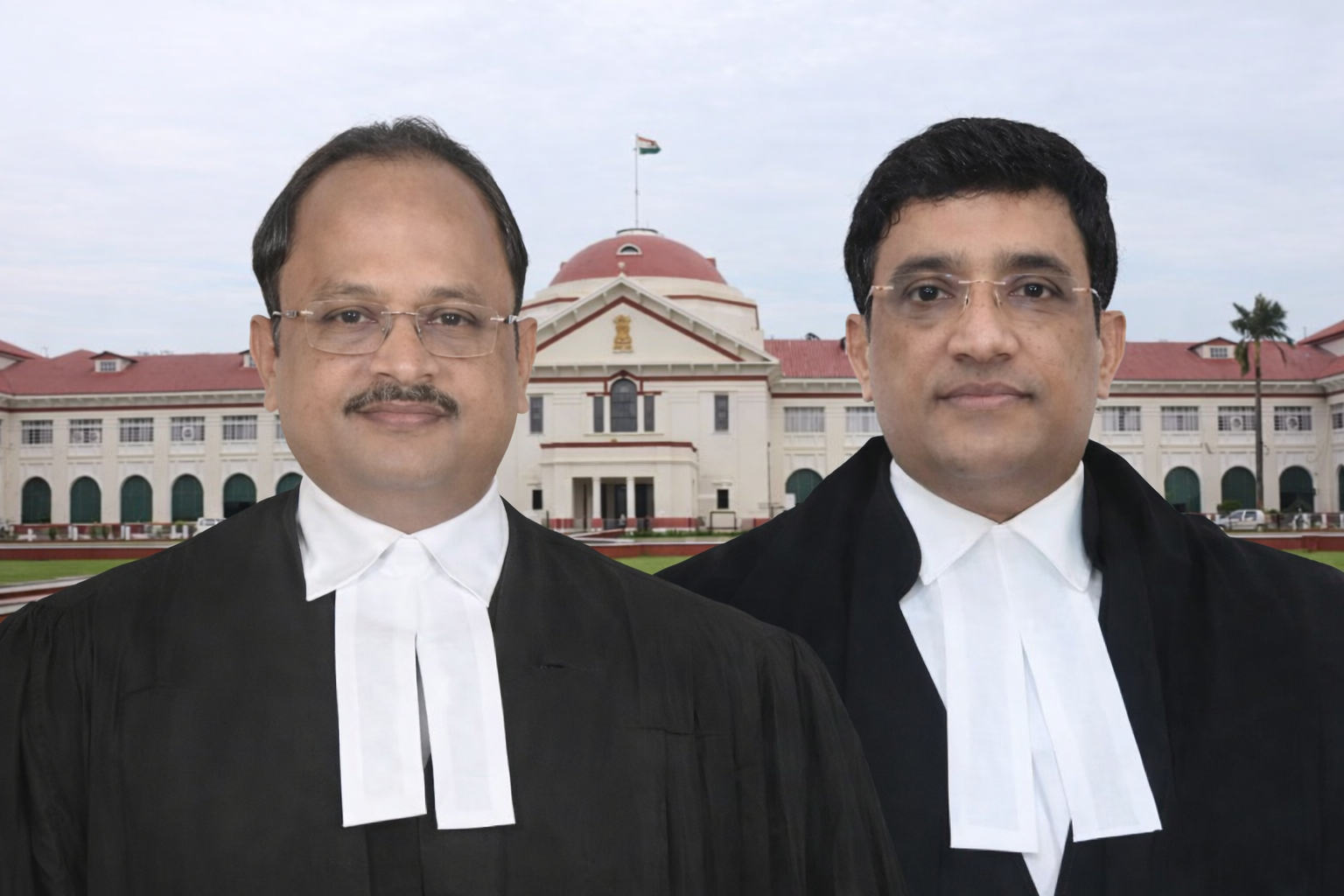
A Division Bench comprising Justice Nani Tagia and Justice Alok Kumar Pandey passed the judgment in Shyam Bihari Mishra v. Sanju Devi (Miscellaneous Appeal No. 92 of 2020), while dismissing an appeal against the 2019 judgment of the Principal Judge, Family Court, Siwan.
The appeal arose from a divorce petition filed by the husband under the provisions of the Hindu Marriage Act, 1955 alleging adultery and desertion by his wife. Notably, the proceedings before the Family Court had continued ex parte against the wife after she failed to appear despite service of notice.
Table of Contents
Husband’s Allegations Before the Court
According to the husband, the wife’s behaviour allegedly changed after two years of marriage. He claimed that she frequently visited markets without informing family members and allegedly stayed outside the matrimonial home for long periods.
The husband further alleged that on 15 October 2012, the wife left home at around 11 a.m. and returned at 9 p.m. He claimed to have seen her coming out of a cinema hall with another man. He also asserted that he later came to know that the wife had allegedly been involved in a love affair with one Dhananjay Tiwary even before the marriage.
Before the High Court, the appellant argued that the Family Court failed to properly appreciate the pleadings and evidence placed on record. It was also contended that since the wife had not appeared despite service of notice, the Family Court ought to have granted an ex parte decree of divorce.
High Court Finds Allegations “Vague”

Rejecting the husband’s contentions, the High Court observed that the allegations contained in the divorce petition were fundamentally deficient and lacked necessary particulars.
The Bench noted that the husband had failed to disclose the specific time, place, and identity of the alleged adulterous relationship. Importantly, the alleged paramour was also not impleaded as a party to the proceedings.
The Court observed:
“The allegation of adultery is made against the respondent/wife without revealing the name of person who was accompanying respondent and the person against whom allegation is made has not been made party. The allegation is vague…”
The Bench further pointed out that except for the alleged incident dated 15.10.2012, no specific instances of misconduct between 2003 and 2012 had been pleaded in the petition.
According to the Court, the husband merely made broad allegations that the wife had become “indisciplined” after two years of marriage without providing concrete particulars or circumstances to substantiate the accusations.
Evidence Beyond Pleadings Cannot Be Considered
The High Court also agreed with the findings of the Family Court that although certain witnesses referred to an alleged relationship with Dhananjay Tiwary, no witness from the concerned village was examined to corroborate the claims.
Significantly, the Court reiterated the established principle of civil and matrimonial law that evidence beyond pleadings cannot be taken into account while deciding a case.
The Bench observed that permitting parties to introduce facts through oral evidence without foundational pleadings would defeat the very purpose of pleadings and would unfairly take the opposite party by surprise.
The ruling reinforces the legal requirement that allegations of adultery must be specific, properly pleaded, and supported by credible evidence before a court can grant matrimonial relief.
Finding no error in the Family Court’s reasoning, the High Court dismissed the husband’s appeal and upheld the refusal to grant divorce.
Case Details
- Case Title: Shyam Bihari Mishra v. Sanju Devi
- Case Number: Miscellaneous Appeal No. 92 of 2020
- Court: Patna High Court
- Bench: Justice Nani Tagia and Justice Alok Kumar Pandey
- Appellant Counsel: Mr. Dhanendra Chaubey
- Respondent: None appeared
The judgment also aligns with settled judicial principles repeatedly emphasized by Indian courts that mere suspicion, isolated allegations, or vague accusations are insufficient to establish adultery in matrimonial disputes.
READ JUDGMENT
ALSO READ: “Supreme Court’s Powerful Relief To Murder Convict After 22 Years In Jail; Faults Orissa HC For Rejecting Appeal On Delay”
LATEST POSTS:
- Patna High Court Refuses Divorce on “Vague” Adultery Allegations, Says Evidence Beyond Pleadings Cannot Be Considered

- Supreme Court’s Powerful Relief To Murder Convict After 22 Years In Jail; Faults Orissa HC For Rejecting Appeal On Delay

- Supreme Court Questions Delhi High Court Ruling on Low Attendance for Law Students, Seeks BCI’s Stand
- Union Cabinet Approves Key Move to Increase Supreme Court Strength to 38 Judges
- Supreme Court Clarifies Limits of Article 227: High Courts Cannot Substitute Plausible Views of Execution Courts

- Shocking Delhi Judge Death: 30-Year-Old Judicial Officer Found Dead, Family Alleges Harassment

FOLLOW US ON OUR INSTAGRAM FOR QUICK UPDATES: