
Supreme Court Grants Bail To Convict After 22 Years In Jail, Criticises Orissa HC Delay Rejection
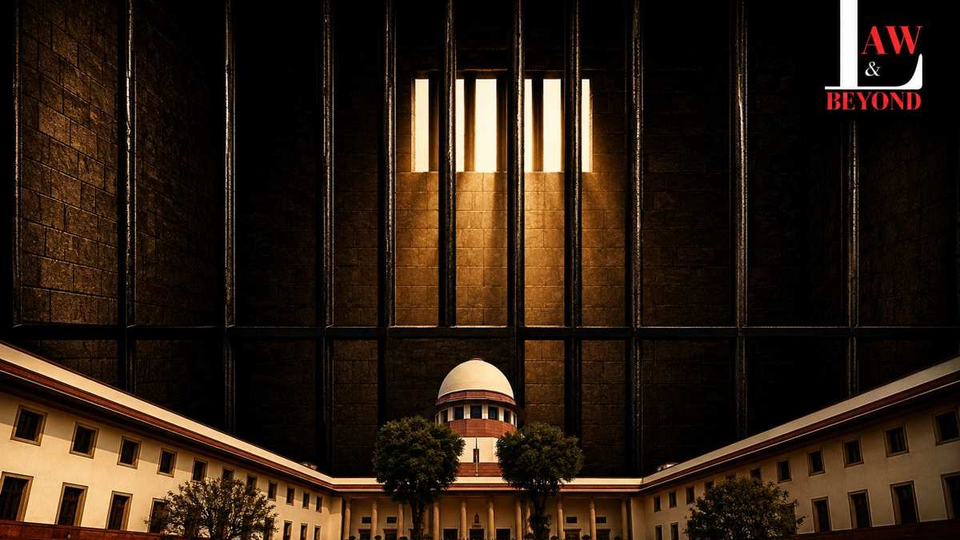
In safeguarding the rights of prisoners and access to justice, the Supreme Court of India on May 7, 2026 granted bail to a murder convict who had remained incarcerated for more than 22 years, while strongly criticizing the approach adopted by the Orissa High Court in dismissing his criminal appeal solely on the ground of delay.
A Bench comprising Justice J.B. Pardiwala and Justice Ujjal Bhuyan termed the High Court’s order “very disturbing” and observed that a practical and sympathetic approach ought to have been adopted, especially when the appeal had been filed through jail authorities by a life convict.
The matter arose from the conviction of the petitioner, Arjun Jani alias Tuntun, who was convicted in 2006 by the trial court for offences punishable under Sections 302 and 201 of the Indian Penal Code. He was sentenced to life imprisonment for murder and destruction of evidence.
Subsequently, the petitioner approached the High Court challenging his conviction. However, there was a delay of 3157 days, nearly nine years, in filing the criminal appeal. By an order dated January 11, 2016, the High Court declined to condone the delay and dismissed the appeal as barred by limitation without examining the merits of the case.
Expressing serious concern over the manner in which the appeal was rejected, the Supreme Court observed:
“The High Court, while declining to condone the delay, ought to have considered the fact that the petitioner was already undergoing sentence past 12 years. The High Court ought to have also considered that it was an appeal through jail. This itself was sufficient for the High Court to take a practical view or rather a sympathetic view of the matter and at least ought to have condoned the delay so as to give one opportunity to the petitioner to argue his criminal appeal on merits. As on date, the petitioner has undergone almost 22 years of sentence.”
The Court noted that at the time the High Court dismissed the appeal, the petitioner had already spent over 12 years in prison. The Bench emphasized that appeals filed through jail authorities deserve liberal consideration because convicts often lack adequate legal assistance and resources.
During the hearing, counsel appearing for the petitioner produced a conduct certificate issued by the Senior Superintendent of Circle Jail, Koraput, certifying that the petitioner’s conduct throughout his incarceration had remained satisfactory. The certificate further revealed that he had never been punished for any jail offence.
The Supreme Court also took note of the fact that the petitioner had not been released even once on parole or furlough during the entire period of 22 years of imprisonment.

Considering these peculiar circumstances, the Court held that remanding the matter back to the High Court after condoning the delay would now serve no useful purpose and would amount to a “futile exercise.”
Invoking its extraordinary powers under Article 142 of the Constitution of India, the Court directed the release of the petitioner on bail upon furnishing a personal bond of Rs.10,000 to the satisfaction of the Jail Superintendent.
The Court ordered:
“Thus, in exercise of our jurisdiction under Article 142 of the Constitution as an exceptional case, we order that the petitioner be released on bail on the executing a personal bond of Rs.10,000/- to the satisfaction of the Jail Superintendent.”
Additionally, the Bench directed the District Legal Services Authority, Koraput, to assist the petitioner in seeking remission of sentence in accordance with the applicable remission policy.
The Court stated:
“We direct the District Legal Services Authority, Koraput, State of Odisha to help the petitioner in preparing an appropriate representation, seeking remission of sentence in accordance with the remission policy prevailing at the time of the commission of the offence or any Policy which is beneficial to the petitioner insofar as the remission of sentence is concerned.”
Highlighting the humanitarian considerations behind the order, the Bench further observed:
“We have passed this order keeping in mind the fact that the petitioner is undergoing sentence past 22 years and has not been released even once during this period of 22 years. His jail conduct has also been found to be satisfactory.”
The matter has now been listed on May 28, 2026 for reporting compliance.
The case is titled ARJUN JANI @ TUNTUN VERSUS STATE OF ORISSA.
READ JUDGMENT:
LATEST POSTS:
- Supreme Court’s Powerful Relief To Murder Convict After 22 Years In Jail; Faults Orissa HC For Rejecting Appeal On Delay
 The Supreme Court granted bail to a murder convict imprisoned for 22 years and criticised the Orissa High Court for dismissing his appeal solely on delay without examining merits.
 - Supreme Court Questions Delhi High Court Ruling on Low Attendance for Law Students, Seeks BCI’s Stand
 Supreme Court Questions Delhi HC Verdict Against Debarring Law Students Over Low Attendance
 - Union Cabinet Approves Key Move to Increase Supreme Court Strength to 38 Judges
 Union Cabinet approves proposal to increase Supreme Court judge strength from 34 to 38 through Amendment Bill 2026 to address pendency and ensure speedy justice.
 - Supreme Court Clarifies Limits of Article 227: High Courts Cannot Substitute Plausible Views of Execution Courts
 Supreme Court Limits Article 227 Powers: High Courts Cannot Substitute Execution Court Findings
 - Shocking Delhi Judge Death: 30-Year-Old Judicial Officer Found Dead, Family Alleges Harassment
 A 30-year-old Delhi judge, Aman Kumar Sharma, was found dead in Safdarjung Enclave. Police suspect suicide as family alleges harassment. Investigation ongoing.
 - Breaking: Supreme Court Declines to Interfere in TMC Plea on Bengal Vote Counting, Orders Strict Compliance with ECI Circular
 Supreme Court declines to interfere in TMC plea on Bengal election counting staff, directs strict implementation of ECI circular ensuring State nominee presence.
FOLLOW US ON OUR INSTAGRAM: