

Union Cabinet Approves Increase in Supreme Court Strength to 38 Judges | Amendment Bill 2026
Union Cabinet approves proposal to increase Supreme Court judge strength from 34 to 38 through Amendment Bill 2026 to address pendency and ensure speedy justice.
In a step aimed at strengthening the judiciary and addressing the growing backlog of cases, the Union Cabinet on Tuesday approved a proposal to increase the sanctioned strength of judges in the Supreme Court of India from 34 to 38, including the Chief Justice of India (CJI).
The decision paves the way for the introduction of the Supreme Court (Number of Judges) Amendment Bill, 2026, which seeks to amend the Supreme Court (Number of Judges) Act, 1956. The proposed amendment will increase the number of judges from the existing 33 (excluding the CJI) to 37 (excluding the CJI), thereby raising the total strength to 38 judges.
According to an official government statement,
“The Union Cabinet chaired by the Prime Minister Shri Narendra Modi today has approved the proposal for introducing The Supreme Court (Number of Judges) Amendment Bill, 2026 in Parliament to amend The Supreme Court (Number of Judges) Act, 1956 for increasing the number of Judges of the Supreme Court of India by 4 from the present 33 to 37 (excluding the Chief Justice of India).”
Table of Contents
Objective Behind the Increase
The move has been proposed in view of the mounting pendency of cases before the apex court. With more than four judges expected to retire this year, the increase in sanctioned strength is likely to provide some relief to the existing caseload.
The government further stated that the increase in the number of judges will allow the Supreme Court to function more efficiently and effectively, ensuring speedy justice.
Constitutional and Statutory Framework
The strength of the Supreme Court is governed by the Supreme Court (Number of Judges) Act, 1956, enacted under Article 124(1) of the Constitution of India.
Article 124(1) states:
“There shall be a Supreme Court of India consisting of a Chief Justice of India and, until Parliament by law prescribes a larger number, of not more than seven other Judges…”
This provision empowers Parliament to increase the number of judges through legislation.
Historical Evolution of Judge Strength
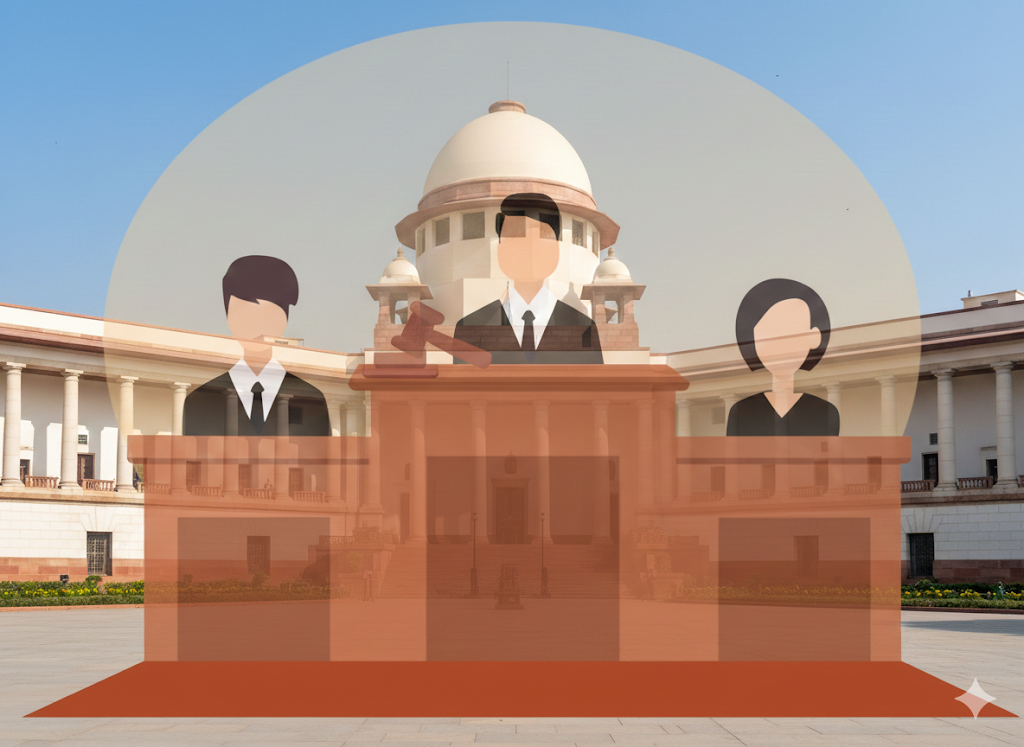
Since its establishment in 1950, the Supreme Court has undergone several revisions in its sanctioned strength:
- Initially, the Court had 8 judges, including the CJI.
- In 1956, the strength was increased to 11 (including the CJI).
- It was raised to 14 in 1960 and 18 in 1977.
- The strength remained restricted to 15 judges until the end of 1979, when the restriction was withdrawn at the request of the then CJI.
- In 1986, the strength was increased from 18 to 26.
- In 2009, it was further expanded from 26 to 31.
- In 2019, the number was increased from 31 to 34 (including the CJI), i.e., 33 excluding the CJI.
Legislative Process Ahead
The proposed amendment will now be introduced in Parliament as the Supreme Court (Number of Judges) Amendment Bill, 2026. Once enacted, it will formally revise the statutory limit and enable the appointment of additional judges.
Significance of the Move
This development is a crucial institutional measure to enhance the capacity of the Supreme Court. The increase in judge strength is expected to reduce delays, improve case disposal rates, and strengthen the administration of justice.
LATEST POSTS:
- Supreme Court’s Powerful Relief To Murder Convict After 22 Years In Jail; Faults Orissa HC For Rejecting Appeal On Delay

- Supreme Court Questions Delhi High Court Ruling on Low Attendance for Law Students, Seeks BCI’s Stand
- Union Cabinet Approves Key Move to Increase Supreme Court Strength to 38 Judges
- Supreme Court Clarifies Limits of Article 227: High Courts Cannot Substitute Plausible Views of Execution Courts
- Shocking Delhi Judge Death: 30-Year-Old Judicial Officer Found Dead, Family Alleges Harassment

- Breaking: Supreme Court Declines to Interfere in TMC Plea on Bengal Vote Counting, Orders Strict Compliance with ECI Circular

JOIN US ON OUR INSTAGRAM FOR QUICK UPDATES