
Supreme Court: ED Clarifies No Claim of Constitutional Breakdown in West Bengal I-PAC Case
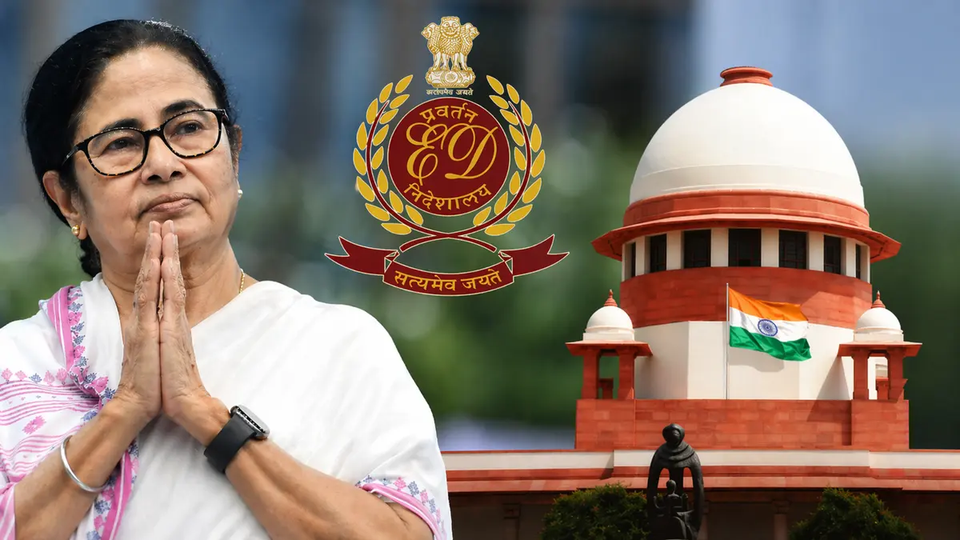
The Supreme Court of India on April 23, 2026, heard arguments in a high-stakes matter involving the Enforcement Directorate (ED) and the State of West Bengal. The case, Directorate of Enforcement and Anr. v. State of West Bengal and Ors. [W.P.(Crl.) No. 16/2026], revolves around allegations of obstruction during ED raids at the office of political consultancy firm I-PAC.
Bench and Core Issue
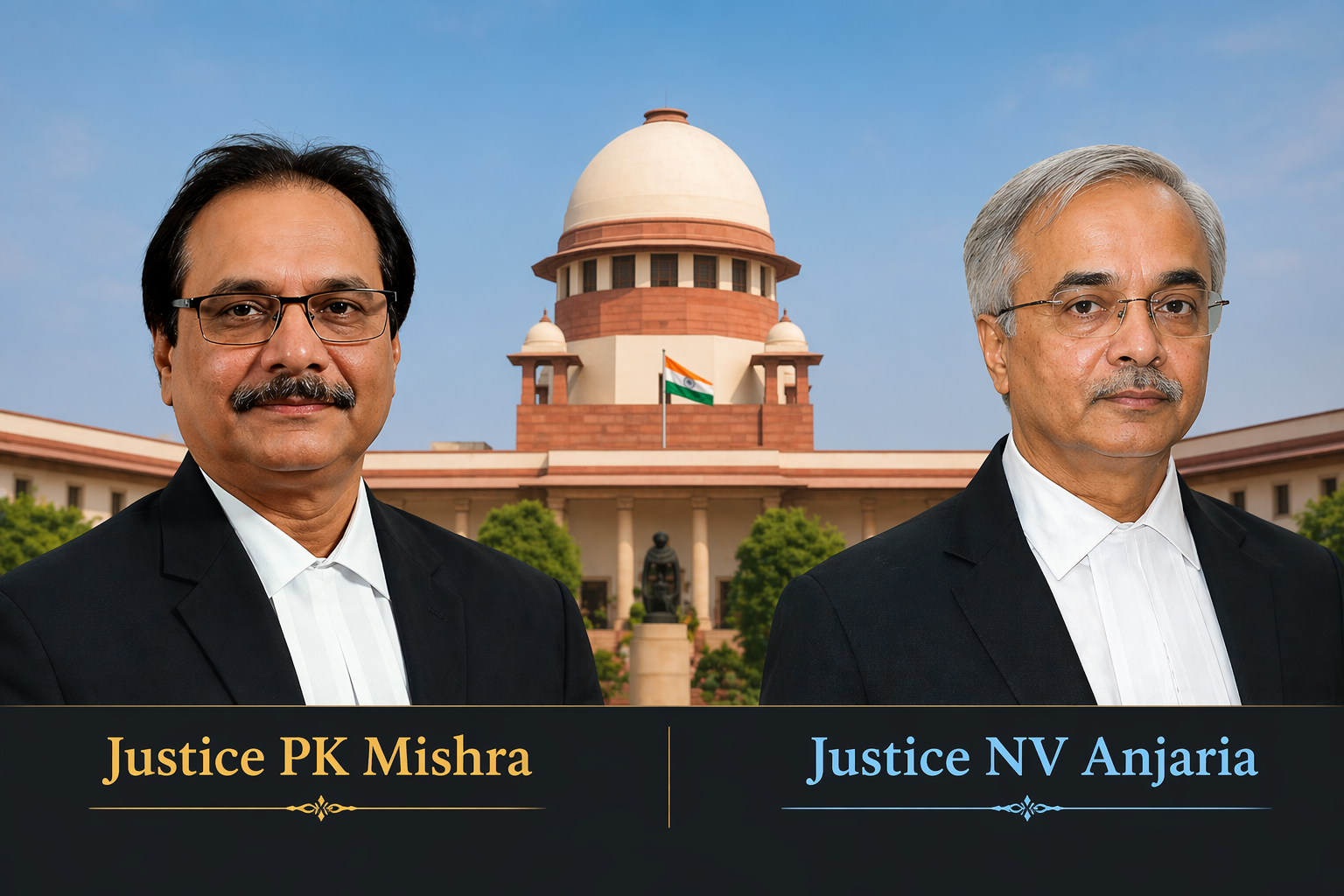
The matter is being adjudicated by a Division Bench comprising Justice Prashant Kumar Mishra and Justice N.V. Anjaria. The primary issue under consideration is the maintainability of writ petitions filed by the ED and its officers under Article 32 of the Constitution, alleging violation of their fundamental rights.
Table of Contents
ED’s Stand: Rule of Law, Not Constitutional Breakdown
Solicitor General Tushar Mehta, appearing for the ED, made a crucial clarification before the Court:
“ED can never argue that. I will answer it in that fashion. ED cannot argue that.”
This statement came in response to the Bench’s concern that ED’s arguments regarding a “complete breach of law and order” might imply a breakdown of constitutional machinery under Article 356, which could have “far-reaching consequences,” including the imposition of President’s Rule.
Justice Anjaria observed:
“You are very seriously arguing about the extensive breach of law. It has very very very far-reaching overtones. We hope that you are not hinting at the breakdown of Constitutional Machinery because that’s a very larger concern.”
Reiterating its position, the ED emphasized that its arguments were limited to a breach of the “rule of law,” which it argued is intrinsically linked to Article 14 (right to equality), thereby justifying the invocation of Article 32.
Maintainability Under Article 32
The ED argued that:
“Rule of law means wherever and whenever the State fails to perform its duty, the Court can step in.”
It further submitted that the violation of rule of law directly impacts the fundamental rights of its officers, who, despite acting in official capacity, remain individuals entitled to constitutional protections.
The Court, however, expressed reservations about expanding Article 32 jurisdiction, noting:
“There is inherent danger if we keep on entertaining. This court will be flooded with Article 32 [petitions]. Not by individuals. By different state governments.”
Background of the Dispute
The controversy stems from an incident on January 8, 2026, when West Bengal Chief Minister Mamata Banerjee allegedly entered the premises of I-PAC during an ED search operation and removed documents and electronic devices.
The ED claims that the raid was part of a money laundering investigation linked to a ₹2700 crore coal smuggling case involving businessman Anup Majee. According to the agency, interference by the Chief Minister and State police officials obstructed the investigation.
Allegations of Pattern and Obstruction
The Solicitor General argued that the incident was not isolated but part of a recurring pattern:
“This is not an isolated first of a kind incident. There is a pattern.”
He cited previous instances, including protests against CBI actions and alleged interference in investigations, to demonstrate a “well-established pattern” of undermining investigative processes.
He further stated:
“Political executive using state machinery and the rule of law warrants immediate interference by constitutional courts.”
ED’s Argument for CBI Probe
The ED has sought a court-monitored investigation by the Central Bureau of Investigation (CBI), arguing that approaching the State police would be futile:
“Now the question is, can I go file an FIR there where I am myself facing an FIR… I cannot.”
Additional Solicitor General S.V. Raju also contended that ED officers were victims of offences such as wrongful confinement and that the investigation by State police was biased.
Court’s Observations
The Bench questioned whether ED officers, acting in official capacity, could invoke fundamental rights:
“But fundamental rights are person-centric.”
At the same time, the Court acknowledged the seriousness of the allegations and earlier remarked that the situation in West Bengal appeared “extraordinary.”
Conclusion
The case raises critical constitutional questions concerning the scope of Article 32, the interplay between rule of law and federal structure, and the rights of officials acting under statutory duties. The Supreme Court’s eventual ruling is expected to have far-reaching implications for Centre-State relations and the jurisdictional boundaries of constitutional remedies.
The matter is currently ongoing.
ALSO READ:- “Supreme Court Plea Challenges PM Narendra Modi’s April 18 Doordarshan Speech Over Alleged MCC Violation”
LATEST POSTS:-