
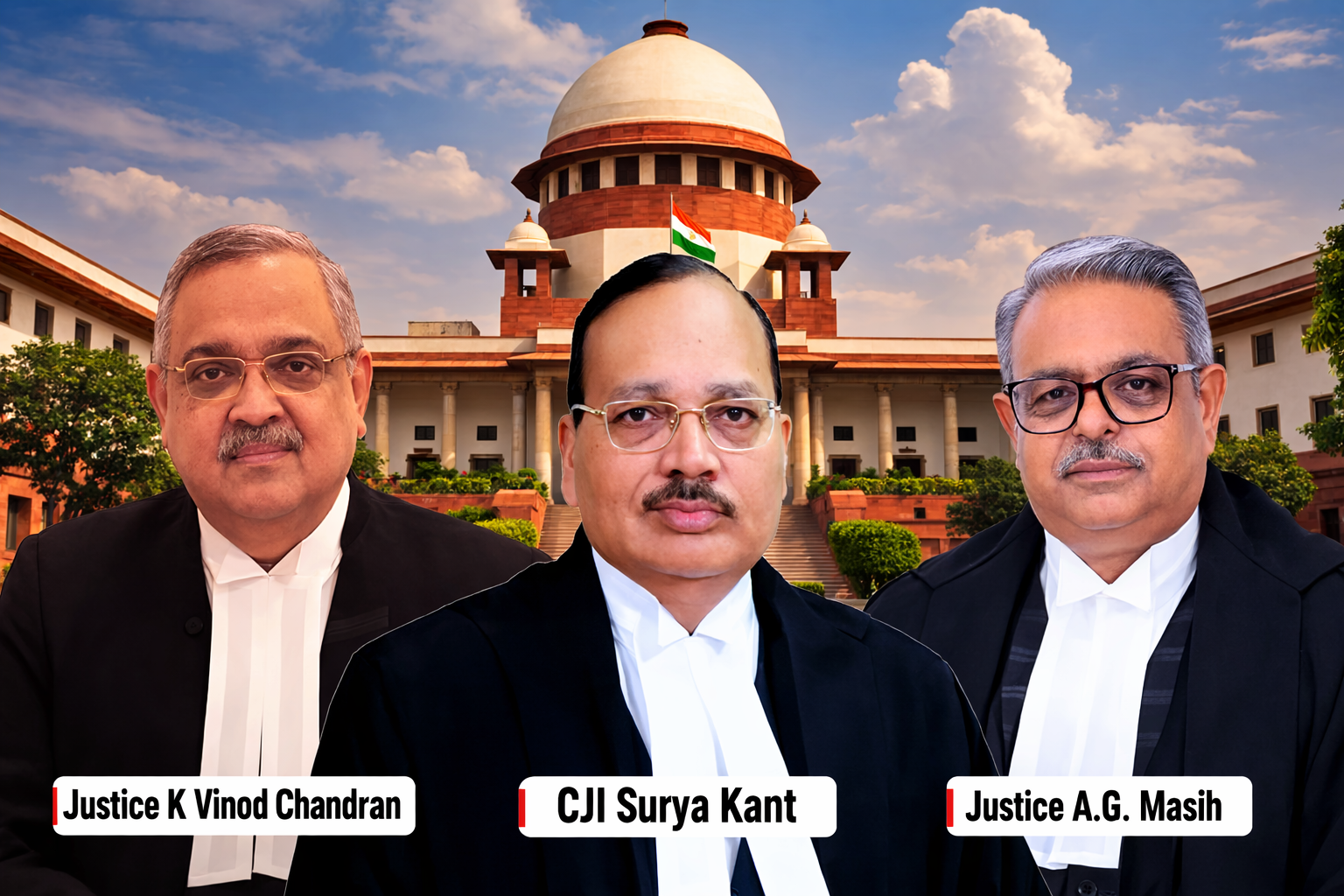
Supreme Court Says 3-Year Practice Rule for Civil Judges Should Continue, Extends Application Deadline
The Supreme Court of India has indicated that the mandatory three-year legal practice requirement for candidates seeking appointment as Civil Judge (Junior Division) should continue to remain in force. The Court made the observation while hearing review petitions challenging its earlier judgment restoring the practice requirement for entry into judicial service.
At the same time, the Court directed all High Courts across the country to extend the last date for submission of applications for Civil Judge posts until April 30, 2026, so that candidates are not adversely affected while the review proceedings remain pending.
The matter is being considered in review of the Court’s earlier ruling in the All India Judges Association case, where the Supreme Court reinstated the requirement that candidates must have a minimum of three years of legal practice at the Bar before joining judicial service.
Supreme Court: Practice Requirement Must Remain
During the hearing, the bench made it clear that the principle requiring prior legal practice is unlikely to be diluted, and that the Court is primarily examining how the rule should be implemented.
The bench observed:
“Ultimately, let’s be very clear. The practice condition will have to be there. There is the view taken by a bench and we should respect that bench. The only issue is the modalities of giving effect to that.”
The Court stressed that the earlier judgment restoring the practice requirement was passed after extensive consideration, and therefore the focus of the review proceedings should be limited to operational aspects rather than reconsidering the rule itself.
Table of Contents
Debate on the Nature of Legal Practice
During the hearing, the bench also discussed the quality and nature of legal practice required for candidates aspiring to become judges.
Raising concerns about whether passive presence in courts could be considered meaningful experience, the bench remarked:
“3 years [condition] should be there. But does that mean an advocate sitting idle in one court or the other and watching? Is that going to make them eligible?”
The Court suggested that the experience requirement should ensure genuine legal exposure and professional engagement, rather than merely fulfilling a formal time-based condition.
The Chief Justice also floated the idea of structured engagement through legal aid work, observing:
“Or make them free legal aid counsel. That is a very good idea.”
This suggestion reflects the Court’s concern that judicial officers must possess real courtroom exposure and practical understanding of litigation, which cannot be acquired solely through academic study.
Bench Divided on Possible Alternatives
Another aspect discussed during the proceedings relates to the possibility of introducing a practice-cum-training model for judicial aspirants.
Some members of the bench explored whether a one-year practice or training programme could serve as a viable alternative to the three-year practice rule. However, the bench appeared divided on whether such a model would adequately replace the practical exposure provided by longer practice at the Bar.
One of the judges observed during the discussion:
“The question is whether instead of three years, we can have a one-year structured training model.”
At the same time, concerns were raised that reducing the practice requirement could affect the quality and preparedness of trial court judges, who deal with complex civil and criminal disputes at the grassroots level.
Concerns About Relaxations
The Court also considered whether relaxations in the practice requirement could be granted to certain categories of candidates, such as women or persons with disabilities. However, the bench appeared cautious about introducing category-based relaxations.
During the discussion, the Court remarked:
“If we start carving out exceptions, it will become extremely difficult to maintain uniform standards.”
The bench indicated that maintaining consistency and fairness in judicial recruitment is crucial, and any modification must ensure that the overall quality of the judiciary is not compromised.
Application Deadline Extended
Recognising that the ongoing litigation may affect judicial recruitment processes across several states, the Supreme Court directed High Courts to extend the deadline for Civil Judge (Junior Division) applications until April 30, 2026.
The extension aims to ensure that candidates preparing for judicial service examinations are not prejudiced by uncertainty surrounding the eligibility rules while the Court continues to examine the issue.
Impact on Judicial Aspirants
The outcome of the review petitions will have major implications for thousands of judiciary aspirants across India. For many law graduates, the earlier system allowed them to enter judicial service directly after completing their legal education.
However, the Supreme Court has repeatedly emphasised that trial court judges must possess practical legal experience, as they are responsible for handling complex disputes and administering justice at the grassroots level.
The Court is expected to continue hearing the review petitions in the coming weeks, focusing primarily on refining the implementation mechanism of the three-year practice requirement rather than reconsidering the rule itself.
Case Title: Case Title – Bhumika Trust v. Union of India and connected cases
ALSO READ:-“Supreme Court Issues Notice on PIL Seeking Ban on Animal Sacrifice in Religious Practices”
LATEST POSTS